

1. Vietnam Gained The Biggest Benefit In The First Trump’s Term
During Trump’s first term (2017-2021), Vietnam saw a remarkable 232% growth in exports to the U.S., rising from $415 billion in 2017 to $963 billion in 2021. Key industries driving this growth included electronics, machinery, furniture, footwear, apparel, and seafood, while exports of bags, agricultural products, and coffee declined. The U.S. share of Vietnam’s total exports surged from 19.3% to 28.7%.
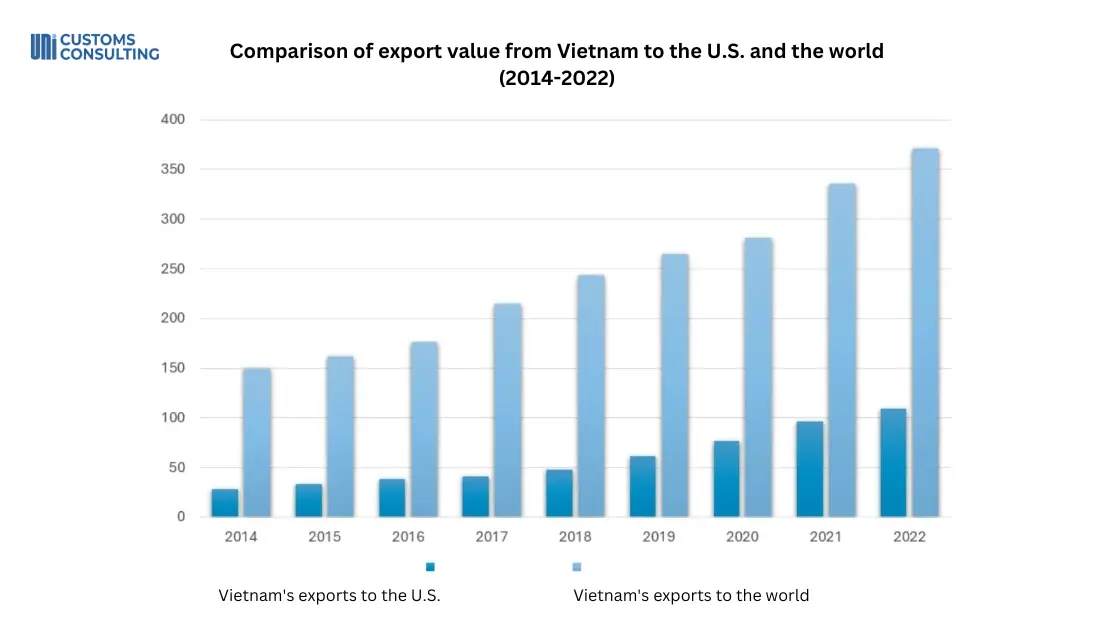
Vietnam benefited from the U.S.-China trade war, with advanced industries surpassing traditional sectors. If the U.S.-China dispute intensifies again under a second Trump administration, Vietnam could benefit once again reap the benefits , though tariffs or trade restrictions could threaten this advantage.
(According to Analysis of China’s Circumventing US Exports Trends (Project 24_TF19),
2. Vietnam: A Neutral Nation in a Changing Global Order
The shifting global landscape could alter the status of major economies, including the G2. The U.S. and China’s protectionist measures might provoke retaliatory actions, leading to a global cycle of protectionism, which could cause short-term inflation and consumption slowdown.
In the long term, protectionism may boost domestic industries in major economies, but developing nations might face inflation and slow growth. Vietnam, however, could capitalize on its image as a developing and neutral nation to improve its diplomatic and trade position.
3. Vietnam’s Challenges In The Trump 2.0
a. Concerns over China’s Circumventing Exports and Mexico’s 25% Tariff Threat
Concerns are rising that Chinese goods are being disguised as ‘Made in Vietnam’ by transiting through the country. The government and producers must enforce strict origin management, especially as Vietnam’s electronics industry has a low localization rate of about 10%. Strengthening the component and materials industry through such policies is crucial. Mexico, similarly, faces a 25% tariff threat due to being a transit country for Chinese goods.
b. Vietnam’s Trade Surplus with the US, Trump’s Reciprocity, and Bilateral Negotiations
From January to September this year, Vietnam’s trade surplus with the U.S. reached around $90 billion, ranking fourth after China, the EU, and Mexico. Vietnam has traditionally benefited from its developing country status in multilateral negotiations, but under a second Trump administration, it may face pressure for bilateral talks due to the trade deficit and reciprocity principles.
4. Forecasting the Impact on Key Industries in Vietnam
a. Electronics, Machinery Industry:
Vietnam’s potential for increasing electronics exports to the US is high. However, the low rate of domestication indicates that the supporting industries of components, parts, and materials need development to support this growth. In the long term, Vietnam needs to improve the reliability of product certificates of origin.
b. Textiles, Apparel, Footwear, Bags, Furniture Industry:
Labor-intensive industries may see an increase in demand for Vietnamese products due to the US-China conflict and rising production costs in the US. It is necessary to diversify the supply of raw materials such as yarn and fabrics from various countries, while promoting domestic production to ensure compliance with the rules of origin.
c. Agriculture and Coffee:
Exports of agricultural products and coffee to the US may decrease due to Trump’s tax policies. However, the decline may have a low or even no significant impact if the overall tariff rate is not too high.
5. What should businesses in Vietnam prepare in the Second Trump Term?
a. Establish a Trade Agreement with the US
There is no specific trade agreement between the U.S. and Vietnam, requiring a general certificate of origin. The U.S. uses a vague “substantial transformation” criterion to determine goods’ origin. The Vietnamese government should negotiate with the U.S. to establish a bilateral agreement or clearer rules of origin.
Vietnam should aim to balance trade and boost exports to the United States by pursuing bilateral agreements with the U.S. government. At the same time, it should secure its position in the global market by leveraging FTAs with ASEAN, Europe, and other regions. The country should also actively attract foreign investments in advanced technology and capital.
b. Create a 100% Digitalized, Transparent, and Accurate Origin Management
If Vietnam develops a globally recognized and transparent origin management system, it will enhance its position in the evolving trade landscape and strengthen its export competitiveness.
Therefore, the Vietnamese government and producers must innovate their origin management systems, focusing on establishing an externally verifiable system. Fully digitalizing the current origin certification process will improve transparency and credibility.

c. Enhance the Traceability of Imported Goods
A traceability system for imported goods is essential to prevent origin laundering. This will help avoid the misuse of origin that doesn’t add value to Vietnam, while effectively protecting both Vietnamese producers and consumers.
d. Build Public Consensus through Policy Promotion
Government-level origin management policies need broad public outreach to gain support. Stricter policies may cause resistance from producers and consumers, so it’s crucial to emphasize that these policies are designed to “protect our interests” and foster public understanding and backing.
e. Diversify the Raw Materials Imports (Origin Managment at the Corporate Level)
Businesses should actively adapt to the changing trade landscape through effective origin management. They should diversify their raw material sources and carefully manage the origin of goods from each supplier. While Vietnam benefits from tax exemptions for export-oriented raw materials, there has been limited origin management for these materials.
For instance, if raw materials are imported from Korea, businesses can secure AKFTA, VKFTA, and RCEP certificates of origin.
f. Monitor Other Countries’ Development from the U.S.’s Expansion
Preparations for C-TPAT (Authorized Economic Operator, or AEO) may be essential, as the U.S. has recently expanded C-TPAT to include Mexican manufacturing companies. AEOs typically enter into mutual recognition agreements with other countries’ AEOs, ensuring they receive the same treatment as domestic AEOs. Given the potential expansion of the U.S. C-TPAT system to other countries, Vietnamese manufacturing companies should closely monitor these developments.
g. Monitor Trade Measures from the U.S
The U.S. has imposed anti-dumping duties on Vietnamese tires, and companies should closely monitor such trade measures. Once a trade measure is imposed, companies must take immediate action, starting at the investigation stage. A proactive response is crucial to maintaining cost competitiveness.
The latest information about customs situation will be continuously updated in the customs newsletter of UNI CUSTOMS CONSULTING. We invite businesses to stay informed!