

Since returning to the White House on January 20 this year, U.S. President Donald Trump has continued to uphold tariff and trade protection policies. One of the most notable recent decisions is his imposition of a 25% tariff on imported aluminum and steel. In this context, a thorough analysis of the impact of this decision on Vietnam’s steel and aluminum production and export sectors is essential.
1. Imposition of a 25% tariff on all imported aluminum and steel
On the evening of February 10, 2025, U.S. President Donald Trump signed an executive order imposing a 25% tariff on all imported steel and aluminum, without any exceptions or waivers for any country. The specific details are as follows:
- Affected entities: All countries exporting aluminum and steel to the U.S. market.
- Tariff rate: Reapplying the 25% tariff on all imported steel and an increase in the aluminum tariff from 10% to 25%.
- Effective date: The new tariff rates will take effect on March 4, 2025.
Section 232 of the U.S. Trade Expansion Act of 1962 authorizes the President to impose import restrictions based on an investigation and affirmative determination by the U.S. Department of Commerce that certain imports threaten to undermine U.S. national security.
Investigations conducted under Section 232 concluded that excessive imports had weakened the domestic steel and aluminum industries, reducing their ability to meet U.S. national defense and critical infrastructure needs. Additionally, the U.S. Department of Commerce determined that global overcapacity driven by foreign government subsidies and unfair trade practices had led to declining production, plant closures, and job losses within the American industry.
President Donald Trump asserted that this tariff policy would protect U.S. industries from foreign competitors while also creating more jobs for American workers.

2. Impact of Trump’s tariff policy on car industry and inflation
According to Dean Baker, Senior Researcher at the Center for Economic and Policy Research (CEPR), Trump administration’s 25% tariff on steel and aluminum is expected to cause overall price increases, with the car industry being the most significantly affected.
- With approximately 450kg ($6,000-7,000) of steel used per vehicle, the additional steel tariff is expected to increase vehicle prices by about $1,000-1,500.
- Even if automakers increase their use of U.S.-made steel, some companies may take the opportunity to raise product prices due to increased foreign steel prices.
- If the 30-day suspended tariffs on Canada and Mexico are ultimately implemented, regular vehicle prices could rise by an additional $6,250.
- The UK announced it is in discussions with the U.S. regarding the additional steel and aluminum tariffs, while the EU criticized the tariff measures and warned of firm and proportional countermeasures.
CBS News reported experts’ warnings that the Trump administration’s tariff policy could accelerate inflation.
- Deutsche Bank analysis suggests that if both the steel/aluminum tariffs and reciprocal tariffs are implemented, the Personal Consumption Expenditure (PCE) price index could rise by an additional 0.4 percentage points.
- Trump is considering tariffs on foreign automobiles, semiconductors, pharmaceuticals, and other products beyond steel and aluminum.
- However, it was noted that during Trump’s first term, while U.S. steel prices rose briefly after steel tariffs were imposed, they fell back to pre-tariff levels within 12 months due to decreased domestic demand.
3. U.S. additional steel and aluminum tariffs aimed at blocking Chinese circumvention exports
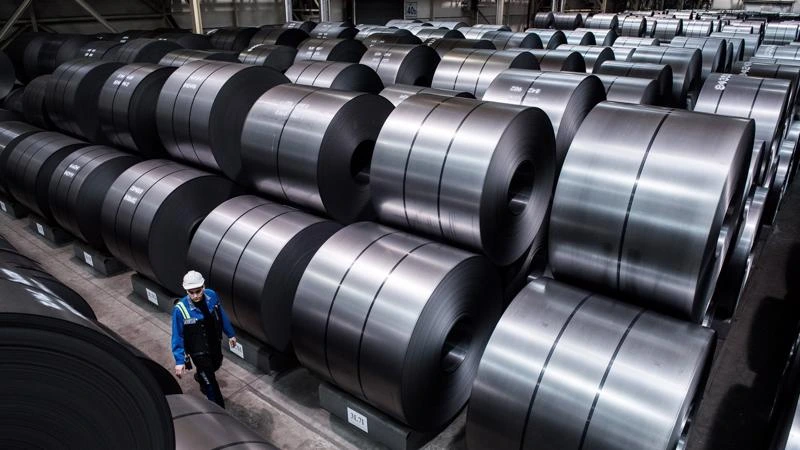
The New York Times analyzed that the additional tariffs on foreign steel and aluminum ultimately target China.
- Top steel exporters to the U.S. are Canada, Brazil, Mexico, South Korea, and Germany, with China not among the top exporting countries.
- In September 2024, the previous Biden administration implemented up to 25% tariffs on Chinese steel and aluminum routed through Mexico.
- However, China’s steel and aluminum overproduction continues to weaken U.S. industry’s global competitiveness, with Chinese products being re-exported to the U.S. through Canada, Mexico, Vietnam, and other countries after failing to find domestic consumers.
Currently, not only the U.S. but also Canada, Brazil, Indonesia, Turkey, and others are responding to China’s overproduction by imposing tariffs on Chinese steel and aluminum.
Read more: What is Antidumping duty? List of Chinese Goods subject to antidumping duty in Vietnam.
4. Impact of the 25% tariff on Vietnam’s steel and aluminum manufacturing and export industry
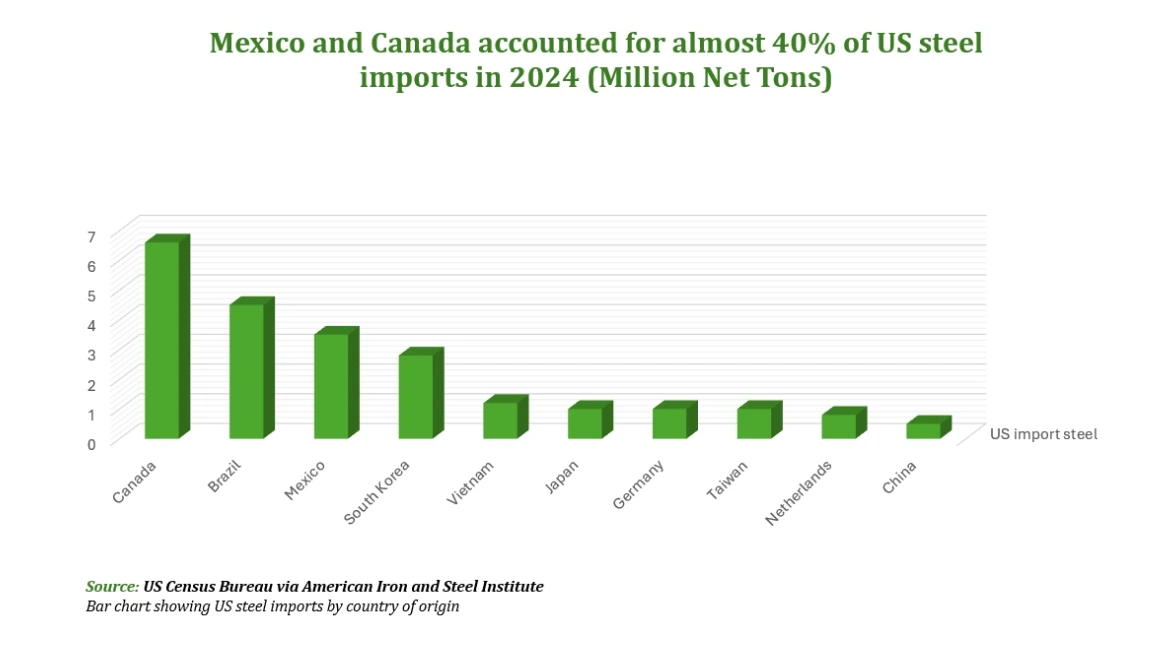
Vietnam was among the top five suppliers of steel to the U.S.
Experts from SSI Securities Corporation note that Vietnamese steel has been subject to a 25% import tariff in the U.S. since 2018 under Section 232, so the latest tariff increase may not have a significant impact.
In fact, the new tariff action could have a slightly positive effect on Vietnam’s steel industry by leveling the playing field, as Vietnam’s import tariff rate (before considering other protective duties) is now on par with other countries.
However, the impact on aluminum is more severe, as tariffs have increased from 10% to 25%. Higher tariffs will raise the production costs of Vietnamese steel and aluminum, reducing their competitiveness in the U.S. market. As a result, many Vietnamese businesses, especially small and medium-sized enterprises, face the risk of losing market share in the U.S.
5. Recommendations for aluminum and steel manufacturers in Vietnam
The Vietnam Trade Office in the U.S. advises Vietnamese businesses to assess the situation and develop appropriate business strategies, including expanding exports to markets that have FTAs with Vietnam to avoid over-reliance on a single market.
Enterprises must also comply with U.S. origin regulations and be fully prepared to participate in trade remedy investigations. Currently, there are 34 trade defense cases involving steel and two ongoing investigations related to aluminum.
Additionally, experts from KB Vietnam Securities Joint Stock Company (KBSV) suggest that manufacturers should enhance their competitiveness in the domestic market to sustain revenue growth.
Read more: Vietnam’s Trade in The Trump 2.0: Opportunities, Challenges, and Advice for Businesses in Vietnam
CONCLUSION
Amidst the volatility of global trade, the U.S. tariff decision on steel and aluminum continues to pose significant challenges for Vietnam’s steel and aluminum manufacturing and export industries. However, this also presents an opportunity for Vietnamese businesses to enhance their competitiveness, diversify markets, and develop adaptive strategies. Closely monitoring international trade policies and implementing appropriate response strategies will be crucial for the industry’s long-term sustainable growth.
UNI Customs Consulting remains committed to assisting businesses in navigating these challenges and identifying optimal solutions. Contact UNI for any inquiry about tariff and customs procedure when importing steel, aluminum and any other products to Vietnam.
Reference materials:
- VCCI: US imposes 25% tax on aluminum and steel: Vietnamese steel still has export opportunities in the short term but needs to urgently prepare for the future (link)
- CBS News (Feb 11): Trump orders 25% tariffs on steel and aluminum. Here’s what experts say could become pricier. (link)
- New York Times (Feb 10): “China Is at the Heart of Trump Tariffs on Steel and Aluminum” (link)
- VTV Online (Feb 11): How will Vietnam’s aluminum and steel be affected when the US imposes a 25% tax? (link)
The latest information about customs situation will be continuously updated in the customs newsletter of UNI CUSTOMS CONSULTING. We invite businesses to stay informed!
For expert advice on customs issues, please contact this hotline +(84) 908-535-898 (Vietnamese), +(84) 902-927-767 (Korean) or send an email to the address: uni@eximuni.com.