

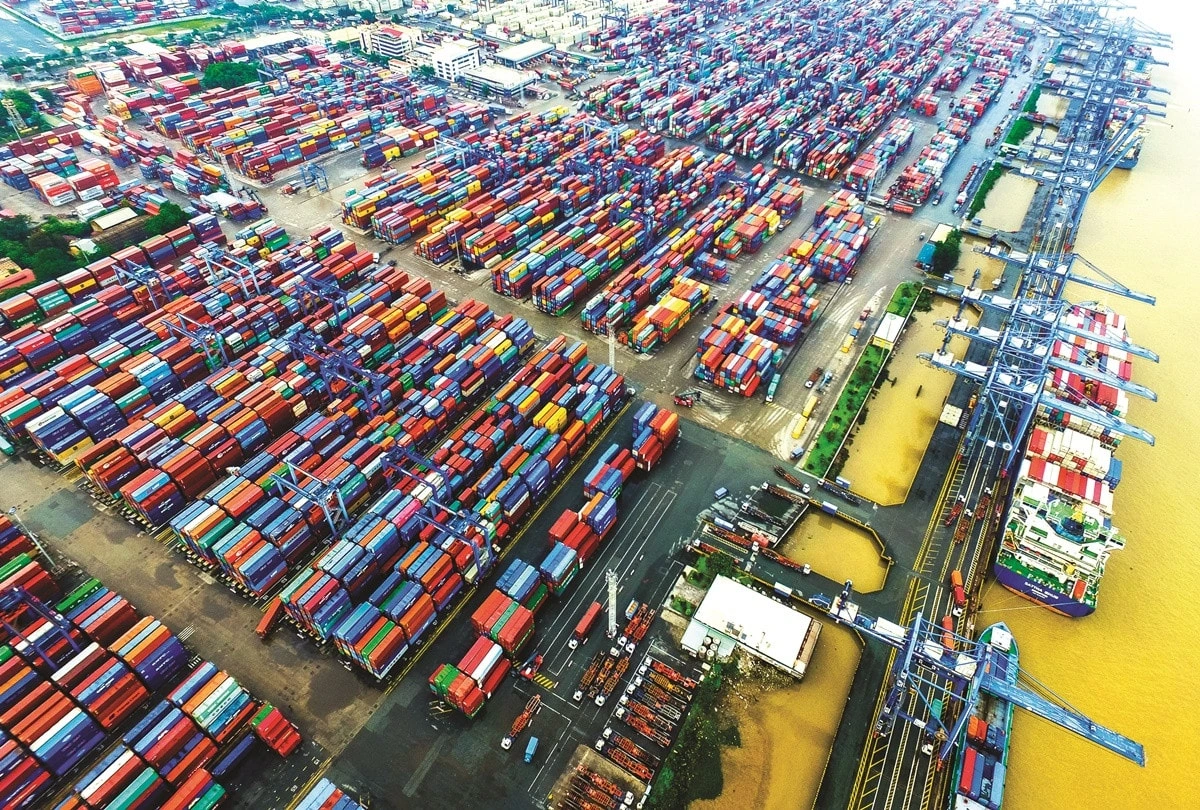
On 09 October 2025, the Prime Minister signed Decision No. 2229/QĐ-TTg approving the Strategy for the Development of Vietnam’s Logistics Services for the period 2025–2035, with a vision to 2050, aiming to transform logistics into a key, efficient, sustainable, and high-value economic sector.
1. Main Objectives:
| Objective | Period 2025–2035 | Vision to 2050 |
| Proportion of logistics sector value added | 5–7% of GDP | 7–9% of GDP |
| Average growth rate | 12–15%/year | 10–12%/year |
| Enterprises using outsourced logistics services | 70–80% | 80–90% |
| Logistics costs | 12–15% of GDP | 10–12% of GDP |
| LPI (Logistics Performance Index) Ranking | Top 40 countries | Top 30 countries |
| Enterprises applying digital transformation solutions | 80% |
100% |
| Technically trained workforce | 70% (of which 30% hold a university degree or higher) | 90% (of which 50% hold a university degree or higher) |
| Modern logistics centers meeting international standards | ≥5 centers | ≥10 centers, becoming international hubs |
2. Development Orientation and Solutions
2.1. The Strategy sets out 08 core orientations and corresponding solutions:
| STT | Orientation | Solution |
| 1 | Improve legal and institutional framework | Review and amend relevant legal documents (such as Decree No. 163/2017/NĐ-CP), simplify procedures, attract investment, and enhance state management. |
| 2 | Promote infrastructure development | Develop synchronized and modern infrastructure: seaports, airports, smart warehouses, urban logistics, agricultural and e-commerce distribution centers. |
| 3 | Strengthen regional connectivity | Develop key economic zones in Hanoi, Ho Chi Minh City, Da Nang, Hai Phong; connect North–South economic corridors and ASEAN region. |
| 4 | Develop supply sources and logistics market | Attract multinational corporations, establish free trade zones, promote export logistics and cross-border e-commerce. |
| 5 | Enhance enterprise competitiveness | Support enterprises in integrating 4PL and 5PL services, improving quality, greening operations, and digital transformation. |
| 6 | Promote research, digital transformation, and green transition | Apply new technologies, automation, logistics optimization, and customs transparency. |
| 7 | Develop high-quality human resources | Establish professional standards, provide training from elementary to postgraduate level, and cooperate with international organizations. |
| 8 | Strengthen the role of associations and leading enterprises | Promote modern supply chains, build strong logistics enterprises with international competitiveness |
2.2 Other tasks:
- Disseminate legal regulations and raise awareness of green and sustainable logistics.
- Conduct market research and forecasting; annually publish the Vietnam Logistics Report.
- Develop a national database on logistics markets, enterprises, and infrastructure; apply AI and big data.
- Compile and monitor sectoral indicators and indexes.
- Organize Vietnam Logistics Day and Logistics Week.
3. Implementation
- Ministry of Industry and Trade: Lead the implementation and provide guidance to ministries and local authorities.
- Ministry of Finance: Allocate budget and mobilize domestic and foreign investment.
- Local authorities and associations: Develop action plans and implement logistics projects based on actual conditions.
- Periodic reporting: Annually before 10 December, submit reports to the Ministry of Industry and Trade for consolidation and submission to the Prime Minister.
(According to Decision No. 2229/QD-TTg October 09, 2025)
Related Services:
📞 Contact UNI Customs Consulting for free consultation:
📧 Email: uni@eximuni.com
📱 Hotline: (+84) 24-7308-7988 (Hanoi) | (+84) 28-7301-8910 (HCM)