

On January 17, 2026, the Government and the Ministry of Industry and Trade simultaneously issued a new system of Decrees and Circulars, officially completing a comprehensive legal framework for chemical activities in Vietnam, including:
- Law on Chemicals 2025 (Law No.: 69/2025/QH15)
- Decree 24/2026/NĐ-CP: Stipulating the list of chemicals within the scope of the Law on Chemicals 2025
- Decree 25/2026/NĐ-CP: Detailing the development of the chemical industry and chemical safety and security
- Decree 26/2026/NĐ-CP: Detailing the management of chemical activities and hazardous chemicals in products and goods
- Circular 01/2026/TT-BCT: Detailing the management of chemical activities and hazardous chemicals in products and goods
- Circular 02/2026/TT-BCT: Detailing the development of the chemical industry and chemical safety and security
Below is a summary of the main contents that enterprises engaged in importing, storing, and using chemicals need to pay special attention to:
A. CHEMICAL IMPORT PROCEDURES
1. Chemical Import Declaration Procedures
(According to Article 12 of the Law on Chemicals 2025; Article 6 of Decree 26/2026/NĐ-CP; Article 6 of Circular 01/2026/TT-BCT)
Main Content:
- Subject and Scope of Application: Chemical declaration is required before customs clearance for goods under Chapter 28, Chapter 29
- Dossier Components:
- Original commercial invoice and Vietnamese translation certified by the enterprise;
- Material Safety Data Sheet (MSDS);
- In case of non-commercial import without invoice, cargo arrival notice may be used instead of commercial invoice.
- Chemical Declaration Information Form: According to Form 13a, Appendix XIII of Circular 01/2026/TT-BCT – see here
- Cases Exempt from Chemical Declaration:
- Import of less than 10 kg per invoice;
- Import of less than 1kg of new chemicals for testing and evaluation of physicochemical properties
- Import of mixtures not under Chapters 28, 29 but containing chemicals under Chapters 28, 29
- Import of specially controlled chemicals when an Import Permit has been issued
- Import of banned chemicals when an Import Permit has been issued
- Responsibility for Accurate Declaration: If the declaration is inaccurate, competent authorities have the right to impose administrative penalties
2. Import and Export Procedures for Conditional Chemicals
(According to Article 12 of the Law on Chemicals 2025, Article 10 of Decree 26/2026/NĐ-CP)
Main Content:
- List of Conditional Chemicals: According to Appendix II of Decree 24/2026/NĐ-CP – see here
- For import of conditional chemicals for enterprise use (not for business purposes): Must declare the purpose of chemical use on the Chemical Sector Database and does not require a Certificate of Eligibility for production and trading of conditional chemicals
- For export and import for business purposes: Must have a Certificate of Eligibility for production and trading of conditional chemicals
3. Import and Export Procedures for Specially Controlled Chemicals:
(According to Article 12 of the Law on Chemicals 2025, Articles 14, 15 of Decree 26/2026/NĐ-CP and Article 3 of Circular 01/2026/TT-BCT)
Main Content:
- List of Specially Controlled Chemicals: Specified in detail in Appendix III of Decree 24/2026/NĐ-CP – See here
- Customs Clearance Condition: Must have an import permit/export permit issued by the Ministry of Industry and Trade
- Import Permit for “Specially Controlled Chemicals”: Issued for each import invoice and valid for 6 months, renewable once for no more than 6 months.
- Authority to Issue Permits:
- Ministry of Industry and Trade: Issues permits for Group 1 specially controlled chemicals
- Provincial People’s Committee: Issues permits for Group 2 specially controlled chemicals
- Dossier Components for Permit Application: Application letter, copy of invoice, Material Safety Data Sheet (MSDS) in Vietnamese; Usage report (for Group 1)
- Forms Related to Permit Issuance: Stipulated in Appendix VII of Circular 01/2026/TT-BCT
- Permit Validity Period: 6 months, renewable once if expired but import/export has not been completed according to the previously issued permit
- Cases Exempt from Permit:
- Group 1 specially controlled chemicals at concentrations below 1% (<1%) by mass of the mixture
- Group 2 specially controlled chemicals at concentrations below 5% (<5%) by mass of the mixture
- Mixtures containing specially controlled chemicals classified as hazardous at low levels
- Specially controlled chemicals contained in the following products:
- Pharmaceuticals; disinfectants, insecticides; food; cosmetics;
- Animal feed; aquatic feed; veterinary drugs; plant protection products; organic fertilizers, biological fertilizers, mixed chemical fertilizers, organic-mineral fertilizers, biological-mineral fertilizers; products for preservation and processing of agricultural, forestry, seafood and food products;
- Radioactive substances; construction materials; paints, printing inks;
- Products used in the household sector including adhesives, cleaning products, cosmetic chemicals;
- Gasoline and oil according to laws on gasoline and oil; condensate, naphtha used in oil processing;
- Batteries, accumulators, medical equipment, laboratory equipment
- Obligation to Declare Purpose of Use: Must declare information according to the form in Appendix XVIII of Circular 01/2026/TT-BCT on the Sector Database 30 days before putting chemicals into use for the first time or when changing the purpose of use
4. Import and Export Procedures for Banned Chemicals:
(Article 12 of the Law on Chemicals 2025, Article 18 of Decree 26/2026/NĐ-CP and Article 6 of Circular 01/2026/TT-BCT)
Main Content:
- Authority to Decide and Issue Permits: The chemical management agency reports and submits to the Prime Minister for permission to issue Permits.
- Conditions for Issuing Import Permits:
Enterprises must simultaneously meet the following conditions:
“a) The organization importing banned chemicals is an organization established in accordance with law;
b) Has special activities using banned chemicals to serve scientific research, national defense, security purposes, or perform tasks assigned by the Government or Prime Minister requiring the use of banned chemicals;
c) Has necessary warning information at the banned chemical storage location, chemical safety regulations, has a signaling system appropriate to the hazard level of banned chemicals at storage and production areas;
d) Has equipment and means for incident response appropriate to the hazardous characteristics of the chemicals;
e) Has a plan or measures for preventing and responding to chemical incidents and safety assurance means approved by competent authorities;
f) Has a plan to control and prevent loss of banned chemicals according to the form prescribed by the Minister of Industry and Trade (including at least the following contents: types; mass; storage methods; inspection and supervision plans).”
- Validity Period of Banned Chemical Import Permit: 6 months, issued for each shipment
- Cases Exempt from Permit: Banned chemicals at concentrations below 0.1% (< 0.1%) by mass of the compound
B. MANAGEMENT OF HAZARDOUS CHEMICALS IN THE PRODUCT MANUFACTURING PROCESS
1. Responsibility to Declare Information on Hazardous Chemical Content in Products and Goods
(Article 32 of the Law on Chemicals 2025, Article 30 of Decree 26/2026/NĐ-CP and Article 11 of Circular 01/2026/TT-BCT)
Main Content:
- Subject of Application: Enterprises engaged in manufacturing or importing goods containing hazardous chemicals
- List of Hazardous Chemicals in Products and Goods Requiring Information Declaration: Stipulated in Appendix XIX of Circular 01/2026/TT-BCT – see here
This list specifies 10 specific types of chemicals such as Acetone (in glue, cleaning products), Formaldehyde (in pressed wood), Hydrochloric acid, Sulfuric acid (in batteries), Toluene (in paints, printing inks)
- Declaration Obligation (By Shipment): Enterprises must declare on the Chemical Sector Database for each manufacturing or import shipment the following information:
- Name of product/goods and name of hazardous chemicals contained therein.
- Hazardous characteristics and content of chemicals.
- Field of use of the product.
The above chemical information must be verified through test results by a Laboratory with adequate operating conditions
- Information on composition, content and recommendations for restricted use must be displayed on product labels or product websites
2. Control Process for Hazardous Chemicals in the Manufacturing Process of Products and Goods Containing Hazardous Chemicals
(According to Article 31 of the Law on Chemicals 2025, Article 29 of Decree 26/2026/NĐ-CP)
“Article 29. Control of hazardous chemicals in the manufacturing process of products and goods containing hazardous chemicals
- The hazardous chemical control process in the manufacturing process must ensure the following objectives:
a) Monitor the composition and content of hazardous chemicals in input materials;
b) Monitor the composition and content of hazardous chemicals emitted during the manufacturing process;
c) Monitor the composition and content of hazardous chemicals in the final product;
d) Prevent loss of hazardous chemicals.
Organizations and individuals manufacturing products and goods containing hazardous chemicals are responsible for developing and issuing the Process for controlling hazardous chemicals in the manufacturing process based on actual operating conditions and Clause 1 of this Article.”
C. PREVENTION AND RESPONSE TO CHEMICAL INCIDENTS
1. Responsibility to Develop Chemical Incident Prevention and Response Plans
(According to Article 37 of the Law on Chemicals 2025, Article 35 of Decree 25/2026/NĐ-CP and Article 4 of Circular 02/2026/TT-BCT)
Main Content:
- List of Chemicals Requiring Development of Chemical Incident Prevention and Response Plans: Specified in detail in Appendix IV of Decree No. 24/2026/NĐ-CP – See here
- Subjects Required to Develop Chemical Incident Prevention and Response Plans for Approval by Chemical Management Authorities:
- Case 1: Has at least 01 chemical in Table a or mixture in Table b of Appendix IV with maximum storage quantity at one time exceeding the threshold stipulated
- Case 2 (Cumulative): If no individual substance exceeds the threshold, but the total ratio of storage quantity to threshold of all hazardous chemicals is greater than or equal to 1.
- Mandatory Content in Chemical Incident Prevention and Response Plans:
“3. Chemical incident prevention and response plans must include the following contents:
a) Information on characteristics, quantity, scale of operations, chemical storage, production technology, chemical use, geographical, population, environmental characteristics of locations with chemical activities;
Human resources, equipment serving chemical incident prevention and response work;
Assessment of the impact of these conditions on chemical incident prevention and response work;
b) Forecasting risks, scenarios of chemical incidents, determining scope of impact, estimating consequences and classifying chemical incidents;
c) Chemical incident prevention measures at chemical storage areas and at high-risk locations;
d) Chemical incident response measures at high-risk areas including the following contents:
Hazard zoning, force and equipment deployment plans according to terrain and weather conditions;
Techniques and materials for responding to recognized incident scenarios;
Methods of using personal protective equipment appropriate to the hazardous characteristics of each type of chemical involved in the incident;
Plans for coordinating with external forces;
Evacuation plans for people and property;”
- Detailed Guidance on Chemical Incident Prevention and Response Plan Content: According to Appendix II of Circular 02/2026/TT-BCT – see here
- Implementation:
- Annual drills: Must organize annual chemical incident response drills periodically
- Data update: Drill results must be updated on the chemical sector database.
2. Responsibility to Develop Chemical Incident Prevention and Response Measures
(According to Article 38 of the Law on Chemicals 2025, Article 37 of Decree 25/2026/NĐ-CP and Article 4 of Circular 02/2026/TT-BCT)
Main Content:
- Subjects Required to Develop Prevention Measures: Enterprises with chemical activities not subject to developing “Plans” (i.e., below the threshold stipulated in Article 35)
- Procedures for Issuance, Storage and Reporting: Unlike “Prevention Plans” requiring approval, “Prevention Measures” are self-managed by enterprises
- Issuance: Enterprises with chemical activities/transportation independently decide to issue Measures
- Reporting: Send Measures to local sector management authorities and report content to the chemical sector database system within 30 days from issuance.
- Storage: Enterprises keep Measures at the facility and are responsible for presenting them upon request from competent authorities.
- Mandatory Content in Prevention Measures:
“3. Chemical incident prevention and response measures in transportation must include the following contents:
a) Information about the investor, transportation unit, means of transportation, information about hazardous chemicals being transported;
b) Forecasting risks, scenarios of chemical incidents, measures, equipment, on-site response forces;
c) Plans for inspection and supervision of means of transportation and chemical incident prevention measures;
d) Plans for coordinating with external forces to respond to chemical incidents“
- Detailed Guidance on Prevention Measure Content: According to Appendix II of Circular 02/2026/TT-BCT – see here
D. SAFETY AND SECURITY REQUIREMENTS IN CHEMICAL ACTIVITIES
1. Requirements for Physical and Technical Facilities
(According to Article 33 of the Law on Chemicals, Article 25 of Decree 25/2026/NĐ-CP)
Main Content:
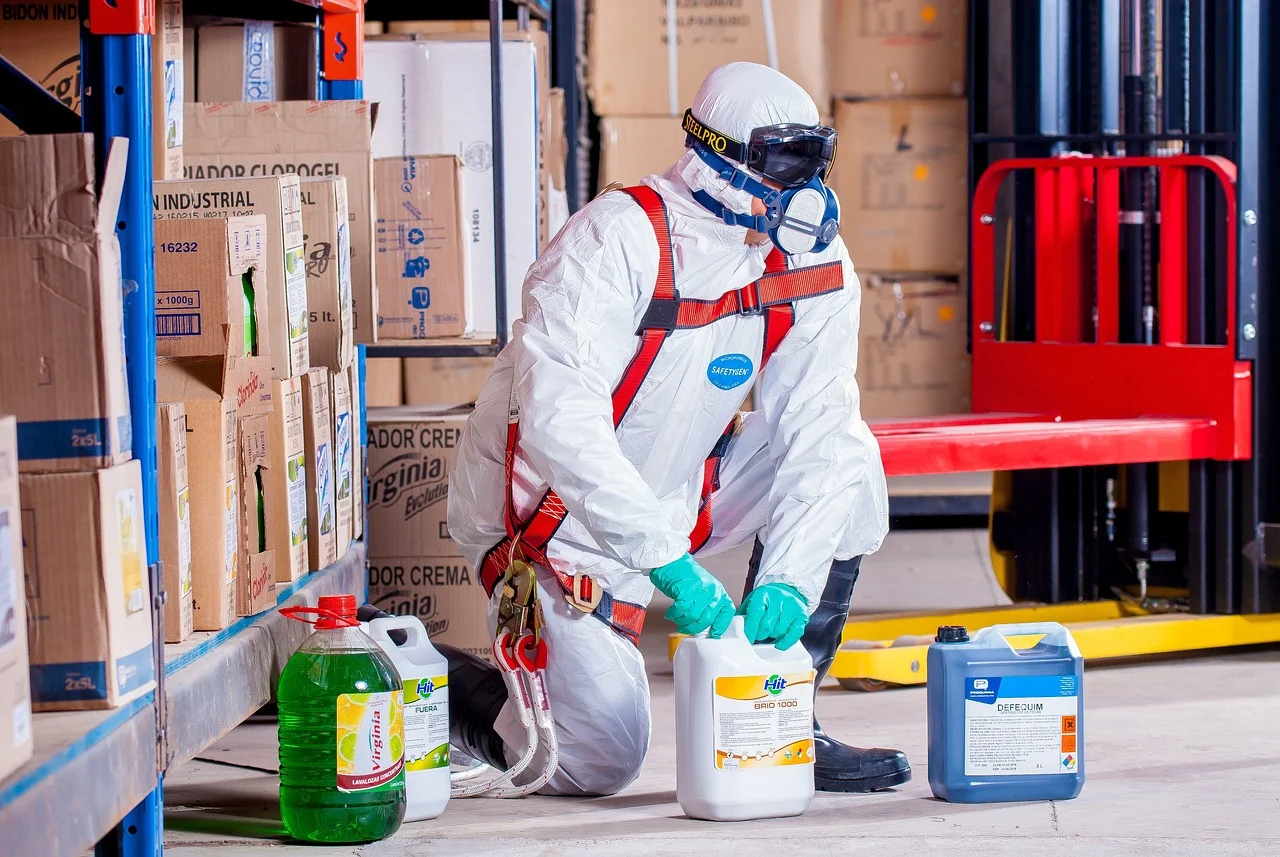
- Requirements for Factories and Warehouses: Must fully meet current national technical standards and regulations on chemical safety
- Requirements for Equipment and Production Facilities
- Equipment Selection: Must prioritize equipment that minimizes risks of incidents, pollution and ensures fire and explosion safety.
- Testing & Calibration: Machinery with strict labor safety requirements and measuring equipment must be tested, calibrated and maintained periodically as prescribed.
- Requirements for Packaging and Containers:
- Characteristics: Must be sealed, durable, leak-proof and able to withstand the physicochemical effects of chemicals as well as weather.
- Used Packaging Management: * Used packaging must be stored separately.
- Old packaging must be thoroughly inspected and cleaned before filling with new chemicals to avoid chemical reactions causing fires and explosions.
- Non-reusable packaging must be treated as waste according to environmental regulations.
- Labeling: Must have complete, clear, easy-to-read labels with high durability, not erased by chemical or transportation effects.
- Requirements for Safety Equipment and Protection
- Fire Prevention and Fighting System: Strictly comply with legal regulations on fire prevention and fighting.
- Incident Response Equipment: Must be equipped correctly and sufficiently according to the list committed in the Plan or Measures for incident prevention at the facility.
- Personal Protective Equipment (PPE): Ensure correct types, quality and quantity appropriate to the hazardous characteristics of the chemical being handled.
2. Professional Requirements for Enterprise Chemical Officers
(According to Article 33 of the Law on Chemicals, Article 27 of Decree 25/2026/NĐ-CP)
“2. Organizations and individuals trading in chemicals, storing chemicals, using chemicals, treating chemical waste, destroying chemicals, disposing of chemicals must have a person professionally responsible for chemical safety with intermediate level or higher training in chemistry fields in the List stipulated in Appendix III issued with this Decree“
3. Requirements for Establishing Safety Distances
(According to Article 35 of the Law on Chemicals 2025, Article 28 of Decree 25/2026/NĐ-CP)
Definition: The distance from chemical facilities to sensitive areas (residential areas, public works, monuments, domestic water sources…) to limit negative impacts
Construction Prohibition: Strictly prohibit factory construction within the stipulated safety distance (except specialized works as prescribed by the Government)
Remediation Roadmap: For chemical facilities already operating but not meeting safety distances before technical regulations take effect, Provincial People’s Committees will issue specific implementation roadmaps
4. Chemical Safety Training Requirements
(According to Article 36 of the Law on Chemicals 2025, Articles 29, 30, 31, 32 of Decree 25/2026/NĐ-CP)
Subjects and Training Cycles:
- Cycle: Once every 02 years.
- Subject Groups:
- Group 1: Leaders, responsible deputies, workshop foremen.
- Group 2: Safety officers, workplace safety supervisors, chemical warehouse keepers.
- Group 3: Workers directly involved with chemicals, facility medical staff.
- Retraining: When changing chemicals, technology, work position or after failing 02 inspections.
Key Training Content
- Group 1: Focus on legal regulations and plans for mobilizing resources to respond to incidents.
- Groups 2 & 3: Focus on safety techniques, chemical characteristics (MSDS), typical incident response procedures and practical use of protective equipment (PPE), incident response materials.
Requirements for Trainers
- If self-training: Trainers must have a Bachelor’s degree in chemistry or higher (in Appendix III) and practical experience in chemical safety.
- If hiring consulting organizations: Trainers must have Chemical Sector Consulting Certificates (Class B according to Circular 02).
Duration and Testing
- Duration:
- First time: Minimum 08 hours (including testing time).
- Subsequent times: Minimum 04 hours (50% of first time).
- Testing: Maximum test time 02 hours, passing grade average or higher.
Training Record Management
- Records include: Training content, attendance list, trainer qualification records, test results and Decision recognizing results.
- Storage period: Minimum 03 years for presentation upon inspection request.
E. TRANSITIONAL PROVISIONS
(According to Article 48 of the Law on Chemicals 2025, Article 30 of Decree 26/2026/NĐ-CP)
Validity of Previously Issued Permits/Certificates:
- Permit Group (Listed Chemicals, Precursors, Restricted): Continue to be used until the expiry date stated on the permit.
- Certificate of Eligibility for Production and Trading of Conditional Chemicals: Continue operations according to issued certificate until December 31, 2027.
Compliance Roadmap for Newly Added Chemical Lists:
For chemicals in the list in Decree 24/2026/NĐ-CP but not in the old list (ND 113, ND 82, ND 33):
- For export and import of specially controlled chemicals: Exempt from presenting Permits before December 31, 2026
- Regarding operating conditions for conditional chemicals: Enterprises must complete conditions to fully meet new Decree requirements before December 31
Mechanism for Using Alternative Documents for Customs Clearance:
- For Industrial Precursors: May use existing Certificate of Eligibility as substitute until December 31, 2027
- For Listed Chemicals/Restricted Chemicals: May use existing Production and Trading Permits as substitute until permit expiry.
Deadlines for Performing Declaration Obligations (Urgent Priority): Enterprises must complete the following obligations before March 1, 2026:
- Declare chemical type and specific purpose of use when importing specially controlled chemicals for use.
- Declare detailed information on hazardous chemical content existing in products and goods
Chemical Incident Prevention and Response Records: Prevention Plans already approved or Prevention Measures already issued before the effective date of the Law on Chemicals 2025 will continue to be implemented according to current content without immediate adjustment
Related Services: Customs Declaration Service
📞 Contact UNI Customs Consulting for free consultation:
📧 Email: uni@eximuni.com
📱 Hotline: (+84) 24-7308-7988 (Hanoi) | (+84) 28-7301-8910 (HCM)