

On May 15, 2025, KOCHAM HCMC hosted a seminar on Vietnam Customs and Rules of Origin, focusing on practical challenges and the benefits of the EPE model for FDI enterprises. Mr. Byun Sang Hyun, CEO of UNI Customs Consulting, shared key insights on regulatory changes and strategic solutions to help businesses navigate customs policies and consider transitioning to EPE .
Main Topics Covered at the Seminar:
- Domestic Export-Import and Transition to EPE
– Mr. Byun Sang Hyun, Expert – UNI Customs Consulting - Statistics on Origin Verification and Utilization of FTA Benefits
– Ms. Hyejun Hwang, KOCHAM HCMC Trade Center - Practical C/O Issuance and Legal Considerations
– Lawyer Nguyen Van Duc, Vietnam Chamber of Commerce and Industry (VCCI) - Introduction to the Domestic Export Support Project
– Mr. Jung Ji-young, Deputy Director – KOCHAM HCMC
1, A Volatile Policy Landscape – Enterprises Must Respond Proactively
Mr. Byun opened with a direct and honest statement:
“Domestic export-import has become a controversial and confusing concept for many FDI enterprises. Sudden regulatory changes and lack of clear guidance are forcing businesses into a passive position.”
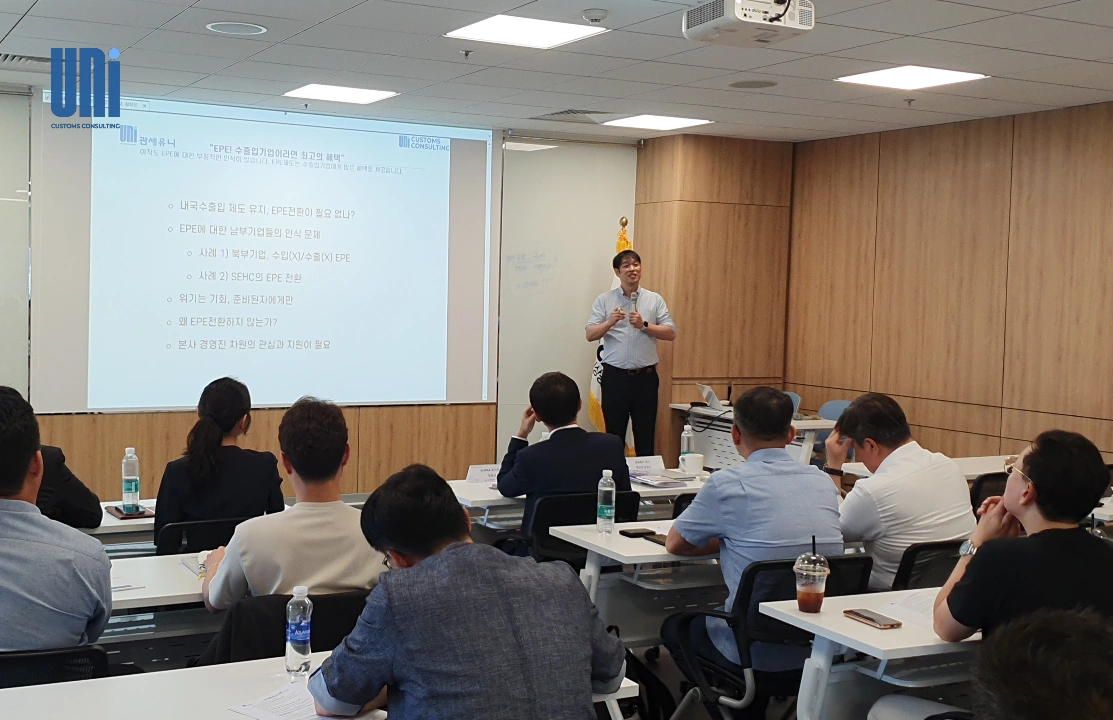
He explained that the Department of Vietnam Customs’ proposal to abolish Clause 1, Article 35 of Decree 08/2015/ND-CP—which underpins the legal basis for “on-the-spot export”—has caused serious disruption in business operations, especially for processing enterprises and domestic supply chains linked to foreign buyers.
2, Current Challenges Faced by Enterprises
Mr. Byun outlined several pressing issues:
- Loss of VAT refund for domestically sourced materials.
- Bonded warehouses no longer eligible for 0% VAT, resulting in added operational costs and paperwork.
- Inconsistent implementation across provinces: For example, E52 (processing) or E31 (export manufacturing) declarations may be accepted in one province but rejected in another.
- Overlapping and conflicting regulations among the Commercial Law, Customs Law, Foreign Trade Management Law, and Tax Laws.
He emphasized:
“It’s not only SMEs — even major corporations like Samsung and LG in HCMC are facing hundreds of billions of VND in suspended VAT refunds due to these sudden changes.”
3, Transitioning to EPE – Opportunity or Obstacle?
Given the uncertain policy environment, Mr. Byun recommended that businesses proactively consider transitioning to the EPE (Export Processing Enterprise) model, which is legally recognized and offers significant tax incentives.
He also addressed five common misconceptions about EPE:
- “EPEs must export 100%” – False. Domestic sales are allowed if proper tax procedures are followed.
- “EPEs are subject to constant inspections and are overly complex” – False. With good internal systems, risks can be managed effectively.
- “Transitioning to EPE is too expensive” – Only true if there’s no proper planning.
- “Becoming an EPE means losing domestic clients” – Not necessarily; transactions can continue with tax-applied delivery mechanisms.
- “EPEs are not eligible for tax refunds” – False. EPEs can still benefit from tax refunds if conditions are met.
4, Advice from the UNI Expert
Mr. Byun concluded his presentation with a strong message:
“Don’t wait for a crisis to act. Enterprises should prepare a contingency plan, reevaluate their domestic supply chains, and seriously consider restructuring under the EPE model. This is not the time to hesitate—it’s the time to adapt.”
He also advised businesses to:
- Engage proactively with local customs authorities to clarify the application of relevant regulations.
- Consult with legal and customs experts early to minimize risks and maximize benefits.
- Coordinate with organizations such as KOCHAM to collectively propose policy adjustments to higher-level authorities.

Conclusion: A Highly Valuable Seminar for Export-Import Enterprises
This seminar not only provided the latest updates on customs regulations and rules of origin, but also served as:
- An open platform for businesses to engage directly with leading experts.
- A reliable source of guidance for enterprises struggling with legal uncertainty.
- A bridge between businesses and authorities, facilitated by KOCHAM and other industry associations.
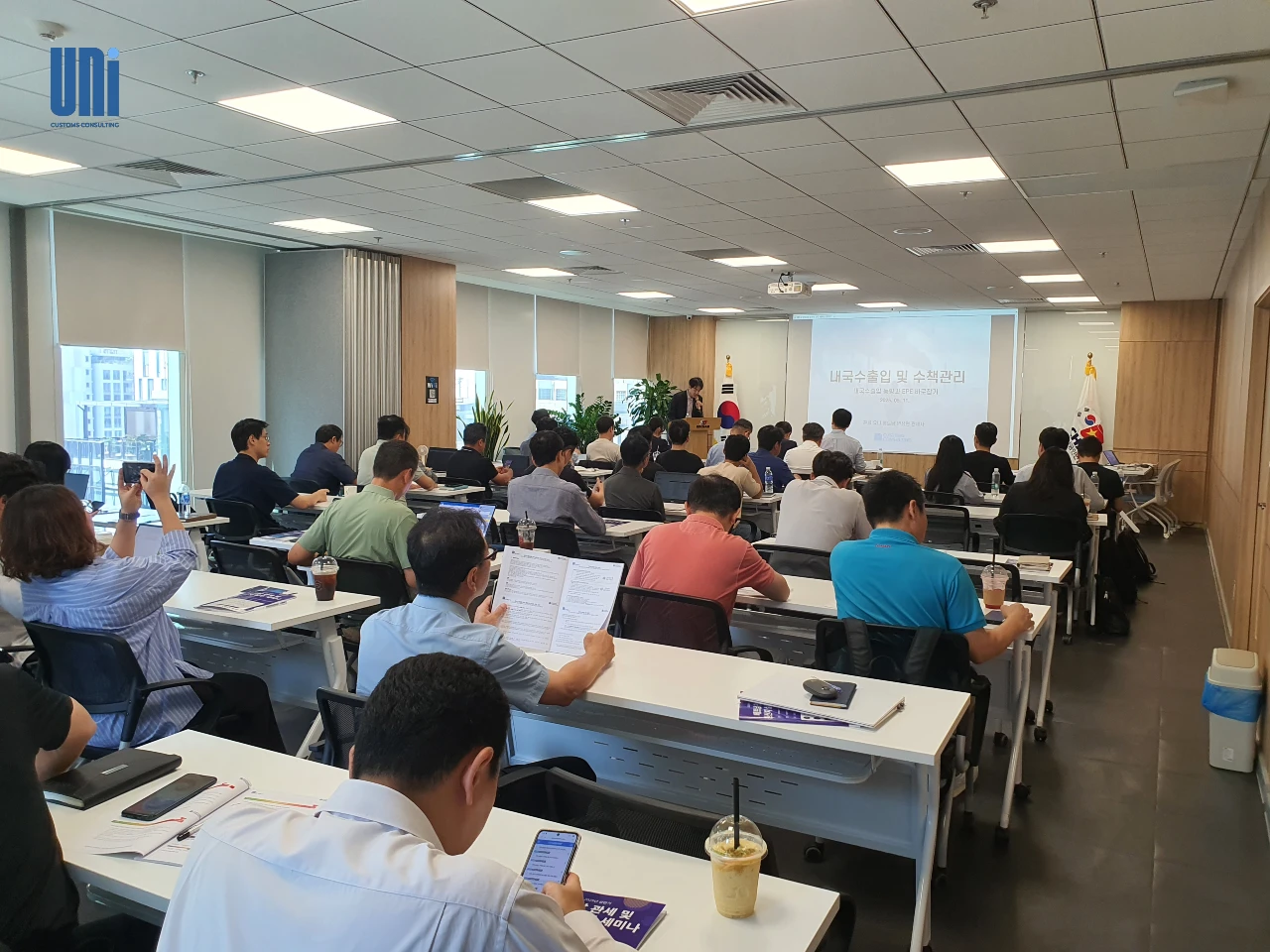
In today’s rapidly shifting policy environment, proactiveness and awareness are critical for the survival and success of FDI enterprises operating in Vietnam.
📞 Contact UNI Customs Consulting for free consultation:
📧 Email: [email protected]
📱 Hotline: +(84) 908-535-898 (Vietnamese) | +(84) 902-927-767 (Korean)