


In international trade, an anti-dumping investigation is a crucial process aimed at protecting domestic industries from foreign dumping practices. In the U.S., this process is strictly regulated with many specific stages and detailed deadlines to ensure fairness in trade.

1. Stage 1: Filing the Petition
a. Process
- An anti-dumping investigation can be initiated based on a petition filed by a U.S. producer, a labor union, a business association in the U.S., or by the decision of the U.S. Department of Commerce (DOC) itself.
- The petition is filed concurrently with both the DOC and the ITC (U.S. International Trade Commission).
b. Recommendations for Businesses
- Monitor warning signs from U.S. industries to proactively anticipate the risk of an anti-dumping lawsuit. For example: from statements, speeches, or public documents of U.S. industries.
- Timely adjust business strategies to minimize risks or seek to persuade the petitioner not to include Vietnam in the list of countries under investigation in the case.
2. Stage 2: Initiation of Investigation
1. Process
- Within 20 days (which can be extended), the DOC reviews the sufficiency of the petition or the standing of the petitioner to decide whether to accept the petition and initiate an anti-dumping investigation.
- The DOC issues a notice of initiation of investigation when the petition meets the conditions.
2. Recommendations for Businesses
- Mandatory Respondent Registration:
-
- The DOC typically selects 2-3 exporting companies with the largest export turnover as mandatory respondents.
- Businesses must fully answer the main questionnaires (Parts A, C, D) and supplementary questions from the DOC.
- Cooperate during the DOC’s on-site verification process, provide original documents, and coordinate well with investigating officers.
- Send representatives to attend hearings and thoroughly prepare counter-arguments.
- Submit written arguments, supplementary information, and responses by the due dates as required.
Note: Businesses must pay attention to the deadline for responding to questionnaires (usually within 21–30 days from the DOC’s notice). If unable to complete on time, a written request for extension must be submitted before the deadline, stating a valid reason.
- Voluntary Respondent Registration:
-
- Submit a request for a separate duty rate to the DOC.
- Prove that the business is not controlled by the government of the exporting country, both de jure (legally) and de facto (in practice).
3. Stage 3: Preliminary Injury Investigation (Conducted by ITC)
a. Process
- Within 45 days from the date the petition is filed (no extension), the ITC makes a preliminary determination on whether the U.S. domestic industry is being harmed by the subject imported goods.
- If the ITC determines there is injury or a threat of injury, the investigation continues.
- If the ITC determines there is no injury, the case will be terminated immediately by both the ITC and the DOC.
- The ITC publishes the investigation schedule, holds hearings, and sends out questionnaires.
b. Recommendations for Businesses
- Encourage U.S. importing partners to answer questionnaires: Vietnamese businesses cannot interfere with the petitioner’s side, but they should proactively persuade their importers to answer fully and on time to support a more favorable investigation outcome.
- Answer respondent questionnaires: If the ITC finds that the U.S. is a large or sole market for the business, the risk of an affirmative threat determination will be high. Therefore, businesses should provide evidence showing diversified export activities to many markets other than the U.S.
- Hire lawyers/consultants and invite witnesses to meetings with investigating officers: Meetings with ITC officers are mandatory and often disadvantageous for foreign businesses. Hiring lawyers/consultants early and thoroughly preparing arguments and witnesses can make a significant difference.
- Submit post-conference submission: Businesses should submit additional arguments within 1 week after the meeting to reinforce the points and evidence presented.
- Informal consultation with investigating officers: After submitting formal arguments, businesses should proactively consult further with investigating officers, clarifying any remaining ambiguities. This is because the ITC may decide to continue the investigation if it finds points that are still unclear.

4. Stage 4: DOC Preliminary Dumping Investigation
a. Process
Within 160-210 days from the date the petition is filed, the DOC investigates to determine whether the goods are being dumped. The DOC sends detailed questionnaires to relevant foreign producers and exporters. The DOC has the right to conduct on-site verifications at the businesses’ factories. There are two investigation conclusions:
- Affirmative dumping conclusion: Provisional measures are applied.
- Negative dumping conclusion: The investigation continues, but no provisional measures are applied.
b. Recommendations for Businesses
- Answer DOC questionnaires: Be truthful, accurate, and provide full evidence, primarily in the form of documents and accounting records. Additionally, businesses should consider using consulting services or hiring lawyers due to the complexity of the response and evidence preparation process.
- Request an extension if unable to respond on time: The deadline for responding to questionnaires is 21-30 days. Businesses must submit an extension request before the deadline if they foresee being unable to answer the questions on time.
- Request adjustment of the DOC’s preliminary determination: Although the likelihood of changing the DOC’s preliminary determination is not high, businesses should still submit comments for the DOC to reconsider before issuing the final determination.
5. Stage 5: DOC Final Dumping Investigation
a. Process
Within 235 – 345 days from the date of the petition, the DOC will continue the investigation with the following steps:
- Send requests for additional information: The DOC may ask relevant parties to provide more information to accurately determine the dumping margin.
- Conduct on-site verification (if necessary): The DOC may conduct physical inspections at the production facilities or warehouses of relevant businesses to verify reported information and data.
- Prepare an analysis report: After collecting sufficient data, the DOC will prepare an analysis report on the investigation results, including assessments of the dumping margin, injury to the domestic industry, and the impact of the imported products under investigation.
- If the DOC or ITC concludes disagreeing with the petitioner: the investigation is terminated.
- If both the DOC and ITC make an affirmative conclusion: the DOC issues an official decision to apply anti-dumping measures (imposing provisional anti-dumping duties).
b. Recommendations for Businesses
- Prepare for the on-site verification process:
-
- Prepare complete records, ledgers, and relevant documents.
- Provide personnel to support investigation activities.
- Cooperate with consulting lawyers.
- Ensure consistency in accounting records and financial statements.
- Do not commit fraud or manipulate data.
- Submit submissions, rebuttal briefs, and participate in hearings:
- After the DOC publishes the on-site verification report, interested parties must submit argumentative briefs to the DOC, including: key issues in the investigation, issues raised in the on-site verification report, and issues arising during the verification process.
- The deadline for submitting briefs is published in the Federal Register along with the DOC’s preliminary determination, and one week later, parties submit rebuttal briefs.
- If requested by any interested party, the DOC will hold a public hearing one week after the rebuttal briefs are submitted.
6. Stage 6: ITC Final Injury Investigation
a. Process
The ITC conducts the final injury investigation for approximately 280 to 420 days, including:
- The ITC drafts investigation questionnaires to collect injury information from interested parties.
- Sends final investigation questionnaires to interested parties.
- After collecting information, the ITC continues evaluation activities as follows:
- Pre-hearing staff report.
- Sends interested parties the businesses’ arguments before the hearing.
- The ITC holds a public hearing for parties to present arguments and rebuttals.
- Interested parties may submit additional arguments after the hearing.
- The ITC publishes a final report based on the information and arguments collected.
- Interested parties may comment on or object to the data used in the report.
- Finally, the ITC Commissioners will vote to determine whether significant injury is caused by the imports of the subject merchandise.
- If the DOC or ITC concludes disagreeing with the petitioner: the investigation is terminated.
- If both the DOC and ITC make an affirmative conclusion: the DOC issues an official decision to apply anti-dumping measures (imposing provisional anti-dumping duties).
b. Recommendations for Businesses
- Answer ITC investigation questionnaires: U.S. businesses involved in the investigation need to proactively and truthfully provide full information in the ITC’s questionnaire for the ITC to assess the impact of imports on the domestic industry. Failure to cooperate or providing false information can lead to unfavorable results.
- Submit written arguments before and after the hearing: Businesses can submit legal or economic arguments, along with specific data, to demonstrate that imports do not cause injury to the domestic industry (e.g., stable prices, no sudden increase in import volume, the domestic industry still growing). These arguments must be submitted on time before and after the hearing.
- Participate in the ITC hearing: Businesses should participate in the ITC hearing (in person or through a representative) to present their views, question the opposing party, and influence the ITC’s decision. Cooperation and well-founded arguments at the hearing can help demonstrate that imports do not cause injury.
- Analyze and rebut ITC data: Businesses have the right to submit rebuttal comments on the ITC’s report if they find data errors or unreasonable interpretations. This helps to adjust information before the ITC makes a final decision and can influence the Commissioners’ views.
7. Stage 7: Decision to Apply Anti-Dumping Measures
a. Process
- The DOC issues the anti-dumping duty order and publishes it in the Federal Register.
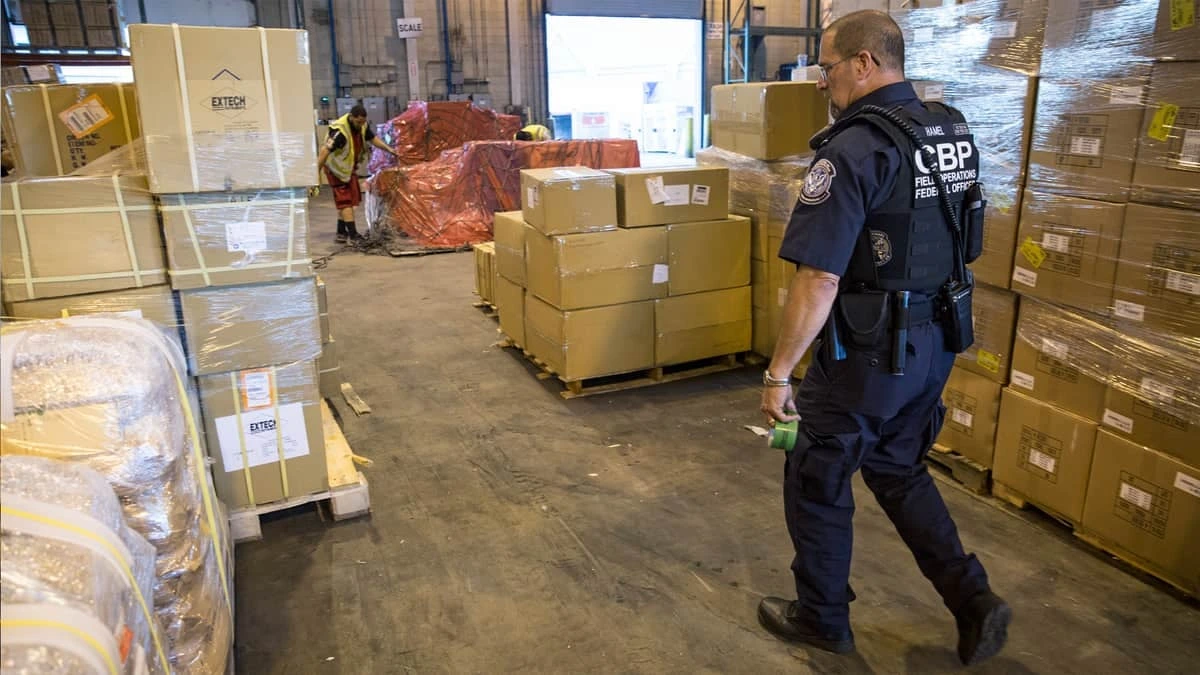
- U.S. Customs and Border Protection continues to officially suspend liquidation for previously imported shipments and maintains the requirement to collect cash deposits for all these shipments.
- Other shipments imported from the date of the order must place cash deposits (instead of bonds). The official duty assessment (allowing formal liquidation) for these shipments will be determined in future annual administrative reviews.
b. What Businesses Need to Do
- Once the duty order is issued, businesses cannot change the situation until the DOC conducts an administrative review one year later.
8. Stage 8: Post-Decision Reviews
a. Process
- Annual Administrative Review: Conducted by the U.S. Department of Commerce (DOC) when requested by one or more interested parties. The purpose is to redetermine the anti-dumping duty rate based on actual performance during the review period.
- Changed Circumstances Review (CCR): Conducted by the DOC and the U.S. International Trade Commission (ITC). Used when there is a significant change in actual circumstances to adjust or revoke the measure being applied.
- Sunset Review: Conducted by both the DOC and ITC after 5 years from the date the measure was applied.
- If one of the two agencies concludes that the measure is no longer necessary, the measure will be revoked.
- If both conclude that the measure is still necessary, the measure will continue in effect.
b. Recommendations for Businesses
- Request for Administrative Review:
-
- Submit the request as a formal PDF document via the DOC’s ACCESS system. The content of the document should include: the name of the requesting business, the review period (usually the previous year), the names of the companies for which a review is requested, and the reason and scope of the requested review.
- This request must be submitted by the deadline. Each year, in the month following the anniversary of the duty order (anniversary month), the DOC will publish an “Opportunity to Request Review.”
- Request for Changed Circumstances Review:
-
- Proactively review significant changes: changes in legal name, relocation of production facilities, changes in ownership structure, or cessation of exports to the U.S. market. These factors can be a basis for requesting the DOC to conduct a Changed Circumstances Review.
- Businesses can flexibly prepare documents and submit requests at any time while the anti-dumping measure is in effect.
📞 Contact UNI Customs Consulting for free consultation:
📧 Email: uni@eximuni.com
📱 Hotline: +(84) 908-535-898 (Vietnamese) | +(84) 902-927-767 (Korean)