

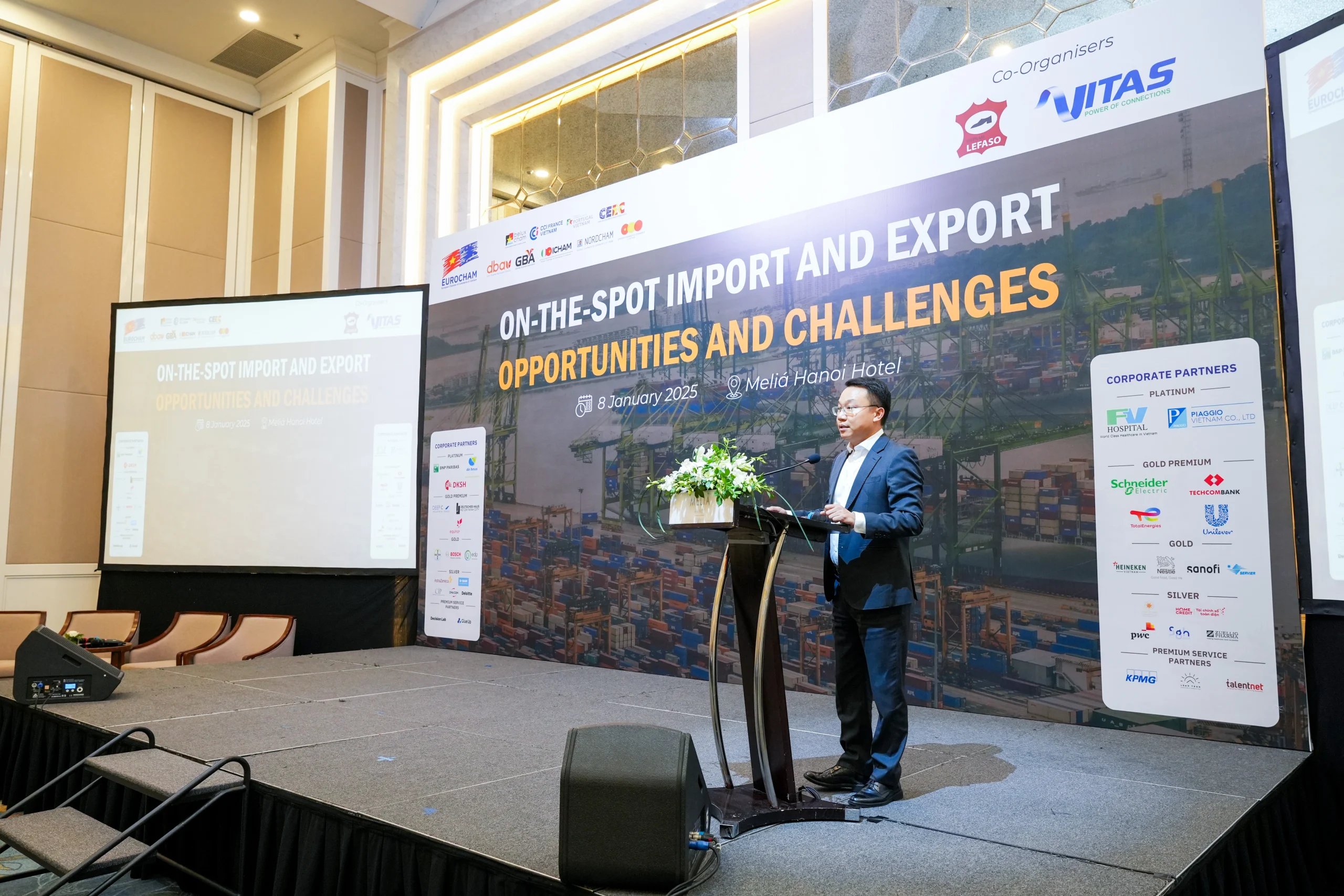
On January 8, 2025, the EUROCHAM Vietnam Seminar on on-the-spot import and export officially commenced, welcoming the participation of numerous Vietnamese business associations and representatives from various departments and ministries. UNI Customs Consulting Co., Ltd. was honored to be the representative of KOCHAM (Korea Chamber of Commerce in Vietnam) to attend this seminar and discuss practical issues related to on-the-spot import and export.
In the current context of strong economic integration and digital transformation, on-the-spot import and export has emerged as a prominent trend in the import-export market. This seminar, titled “ON-THE-SPOT IMPORT AND EXPORT: OPPORTUNITIES AND CHALLENGES,” was organized to share the potential and challenges associated with on-the-spot import-export based on practical experiences and useful information, thereby helping businesses seize opportunities, adapt to changes, and overcome challenges in the future.
1. Attendance list
Organized by a consortium of business associations including: EUROCHAM, Vietnam Leather and Footwear Association (LEFASO), and Vietnam Textile and Garment Association (VITAS), the seminar was attended by over 100 guests. Participants included: KOCHAM, JCCI, and several large foreign enterprises operating in Vietnam, notably Nike. Representatives from the General Department of Customs, the Department of Import-Export under the Ministry of Industry and Trade, and a former Deputy Minister of Industry and Trade were also present.
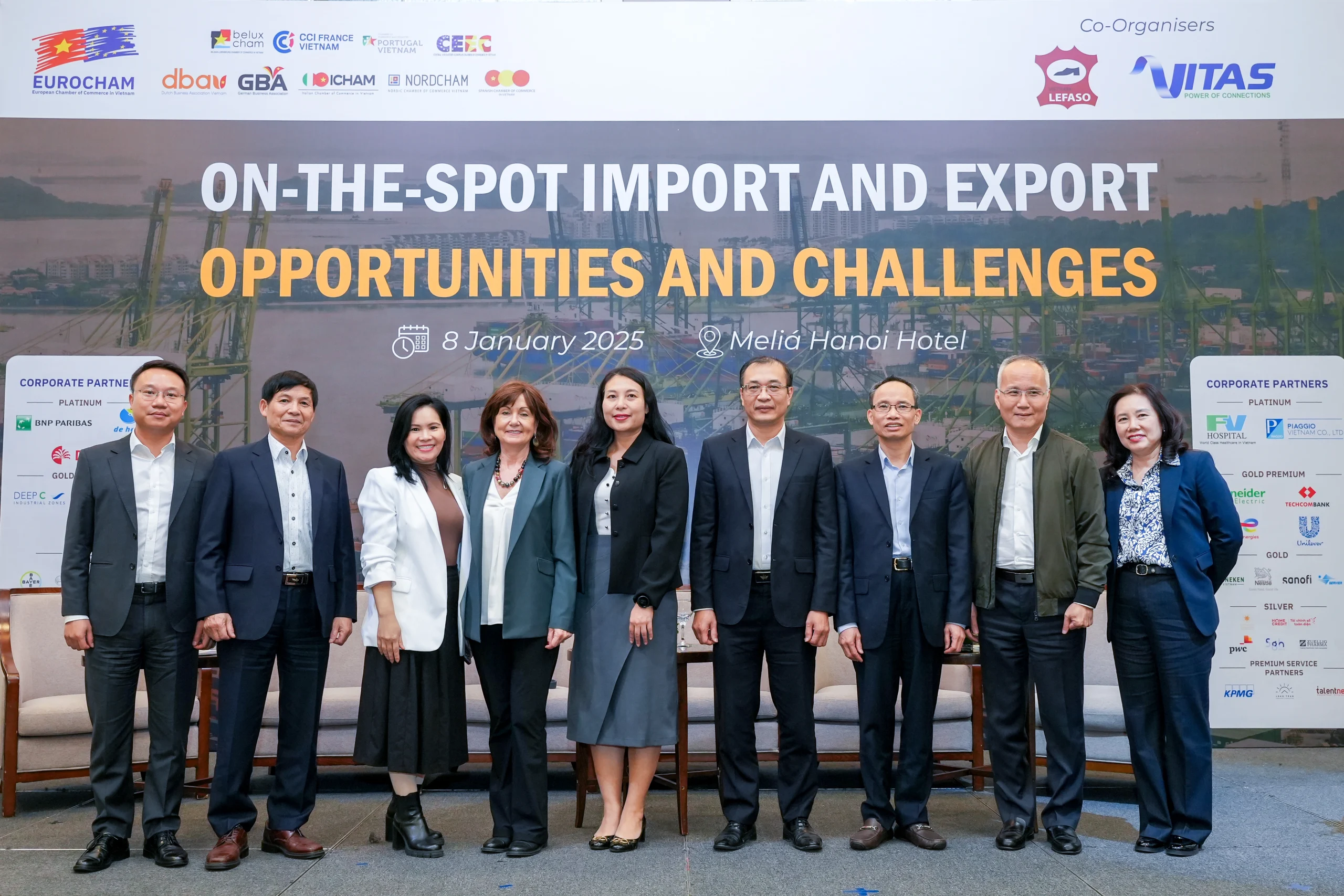 Notable guests in the conference On-the-spot import export: Opportunities and Challenges
2. On-the-spot import and export: Advantages and Disadvantages
At the beginning of the seminar, EUROCHAM introduced the main topic of discussion: Should the on-the-spot import and export policy be maintained in Vietnam?
Having been implemented for over 25 years, on-the-spot import and export has significantly contributed to the development of domestic supply chains, increased localization rates, reduced logistics costs and waiting times, and provided a competitive advantage for Vietnamese goods. The abolition of this policy would increase VAT costs and eliminate tax refund and exemption policies for both domestic Vietnamese businesses and foreign traders. For instance, domestic Vietnamese businesses acting as the delivering party would no longer be eligible for a 0% VAT rate on sales revenue but would instead be subject to an 8% or 10% VAT rate.
Although temporary solutions such as conducting on-the-spot import and export through bonded warehouses and domestic transactions have been implemented, numerous issues persist, including unnecessary logistics costs, a lack of mechanisms for managing invoices, documents, and VAT declarations, etc. Therefore, EUROCHAM proposed to maintain the current regulations on on-the-spot import and export policy and expand the scope of entities eligible for the policy. In the long term, the chambers also stated that on-the-spot import and export mechanisms should only be replaced when a new mechanism is available.
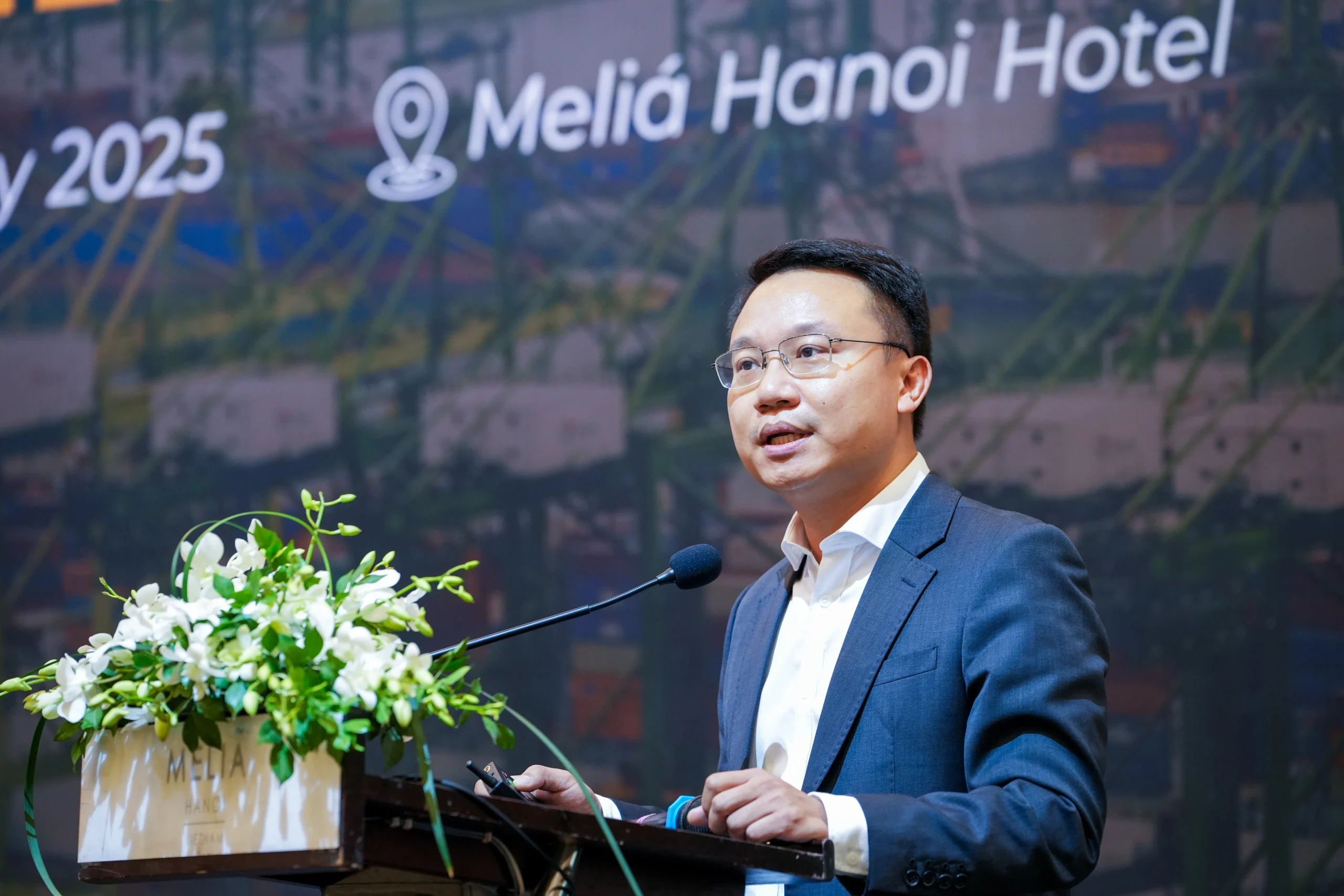
3. The Opinion of the General Department of Customs (GDC) on the abolition of on-the-spot import and export
The representative from the General Department of Customs (GDC) asserted that it would be difficult to abolish Article 35.1.c, which pertains to On-the-spot import and export in cases where the foreign trader does not have a presence in Vietnam. On-the-spot import and export is causing the state to lose significant tax revenue, with an estimated recovery of 90 trillion VND if the policy is eliminated, which is nine times the estimated tax revenue if on-the-spot import and export is maintained.
Therefore, the representative of the GDC proposed the following solution:
- Abolish Article 35.1.c, allow enterprises to continue conducting in-country import-export for one year.
- Remove the condition requiring that the “foreign trader does not have a presence in Vietnam.”
The representative from the Ministry of Industry and Trade (MOIT) also supported the proposed amendment to eliminate the distinction between foreign traders with and without a presence in Vietnam.
4. The abolition of on-the-spot import and export may result in tax revenue loss for Vietnam
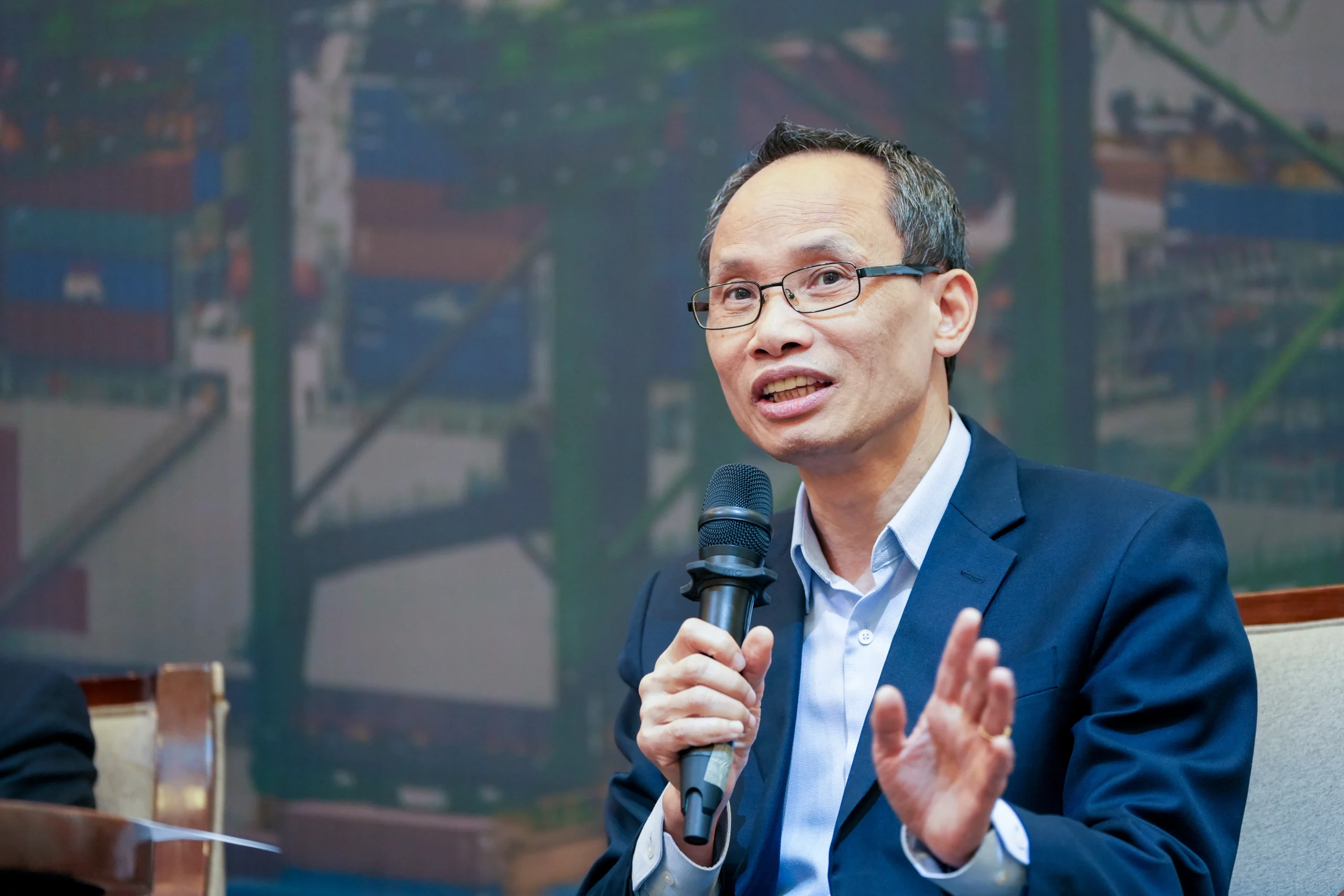
However, economist Can Van Luc argued that abolishing on-the-spot import and export would encourage businesses to evade taxes by taking advantage of tax exemptions and reductions on imported goods from China. Mr. Luc proposed two measures for two types of transactions:
- Transactions not linked to the supply chain should be considered domestic transactions.
- Transactions linked to the supply chain, involving import-export activities, should continue to be subject to the provisions of Article 35.1.c on on-the-spot import and export.
In response to Mr. Can Van Luc’s comments, the customs authorities reiterated that it would be difficult to continue maintaining on-the-spot import and export regulations and that they would take his suggestions into consideration when developing alternative policies.
5. Business Associations in Vietnam advocate for maintaining on-the-spot import and export
On behalf of businesses, Mr. Hong Sun, Chairman of KOCHAM, affirmed that on-the-spot import and export policy is a crucial incentive, contributing to attracting investment from Korean businesses to expand their operations in Vietnam. Mr. Hong suggested that customs authorities should promptly issue official regulations on on-the-spot import and export to reduce difficulties and losses for businesses.
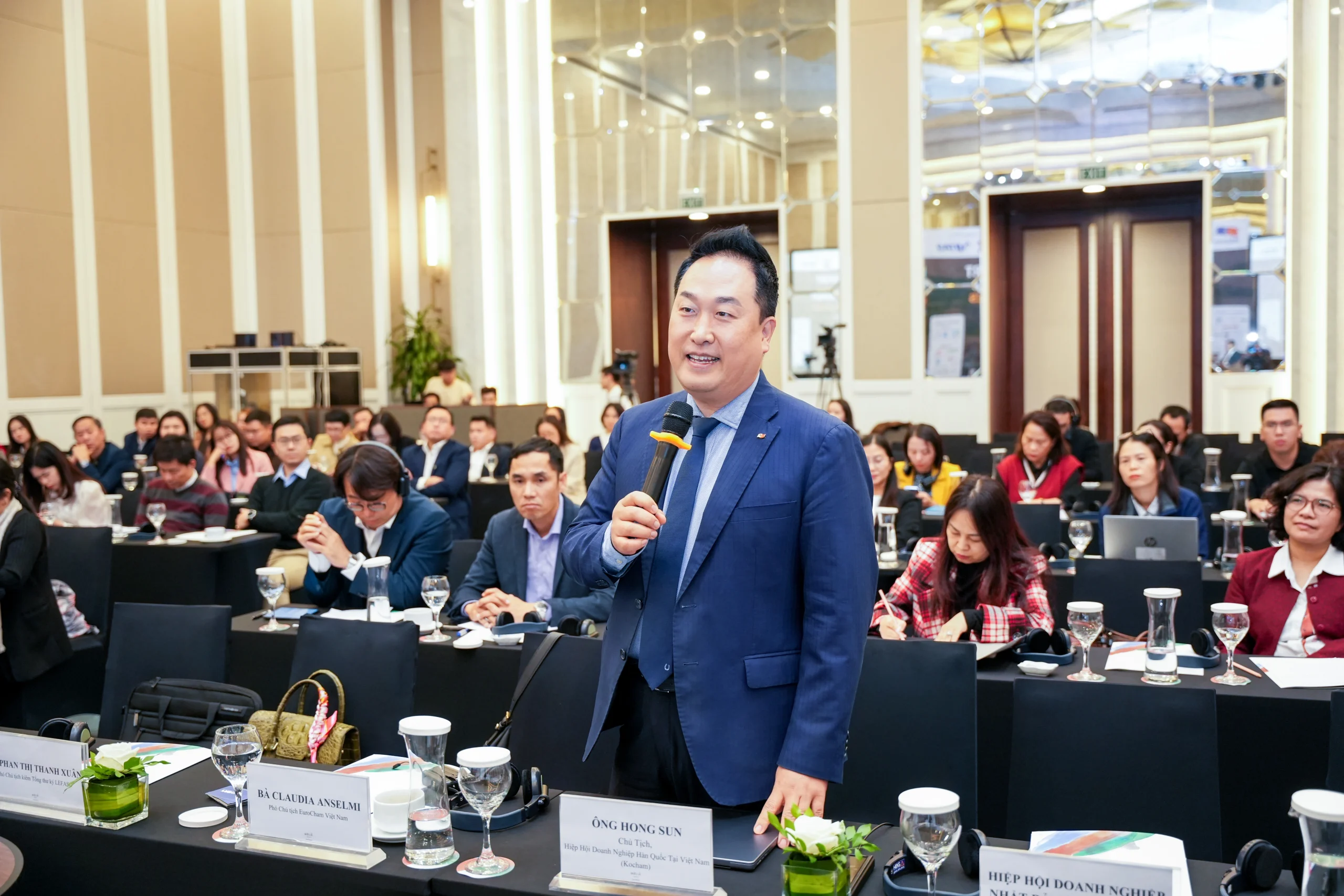
In addition to the representative from KOCHAM, representatives from Nike, Vietnam Leather and Footwear Association (LEFASO), and Vietnam Textile and Garment Association (VITAS) also emphasized the desire to maintain on-the-spot import and export policy. Representatives from these businesses and associations agreed that the requirement for “foreign traders to have no presence in Vietnam” is unnecessary, as most foreign traders have already established a presence in Vietnam and the volume of goods passing through Vietnam is increasing.
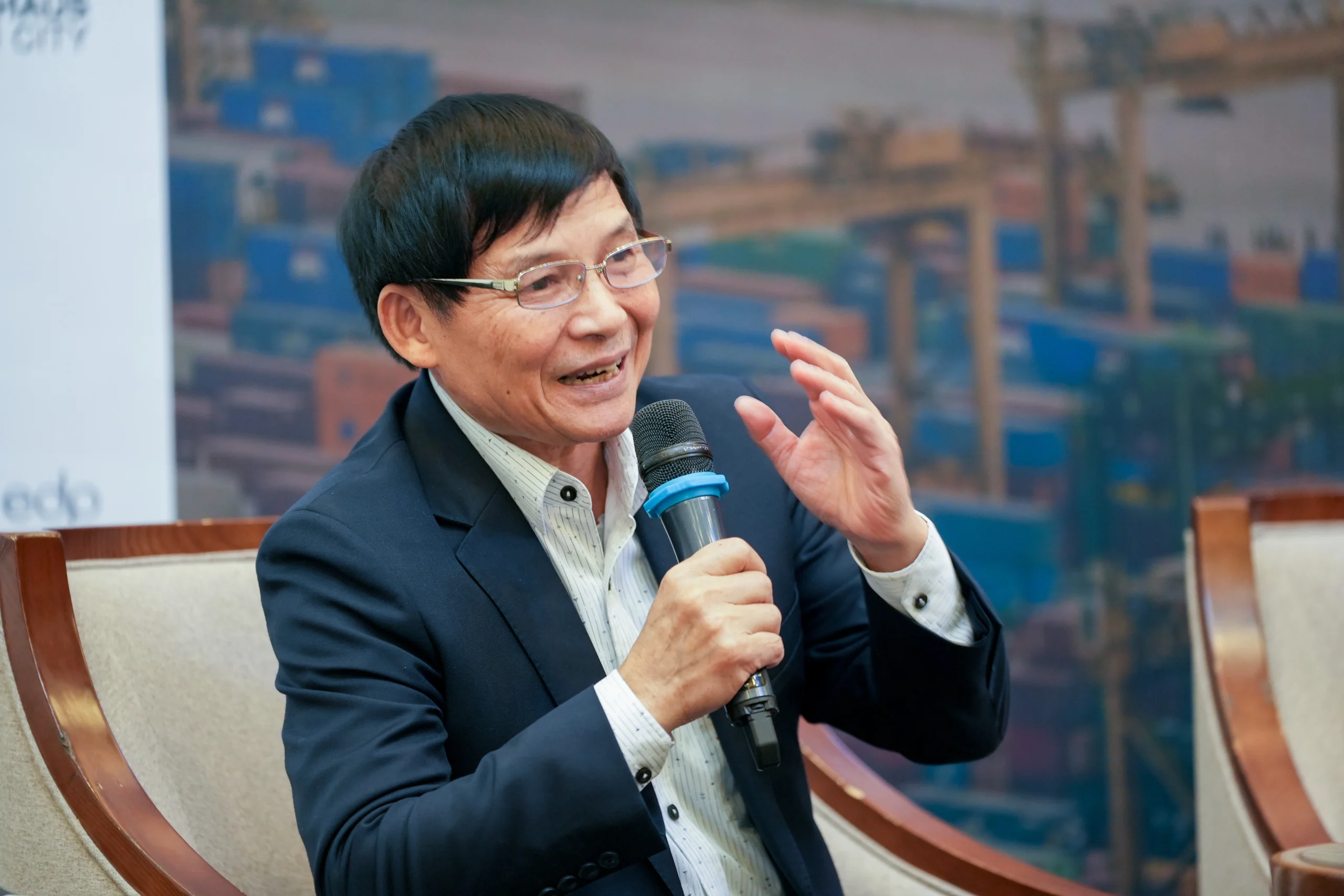
All representatives agreed that on-the-spot import and export is a good policy but is not yet perfect. Therefore, instead of abolishing it, customs authorities should focus on improving and perfecting this policy to better align with the current situation and international commitments. Customs should only abolish the policy when a more effective alternative is in place.
6. Opinion of the Former Deputy Minister of Industry and Trade on the abolition of on-the-spot import and export
After listening to the opinions of all parties, the former Deputy Minister of Industry and Trade Tran Quoc Khanh, attending the amendment of the regulations on on-the-spot import and export, delivered a speech expressing his support for maintaining on-the-spot import and export policy. He argued that this policy has brought many benefits to Vietnam and its’ risks are relatively low, typically occurring only when the final product is not exported. Furthermore, abolishing this policy could lead to a loss of state revenue as businesses switch to purchasing raw materials from China, as economist Can Van Luc had previously suggested.
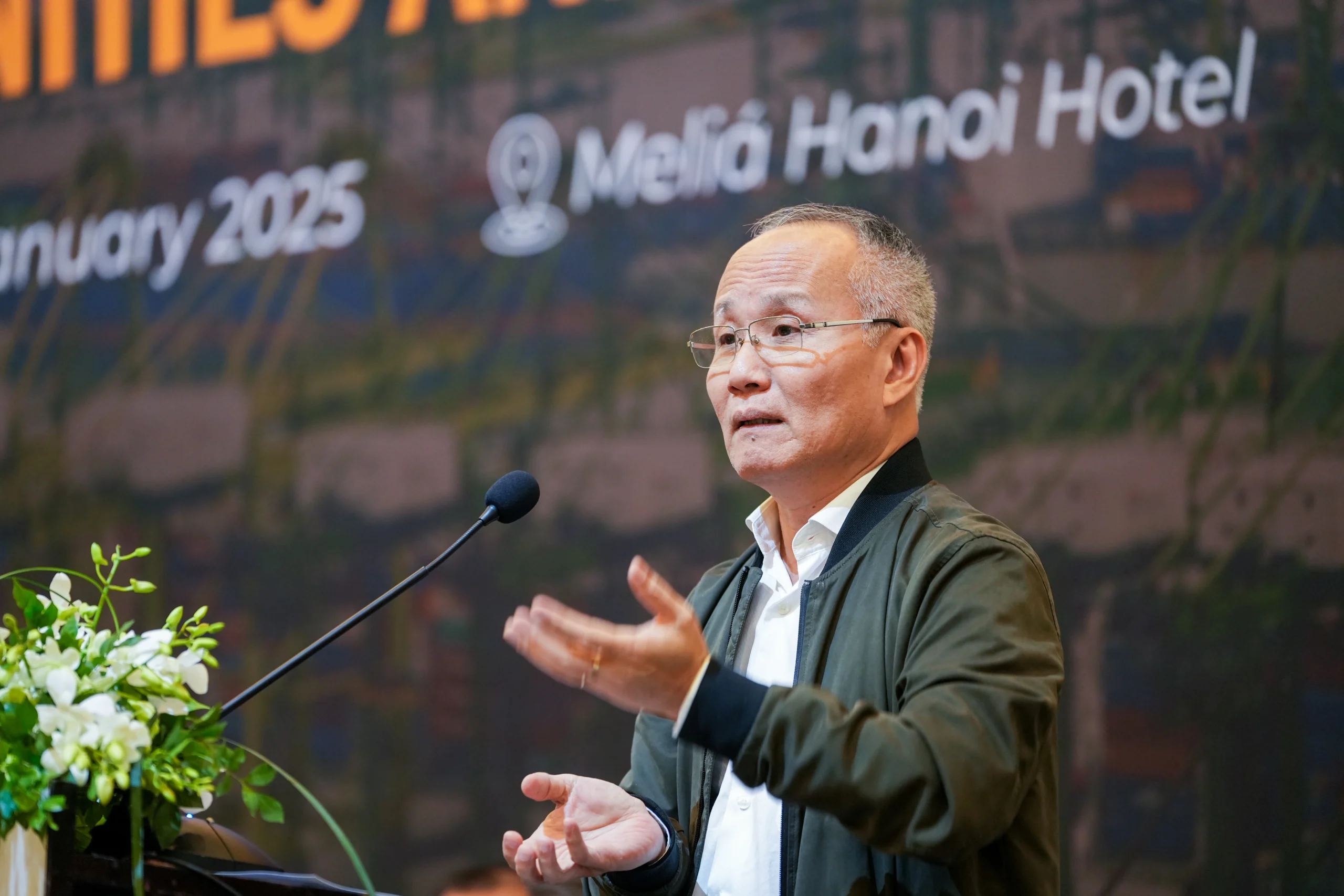
The seminar “ON-THE-SPOT IMPORT AND EXPORT: OPPORTUNITIES AND CHALLENGES” concluded with numerous practical opinions and solutions, helping to address difficulties faced by associations and businesses in Vietnam.
Representing KOCHAM at the seminar, UNI had the opportunity to listen to insights from representatives of associations, experts, and businesses, gaining the latest updates on on-the-spot import and export. This provided valuable tools and strategies to tackle upcoming challenges.
This event strongly reaffirms the enduring connection between UNI and Vietnamese businesses, as well as the close partnership between Korean enterprises and Vietnam’s economic development.
Relevant articles:
Refund Of Taxes For On-spot Import Declaration
On-spot import and export: identification of foreign traders without presence in Vietnam
The latest information about customs situation will be continuously updated in the customs newsletter of UNI CUSTOMS CONSULTING. We invite businesses to stay informed!
For expert advice on customs issues, please contact this hotline +(84) 908-535-898 (Vietnamese), +(84) 902-927-767 (Korean) or send an email to the address: [email protected].