


What is OPS? In the logistics, import-export, and supply chain management industry, OPS (short for Operations) is a term referring to the operations department – the unit responsible for coordinating, controlling, and executing all business operational processes. From orders and warehousing to documentation and delivery, everything falls under OPS monitoring to ensure progress, minimize risks, and enhance efficiency. Although it doesn’t directly generate revenue, this department is the “backbone” that helps the system operate smoothly, stably, and professionally.
1. What is OPS?
a. Concept of OPS (Operations / Operations Department)
OPS is an abbreviation for “Operations,” meaning “Operation” or “Activity.” In the import-export and logistics field, OPS refers to all activities related to coordinating, implementing, and controlling freight transportation processes, from receiving orders to successful cargo delivery.
b. Industries with OPS
The OPS department exists in most industries, but with different names and duties depending on the characteristics of each sector.
Some typical industries:
Logistics/Import-Export: Coordinating transportation, processing documents, working with shipping lines, customs.
Technology/SaaS: Managing service processes, supporting product deployment, monitoring operational metrics.
Commerce/Retail: Tracking orders, inventory, coordinating sales – accounting – warehouse.
Manufacturing: Supervising progress, coordinating raw materials, ensuring quality and productivity.
Startup/Small Business: OPS often handles multiple areas: processes, human resources, finance, customer service.
Regardless of the industry, OPS plays a connecting role between departments, helping all activities run smoothly and achieve objectives.
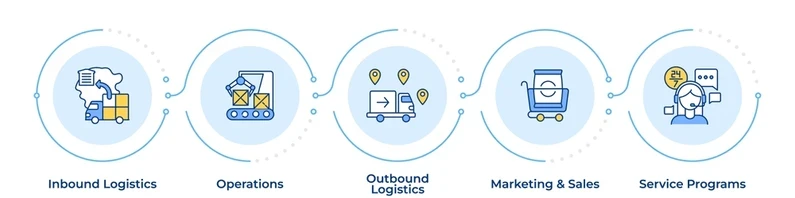
2. What Role Does OPS Play in Business?
Whether called Operations, Back-office, or Business Operations, the OPS department always takes on the function of maintaining smoothness, efficiency, and discipline in internal operations. However, depending on the position within the company, the specific duties and roles of OPS will differ:
| Industry | Role |
|---|---|
| Manufacturing | • Manage production processes from raw materials to finished products
• Reduce waste, increase productivity and ensure quality |
| Retail & E-commerce | • Process orders, warehousing, cargo delivery
• Monitor inventory, optimize supply chain |
| Customer Service | • Operate customer service systems
• Ensure quick response and maintain satisfaction levels |
| Logistics/Supply Chain | • Coordinate transportation, storage, packaging activities
• Manage suppliers and optimize delivery time |
| Finance – Banking | • Ensure transaction processes and payment processing operate smoothly
• Minimize risks and comply with legal regulations |
| Information Technology (IT) | • Operate internal systems, ensure network systems and software run stably
• Technical support and data security |
| Marketing – Advertising | • Monitor marketing campaigns, schedule posts, supervise budgets
• Ensure activities are implemented on schedule and meet objectives |
3. Main Duties of OPS in Logistics
Ensuring Performance and KPIs
The performance of the OPS department is measured by the effectiveness level in operating the supply chain – from order processing, warehouse management to transportation. To evaluate the effectiveness of this important task, businesses often use key KPIs including:
- Delivery time: measures time from order confirmation to goods reaching customer. Faster means higher performance.
- On-time delivery rate: reflects ability to meet customer commitments. Target is usually ≥ 95%.
- Operating costs: total cost per order, including transportation, storage, processing… needs continuous optimization.
- Warehouse productivity: measures number of orders or quantity of goods processed per shift/day/person. High efficiency helps save manpower and space.
- Order accuracy rate: measures level of delivering correct products, correct quantities, KPI is usually ≥ 98%
Tracking Orders and Delivery Progress
One of the main duties of OPS is monitoring the entire order processing and transportation process. OPS staff must regularly update order status in the system, ensuring every step – from confirmation to delivery to customers – proceeds on schedule. When incidents occur such as late delivery, short delivery, or wrong goods, OPS directly handles and coordinates with related parties for timely resolution.
Coordinating Warehousing, Transportation, and Delivery
OPS is responsible for planning warehouse inbound-outbound operations and arranging goods reasonably. The presence of OPS helps storage and transportation processes proceed safely, economically, and efficiently. Allocating transportation vehicles, coordinating delivery personnel, and supervising implementation according to regulations also fall within this department’s scope of work. A well-organized warehouse and transportation system is the foundation for businesses to meet customer needs well.
Processing Documents and Import-Export Records
For businesses with import-export activities, OPS serves as the focal point responsible for preparing and checking important documents such as invoices, packing lists, certificates of origin (C/O), delivery orders (D/O)… Ensuring accurate and complete documents helps the customs clearance process proceed quickly and avoids legal risks. At the same time, OPS is also responsible for storing records for cross-checking when needed.
Performance Reporting and Process Improvement Proposals
OPS regularly compiles and reports operational data such as number of orders, on-time delivery rate, error rate, transportation costs… to help Management monitor operational effectiveness. Based on actual data, the OPS department also makes process improvement proposals such as changing logistics service providers, applying warehouse management software, or adjusting coordination between departments…

4. Technology Supporting Logistics Operations (ERP, Automation, Operations Management Software)
In modern logistics, technology plays a central role in helping the OPS department operate faster, more accurately, and more efficiently. Some notable technologies include:
ERP System (Enterprise Resource Planning)
ERP is a comprehensive management system that helps connect departments such as warehouse, accounting, purchasing, sales, and transportation. Thanks to ERP, OPS can track orders, inventory, costs, and operational progress on a centralized platform, reducing errors and enhancing transparency.

Automation
Automation in logistics includes: automatic goods sorting systems, loading robots, barcode scanning equipment, and cargo tracking sensors. This allows businesses to reduce labor, increase processing speed, and limit manual errors.
Operations Management Software (WMS, TMS, OMS…)
- WMS (Warehouse Management System): helps control warehouse activities (location, inbound-outbound, inventory).
- TMS (Transportation Management System): manages vehicles, routes, costs, and transportation time.
- OMS (Order Management System): tracks order status, integrates with related departments.
Applying technology to logistics helps the OPS department optimize processes, shorten time, increase accuracy, and enhance overall supply chain efficiency.
Conclusion
OPS is the operations department that plays a key role in the logistics and import-export chain. Although it doesn’t directly generate revenue, OPS contributes to maintaining stability, accuracy, and rhythm of the entire logistics system. With technology support, OPS increasingly plays a strategic role in cost optimization, enhancing productivity and competitiveness for businesses.
Related services: Customs declaration services
📞 Contact UNI Customs Consulting for free consultation:
📧 Email: uni@eximuni.com
📱 Hotline: +(84) 908-535-898 (Vietnamese) | +(84) 902-927-767 (Korean)