

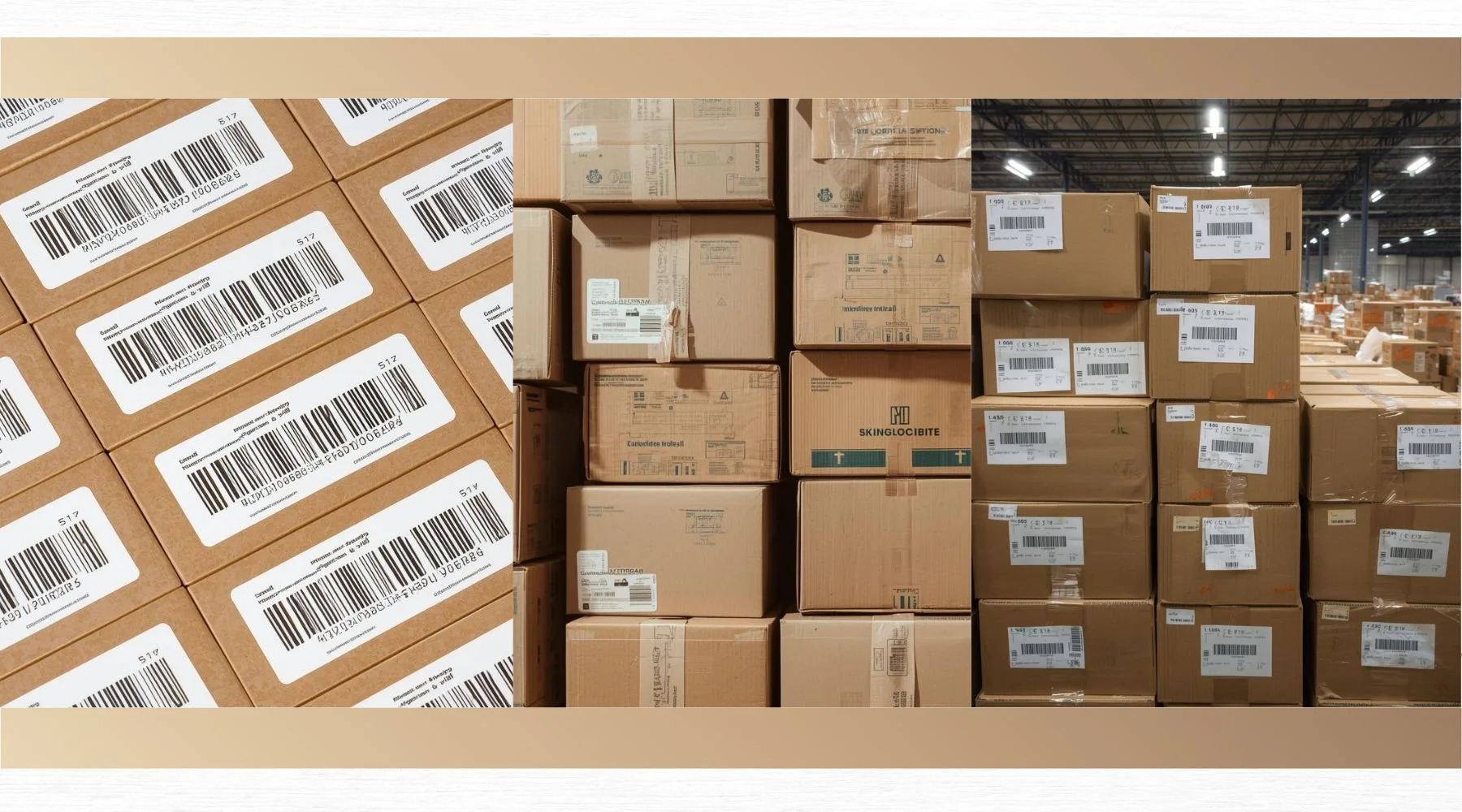
A. Transitional Provisions on the Use of Goods Labels Under Previous Regulations
(According to Article 98 of Decree 37/2026/ND-CP)
Goods labels compliant with previous regulations
Goods labels compliant with previous regulations (Decree 43/2017/ND-CP and 111/2021/ND-CP): Goods that have been manufactured, imported, or circulated prior to 23 January 2026 may continue to circulate until the expiry date.
Goods labels and packaging printed prior to 23 January 2026
May continue to be used for goods manufacturing for a period not exceeding 02 years from the effective date of this Decree (until 23 January 2028).
Handling of goods labels in case of changes in administrative boundaries
Existing labels may continue to be used for 02 years from the effective date of the decision on administrative boundary adjustment.
B. Introduction of New Terminology Related to Goods Labeling
Terminology on Labels
Physical Labels
Definition: A label in physical form (written, printed, or drawn) that is affixed, printed, attached, molded, engraved, carved directly on the goods or commercial packaging, or on other materials attached to the goods.
Legal basis: Article 3.3 of Decree 37/2026/ND-CP
Electronic Labels
Definition: A label in electronic form displayed via a data carrier attached to or directly displayed on the goods or commercial packaging of the goods.
Legal basis: Article 3.4 of Decree 37/2026/ND-CP
Data Carrier
Definition: A means of encoding information or a link to product data (barcode, QR code, DataMatrix, RFID, NFC, etc.).
Legal basis: Article 3.5 of Decree 37/2026/ND-CP
C. Certain New Regulations on Goods Labeling Under Decree No. 37/2026/ND-CP
| Criteria | Previous Decrees (No. 43/2017/ND-CP, No. 111/2021/ND-CP) | New Decree 37/2026/ND-CP | Pursuant to 37/2026/ND-CP |
|---|---|---|---|
| Label format | Mainly regulated physical labels (written, printed, directly affixed) | Supplemented electronic labels via data carriers (QR code, RFID, NFC, etc.) | Article 3 |
| Basis for labeling | Based on the nature of each type of goods (Appendix I of Decree No. 43/2017/ND-CP) | Based on product risk levels (Low, Medium, High) | Articles 5, 53 |
| Electronic label | – | Permitted to partially or fully replace physical labels depending on risk level. | Articles 52, 53 |
D. Content and Methods of Goods Labeling
1. Mandatory Contents on Goods Labels Under Decree No. 37/2026/ND-CP
(Pursuant to: Articles 42 and 39, 40 of Decree 37/2026/ND-CP)
Note: Decree No. 37/2026/ND-CP classifies goods into three risk levels (Low, Medium, High) to determine which contents may be displayed on electronic labels and which contents must be printed on physical labels.
a. Mandatory Contents on Labels of Imported Goods
Original Label (mandatory to be a physical label)
Must present the following contents in a foreign language or in Vietnamese:
- Name of goods
- Origin of goods:
- If the origin cannot be determined: indicate the place where the final process completing the goods is performed
- Names of countries or territories may be abbreviated in accordance with TCVN 7217-1
- Information of foreign organizations or individuals:
- Full name (or abbreviated name) and address of the manufacturer or the organization responsible for the goods abroad
Note: If the original label does not fully contain this information, such information must be provided in accompanying documents or shipment dossiers.
Supplementary Label (in Vietnamese)
Mandatory if the original label does not have or does not fully contain mandatory contents in Vietnamese, except for the following 04 exempted cases:
- Imported components for warranty purposes
- Imported components for production, not sold on the market
- Goods for testing, samples, or promotional goods not consumed on the market
- Supporting equipment for machinery used in production activities
b. Mandatory Contents on Labels of Goods Circulating in Viet Nam
| Contents | Low-Risk Goods | Medium & High Risk Commodities | Pursuant to 37/2026/ND-CP |
|---|---|---|---|
| Name of goods | Physical Labels or Electronic Labels | Mandatory on physical label | Articles 42, 53 |
| Name and address of responsible organization | Physical Labels or Electronic Labels | Mandatory on physical label | Articles 42, 53 |
| Origin of goods | Physical Labels or Electronic Labels | Mandatory on physical label | Articles 42, 53 |
| Warning information | Physical Labels or Electronic Labels | Mandatory on physical label | Article 53 |
| Other mandatory contents depending on the nature of goods | Can be written on electronic labels | May be shown on electronic label | Appendix I, Article 53 |
2. Mandatory Information for Goods with Simple Packaging
(According to Article 51 of Decree 37/2026/ND-CP)
“Goods with simple packaging or bulk goods such as food additives or chemicals, which do not have commercial packaging for direct sale to consumers, shall require selling organizations or individuals to publicly disclose the following information for consumer identification: name of goods; expiry date; safety warnings (if any); name and address of the organization or individual responsible for the goods; and instructions for use.”
3. Indication of Origin of Goods
(According to Article 47 of Decree 37/2026/ND-CP)
2. The origin of goods indicated on the label shall be expressed by one of the following phrases:
“manufactured in”; “made in”; “country of manufacture”; “origin”; “manufactured by”; “product of”, or “Origin”; “Made in”; “Produced in”; “Product of”, together with the name of the country or territory of manufacture, or in accordance with regulations on origin of goods.
3. Where the origin of goods cannot be determined:
The place where the final process completing the goods is performed shall be indicated. This shall be expressed by one or a combination of phrases indicating the finishing process, such as: “assembled in”; “bottled in”; “blended in”; “finished in”; “packed in”; “labeled in”, or “Assembled in”, “Finished in”, or “Assembled by”, together with the name of the country or territory where the final process completing the goods is performed.
4. Indication of Name and Address of the Organization or Individual Responsible for the Goods
(According to Article 44 of Decree 37/2026/ND-CP)
a. For Imported Goods (Clause 2)
General principle: The names and addresses of both the manufacturing organization and the importing organization must be indicated simultaneously.
Branded goods: If goods are manufactured in multiple locations under the same brand, it is permitted to indicate the name and address of the brand owner or the authorized legal entity in Viet Nam (if authorized by the brand owner), provided that the specific manufacturing facility can be traced.
b. For Special Types of Goods (Clauses 3, 4, 5)
- Processing goods: Indicate information of the enterprise placing the processing order
- Agency for foreign traders: Indicate the name and address of the manufacturer and the name and address of the sales agent in Viet Nam.
- Assembly or blending goods: Indicate the name and address of the organization performing the final process (complete assembly entity or blending entity).
5. Indication of Technical Specifications and Warning Information
(According to Article 49 of Decree 37/2026/ND-CP)
General Principles
- Specifications and tolerances: Must comply with specialized legislation. If no regulation exists, enterprises shall determine them themselves but must ensure accuracy and honesty.
- Tolerance values: Must conform to the declared applicable standards. If a specific value is indicated, it shall not be stated in a manner that creates an unfair advantage for the goods.
- Warning format: May be presented in text, images, or symbols in accordance with international practices.
Specific Requirements
Machinery group: Mandatory to indicate basic technical specifications.
Chemical goods group:
- Flammable, explosive, toxic, or corrosive chemicals: additional corresponding warnings must be indicated on the goods label
- Chemicals contained in pressure vessels: additional indication of vessel identification number, filling capacity, filler, and hazard warnings
Other special cases: Live aquatic products, veterinary drugs, plant protection drugs, metallurgical products, etc.: labeling shall comply with detailed guidance in Appendix V of the Decree.
6. Indication of Manufacturing Date and Expiry Date of Goods
(According to Article 46 of Decree 37/2026/ND-CP)
a. Establishment of the “Best Before” Mechanism
Post-expiry circulation permitted: Goods may continue to be sold after the “Best before” date (unlike “Expiry date,” after which circulation must cease).
Accompanying conditions: Enterprises must conduct self-assessment of safety and are required to retain records and data proving product quality throughout the extended circulation period. In the absence of such records, circulation shall be deemed a violation.
b. Standardization of Presentation to Protect Consumers
“Same line” rule: The numbers indicating Day – Month – Year of a time reference must be presented on the same line.
Addition of international terminology: The phrase “Best before…” is officially incorporated into the labeling legal framework, aligning with international imported goods standards.
c. Mechanism for Interchangeability Between Manufacturing Date and Expiry Date
The new regulation retains and clarifies flexible indication methods:
- If a specific manufacturing date is indicated: the expiry date may be expressed as a duration (for example: “24 months from manufacturing date”).
- If the expiry date is indicated: the manufacturing date may be indicated inversely as a duration (for example: “Manufactured 12 months before expiry date”).
7. Other Contents Permitted to be Displayed on Goods Labels
(According to Article 50 of Decree 37/2026/ND-CP)
Enterprises are permitted to display serial numbers, barcodes, conformity marks, regulatory conformity marks, data carriers for traceability, and other contents (if any).
E. General Principles on Goods Labeling
1. Placement of Goods Labels
(According to Article 36 of Decree 37/2026/ND-CP)
Visibility: Goods labels must be placed on the goods or commercial packaging at a position that allows easy identification and full reading of contents without removing parts or components of the goods.
Flexibility: Mandatory contents are not required to be concentrated in one location and may be presented at different positions on the goods, provided visibility and completeness are ensured.
2. Size and Color of Goods Labels
(According to Articles 37 and 43.1 of Decree 37/2026/ND-CP)
Regarding Size
Enterprises may independently design label size; however, the following issues should be noted:
- Where goods are too small to present all mandatory contents with a minimum font size of 0.9 mm, at least the following mandatory information must be fully presented: name of goods, origin, and foreign manufacturer information.
- The name of the goods must be presented in the largest font size compared to other mandatory contents on the label.
Regarding Color
Mandatory contents must have a color contrasting with the background color of the label.
3. Language on Goods Labels
(According to Article 39 of Decree 37/2026/ND-CP)
Principle: Mandatory contents on goods labels circulating in Viet Nam must be written in Vietnamese (except for exported goods not consumed domestically and certain special cases under Clause 4).
Abbreviations: Only abbreviations of administrative unit names are permitted; enterprise names and country names must not be abbreviated.
Goods manufactured and circulated domestically: Permitted to include additional languages alongside Vietnamese.
Imported goods (use of supplementary labels): If the original label does not have or does not fully contain mandatory contents in Vietnamese, a Vietnamese supplementary label is required, except for cases exempted under Article 40.4.
F. Electronic Labels
1. Principles of Electronic Labeling
(Article 52 of Decree 37/2026/ND-CP)
Scope of substitution: Electronic labels are permitted to display part or all mandatory contents (except for original labels of imported goods and sector-specific regulations requiring physical labels).
Two forms of labeling:
- Direct declaration on the National Electronic Label System (https://elabel.gov.vn).
- Self-declaration with mandatory connection and data synchronization with the National Electronic Label Database.
Placement and access: Electronic labels must be attached to goods or packaging at an easily visible position, ensuring consumers can immediately access information when selecting goods for purchase.
In case of product recall by competent authorities: The electronic label must display warning information.
2. Display of Contents on Electronic Labels
(According to Article 53 of Decree 37/2026/ND-CP)
Low-risk goods: Permitted to fully replace physical labels with electronic labels.
Medium- and high-risk goods: Mandatory to maintain physical labels for the following four core contents:
- Name of the goods.
- Name and address of the responsible organization or individual.
- Origin of goods.
- Warning information.
Other remaining mandatory contents may be displayed on electronic labels.
3. Responsibilities for Storage and Transparency of Electronic Labels
(According to Articles 52 and 53 of Decree 37/2026/ND-CP)
Retention period: All published label contents must be retained for a minimum of 12 months from the expiry date of the product.
Change history: The storage system must allow retrieval of the history of label content changes for inspection and examination purposes.
Incident handling: If the system is inaccessible or information is inaccurate, the responsible organization or individual shall bear full legal responsibility.
Related Services: Customs Declaration Service
📞 Contact UNI Customs Consulting for free consultation:
📧 Email: uni@eximuni.com
📱 Hotline: (+84) 24-7308-7988 (Hanoi) | (+84) 28-7301-8910 (HCM)