


The latest customs newsletters on November, 2024 includes the following issues:
I. EXTENSION OF ANTI-DUMPING (AD) MEASURES ON FLAT-ROLLED STEEL ORIGINATING FROM CHINA AND SOUTH KOREA
Case number: ER01.AD04
Product under investigation: Alloy or non-alloy flat-rolled steel, coated or uncoated, subsequently painted.
Common name: Color-coated steel or color-coated steel.
1. HS code:
7210.70.12, 7210.70.13, 7210.70.19, 7210.70.21, 7210.70.29, 7210.70.91, 7210.70.99, 7212.40.11, 7212.40.12, 7212.40.13, 7212.40.14, 7212.40.19, 7212.40.91, 7212.40.99, 7225.99.90, 7226.99.19, and 7226.99.99.
Country under investigation: Korea and China.
Period of validity: Extension of AD measures for an additional five years from 00:00 on October 24, 2024, until October 23, 2029.
Average AD tax rate: China: 34.27%, South Korea: 19.25%.
Tax rates and list of companies subject to AD duties: Details here
2. Exempt products:
- Products with a base layer of hot-rolled steel
- Products with unpainted surfaces
- High-quality PCM and VCM color-coated steel for electronics and household appliances
- PVDF-coated steel products used in thermal power plants
- Color-coated steel products have not been produced in Vietnam
3. Exemption conditions:
- Exemption for (i) and (ii): Based on the inspection results of the Customs Authority or the assessment results of the competent authority.
- Exemption for (iii), (iv) and (v): Submit an application for exemption to the Trade Remedies Department, Ministry of Industry and Trade
4. Additional declaration obligations:
For imported goods with a customs declaration form registered from 0:00 on October 24, 2024 but the enterprise has not yet declared AD duties, an additional declaration must be filed in accordance with regulations.
(According to Decision No. 2822/QD-BCT dated October 24,
2024 and Official Letter No. 5208/TCHQ-TXNK dated October 25, 2024)

II. CONDITIONS FOR APPLICATION OF SPECIAL PREFERENTIAL IMPORT TAX ON EXPORTED GOODS STORED IN BONDED WAREHOUSES AND THEN RE-IMPORTED INTO THE DOMESTIC
On October 24, 2024, the General Department of Customs (GDC) issued Official Letter No. 5177/TCHQ-GSQL, providing guidance on the conditions for enjoying special preferential import tax incentives for exported goods stored in bonded warehouses and then re-imported into the domestic.
1.The GDC has the following opinions:
Goods imported from bonded warehouses into the domestic market are eligible for the corresponding special preferential import tax if they meet the conditions specified in the Decree on the special preferential import tariff schedule.
2. The specific conditions include:
- The goods must be listed in the special preferential import tariff schedule.
- Goods that meet the regulations on the origin of goods (including regulations on direct consignment).
- The goods must be accompanied by a certificate of origin.
3. Notes on direct consignment conditions:
Direct consignment applies to goods transported directly from the exporting member country to the importing member country, including the process of goods being transported from abroad to bonded warehouses in Vietnam
Vietnamese goods exported to bonded warehouses and re-imported into the domestic are considered to meet the direct consignment rule if there are no activities that interfere with the goods and they remain under customs supervision.
(According to Official Letter No. 5177/TCHQ-GSQL dated October 24, 2024)

III. TAX POLICIES IN CASE EXPORT PROCESSING ENTERPRISES (EPES) LEASE FACTORIES TO OTHERS (EPES)
On October 11, 2024, the General Department of Customs (GDC) issued Official Letter No. 4920/TCHQ-GSQL to guide customs procedures and tax policies in case export processing enterprises (EPEs) lease factories to other EPEs.
The GDC has the following opinions:
According to Clause 6, Article 26 of Decree No. 35/2022/ND-CP:
c) Assets, machinery, and equipment that benefit from tax incentives granted to export processing enterprises must not be used for any other production or business activities. In case of using assets, machinery and equipment eligible for tax incentives applicable to export processing enterprises to carry out other business activities, they must refund the tax incentives that have been exempted or reduced in accordance with tax regulations.”
According to the above provisions, assets, machinery and equipment eligible for tax incentives of EPEs are only used for production activities of EPEs. If used for other business activities, EPEs must refund the exempted or reduced taxes.
The GDC requests bussiness to contact the authorities on land, real estate business, and IRC authorities to determine whether bussiness is allowed to sublease offices and factories or not.
In case it is allowed to sublease offices and factories, bussiness must refund tax incentives that have been exempted or reduced when leasing these preferential assets for other purposes.
(According to Official Letter No. 4920/TCHQ-GSQL dated October 11, 2024)
IV. PROCEDURE FOR VERIFYING CUSTOMS VALUE FOR IMPORTED GOODS
The General Department of Customs (GDC) recently issued Official Letter No. 4918/TCHQ-TXNK, providing detailed guidelines on the procedure for verifying the customs value for imported goods.
The GDC has expressed the following views:
During verification, the customs authority must examine the customs value stated on the customs declaration and handle each specific case as follows:
1. For goods subject to complete inspection of the entire shipment (Customs declaration includes multiple items)
- If the goods were “declared inaccurately or insufficiently in terms of description criteria on the customs declaration, affecting the customs value,” the customs authority is entitled to reject the declared customs value.
The customs authority requires the business to make a supplemental declaration within five working days. In case of overdue submission, the customs authority will proceed with a tax assessment.
- If the goods are suspected in terms of the declared customs value, the customs authority will consult with the business to clarify the customs value of the goods.
The customs authority will request the business to provide additional information, documents, or evidence to verify the accuracy of the declared customs value.
- If neither of the above conditions applies, the customs authority must accept the declared customs value.
Therefore, the customs authority’s rejection of the declared customs value for the entire shipment without verifying and processing the inspection results is unfounded.
(Clause 14, Article 1, Circular No. 39/2018/TT-BTC )
- For goods subject to analysis, classification, and inspection.
- The customs authority conducts analysis, classification, and inspection of the goods and obtains results.
- Based on these results, if elements are identified that affect the declared customs value, the customs authority must collect all necessary documents to verify the actual customs value of the goods.
- The customs authority will proceed with tax assessment and handle any violations (if applicable) based on the customs value verification results.
( According to Official Letter No. 4918/TCHQ-TXNK dated October 11, 2024)

V. VIETNAM’S SPECIAL PREFERENTIAL IMPORT TARIFF SCHEDULE FOR IMPLEMENTING THE VIFTA (VIETNAM-ISRAEL FREE TRADE AGREEMENT)
On October 15, 2024, the Government issued Decree No. 131/2024/ND-CP concerning Vietnam’s special preferential import tariff schedule applicable to goods imported from Israel.
The basic information regarding the tariff schedule is summarized as follows:
Scope of application: Applies to goods exported and imported under the VIFTA agreement between Vietnam and Israel (totaling 11,000 lines of goods).
Effective period: From October 15, 2024 to December 31, 2027
1. Implementation schedule and tariff reduction:
- Column “2024”: Tariff rates apply from October 15, 2024, to December 31, 2024.
- Column “2025”: Tariff rates apply from January 1, 2025, to December 31, 2025.
- Column “2026”: Tariff rates apply from January 1, 2026, to December 31, 2026.
- Column “2027”: Tariff rates apply from January 1, 2027, to December 31, 2027.
2. Tariff rates according to tariff quotas:
- Group 04.07: Birds’ eggs, in shell, fresh, preserved, or cooked.
- Group 17.01: Cane or beet sugar and chemically pure sucrose, in solid form.
- Group 24.01: Unprocessed tobacco; tobacco refuse.
- Group 25.01: Salt (including table salt and denatured salt) and pure sodium chloride, whether or not in aqueous solution or containing anti-caking or free-flowing agents; sea water.
3. Tariff rates for standard products
Special preferential tariff rates for standard products (outside the quota) are detailed in the tariff schedule.
For more information, refer to: VIFTA Tariff Schedule 2024 – 2027.
4. Conditions for applicable tariff rates:
- Falls under the special preferential import tariff schedule.
- Imported into Vietnam from Israel.
- Meets the rules of origin and is accompanied by certificates of origin in compliance with the VIFTA Agreement and current regulations.
For goods imported from non-tariff zones, the special preferential tariff rate under the VIFTA Agreement will apply if the enterprise meets conditions (1) and (3) above.
Guidance on reading the tariff schedule:
Symbol “*”: Indicates imported goods that are not eligible for special preferential import tariff rates under the VIFTA Agreement.
(According to Decree No. 134/2024/ND-CP dated October 15, 2024)

VI. REGULATIONS ON TARIFF QUOTAS FOR TEXTILES AND GARMENTS EXPORTED TO MEXICO IN 2024 UNDER THE CPTPP AGREEMENT
Recently, the Ministry of Industry and Trade has issued Decision No. 2680/QD-BCT regulating the amount of tariff quotas for textiles and garments exported to Mexico in 2024 under the CPTPP Agreement. Specifically, as follows:
| STT | Description of goods | Quantity and volume | Units of Calculation |
| 01 | Yarns classified in headings 5202 to 5207, 5508, 5509, 5511 and fabrics classified in Chapter 60 and products classified in Chapter 58, headings 5902 and 5910 are manufactured in Vietnam from raw materials with ordinal numbers 2 and 3 in Appendix II issued together with Circular No.07/2019/TT-BCTdated April 19, 2019 of the Ministry of Industry and Trade | 250.000 | Kg |
| 02 | Knitted clothing classified in Chapter 61 in the column of Output requirements No. 1, 4, 7 of Appendix II manufactured in Vietnam from the raw materials specified in the description column of the above numbers in Appendix II issued together with Circular No.07/2019/TT-BCTdated April 19, 2019 of the Ministry of Industry and Trade | 2.500.000 | Item |
| 03 | Woven garments classified in Chapter 62 in the column Output requirements in No. 5 and 6 of Appendix II are manufactured in Vietnam using raw materials specified in the description column of the above numbers of Appendix II issued together with Circular No.07/2019/TT-BCTdated April 19, 2019 of the Ministry of Industry and Trade | 750.000 | Item |
| 04 | Textiles and garments of HS codes 6111.30, 6209.30 and baby diapers made from synthetic fibers of HS code 9619 | 50.000 | Item |
(According to Decision No. 2680/QD-BCT dated October 09, 2024)
VII. LIST OF WASTE TEMPORARILY SUSPENDED FROM BUSINESS ACTIVITIES OF TEMPORARY IMPORT, RE-EXPORT, AND TRANSSHIPMENT OF GOODS
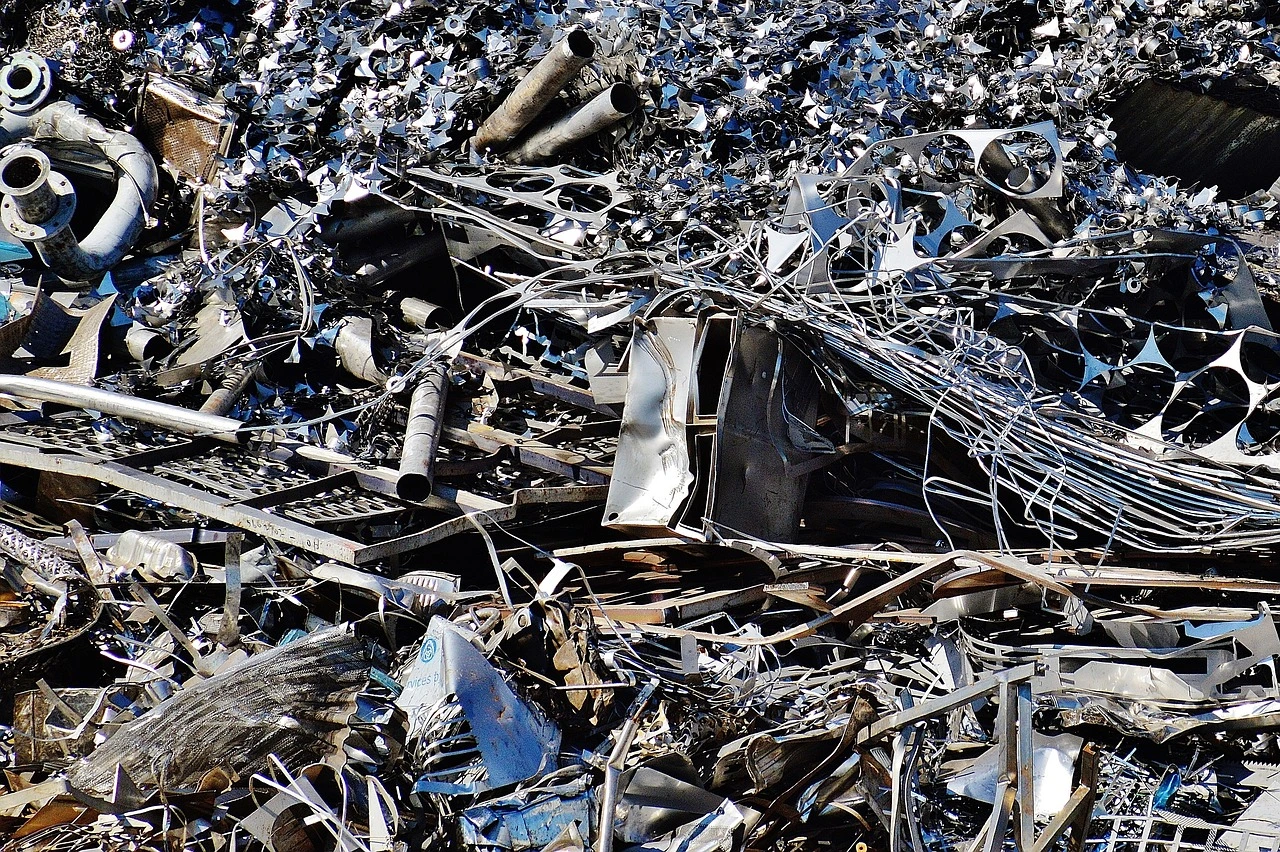
The Ministry of Industry and Trade (MOIT) has just issued Circular No. 18/2024/TT-BCT stipulating the list of waste temporarily suspended from business activities of temporary import, re-export, and transshipment of goods
Accordingly, the waste products temporarily suspended for temporary import, re-export, and transshipment of goods include:
| HS code | Item Description | |||
| Chapter 25 | 2520 | Gypsum; dry plaster; plaster plaster (including calcined gypsum or calcined calcium sulphate), whether or not stained, with or without the addition of a small amount of catalyst or inhibitor. | ||
| Chapter 26 | 2618 | 00 | 00 | Granular slag (sand slag) from the iron or steel smelting industry. |
| 2619 | 00 | 00 | Slag, metallurgical slag (except particle slag), slag chips and other wastes from the iron or steel smelting industry. | |
| 2620 | Slag, ash and residue (except those obtained from the production of iron or steel), containing metals, arsenic, or their compounds. | |||
| Chapter 38 | 3818 | 00 | 00 | Chemical elements that have been stirred up for use in electronics, in the form of disks, thin sheets or similar forms; chemical compounds that have been activated for use in electronics. |
| Chapter 39 | 3919 | Sheets, slabs, films, leaves, tapes, strips and other flat shapes are self-adhesive, plastic, with or without rolls. | ||
| 3920 | Sheets, slabs, films, foils and other strips, made of plastic, non-porous and unreinforced, unlaminated, unreinforced or similarly combined with other materials. | |||
| 3921 | Sheets, slabs, films, leaves and other strips, made of plastic. | |||
| 3923 | Products used in transporting or packaging goods, made of plastic; buttons, caps, valve caps and other types of stoppers, made of plastic. | |||
| – Bags and pouches (including cone-shaped types): | ||||
| 3923 | 21 | – – From polymers from ethylene: | ||
| – – – Aluminum foil reinforced sterile bags (except for retort bottom bags): | ||||
| 3923 | 21 | 11 | – – – – Width of 315 mm or more and length of 410 mm or more, attached with a sealed seal cover. | |
| 3923 | 21 | 19 | – – – – Other types. | |
| 3923 | 29 | – – From other plastics: | ||
| 3923 | 29 | 10 | – – – Sterile bags with or without aluminum foil reinforcement (except for retort bottom bags), width of 315 mm or more and length of 410 mm or more, attached with a sealed seal cover. | |
| 3923 | 29 | 90 | – – – Other types. | |
| Chapter 47 | 4707 | Recycled paper or cardboard (scrap and debris). | ||
| Chapter 50 | 5003 | 00 | 00 | Waste silk (including cocoons not suitable for spinning silk, scrap fibers and recycled fibers). |
| Chapter 51 | 5103 | Fine or coarse fleece or animal wool scraps, including yarn scrap but other than recycled wool. | ||
| 5104 | 00 | 00 | Recycled fine or coarse fleece or animal hair. | |
| Chapter 52 | 5202 | Cotton scrap (including yarn scrap and recycled cotton). | ||
| Chapter 55 | 5505 | Scrap (including fiber scrap, fiber scrap and recycled materials) from man-made fibers. | ||
| Chapter 63 | 6310 | Used or new scrap fabrics, scraps of rope, cordage, ropes and cables, and scraps from scrap fabrics, ropes, cordages, ropes or cables, from woven materials. | ||
| Chapter 70 | 7001 | 00 | 00 | Broken glass and other scrap glass and debris, except glass from cathode lamp tubes or other activated glass of heading 85.49; glass in the form of blocks. |
| Chapter 72 | 7204 | Scrap and iron scrap; scrap casting ingots recooked from iron or steel | ||
| Chapter 74 | 7404 | 00 | 00 | Scrap and scrap of copper. |
| Chapter 75 | 7503 | 00 | 00 | Nickel scrap and debris. |
| Chapter 76 | 7602 | 00 | 00 | Aluminum scrap and scrap. |
| Chapter 79 | 7902 | 00 | 00 | Zinc scrap and debris. |
| Chapter 80 | 8002 | 00 | 00 | Scrap and tin scraps. |
| Chapter 81 | 8101 | Tungsten and tungsten-based products, including scrap and debris | ||
| 8101 | 97 | 00 | – – Scrap and debris | |
| 8102 | Molybdenum and molybdenum products, including scrap and debris | |||
| 8102 | 97 | 00 | – – Scrap and debris | |
| 8104 | Magnesium and magnesium products, including scrap and debris | |||
| 8104 | 20 | 00 | – Scrap and debris | |
| 8108 | Titanium and titanium-based products, including scrap and debris | |||
| 8108 | 30 | 00 | – Scrap and debris | |
| 8109 | Zircon and zircon-based products, including scrap and debris | |||
| – Scrap and debris | ||||
| 8109 | 31 | 00 | – – Contains hafnium content in zircon less than 1/500 by mass | |
| 8109 | 39 | 00 | – – Other | |
| 8110 | Antimony and antimony-based products, including scrap and debris | |||
| 8110 | 20 | 00 | – Scrap and debris | |
| 8111 | Manganese and manganese-based products, including scrap and debris | |||
| 8111 | 00 | 10 | – Scrap and debris | |
| 8112 | Beryllium, chromium, hafinium, renium, taluene, cadmium, germanium, vanadium, gallium, indium and niobium (columbium), and products from these metals, including scrap and scrap | |||
| -Chromium: | ||||
| 8112 | 22 | 00 | – – Scrap and debris | |
Note:
- Products with HS codes 3919, 3920, 3921, 3923.21, 3923.29 only apply to used goods.
- The temporary suspension of transshipment of goods under this Circular does not apply to cases where goods are directly transported from the exporting country to the importing country without passing through Vietnamese border gates.
Circular 18/2024/TT-BCT is a continuation of Circular 27/2019/TT-BCT. Compared to Circular 27/2019/TT-BCT, the list of waste products temporarily suspended from business activities of temporary import, re-export, and transshipment of goods is more detailed, with clear HS codes and product descriptions.
Circular 18/2024/TT-BCT will take effect from January 1, 2025, to December 31, 2029.
(According to Circular 18/2024/TT-BCT issued on October 8, 2024)
VIII. GUIDANCE ON TAX REFUND FOR IMPORTED GOODS USED FOR THE PRODUCTION OF EXPORT PRODUCTS
On October 8, 2024, the General Department of Customs (GDC) issued Official Letter No. 4855/TCHQ-TXNK to provide guidance on tax refunds for imported goods intended for production and business but subsequently used in the manufacturing of exported goods.
The GDC has the following opinions:
1. Guidance on the basis for determining tax-exempt imported goods:
- Export production facility: The enterprise must have a production facility in Vietnam and possess ownership or usage rights over machinery and equipment suitable for the imported raw materials.
- Scope of tax refund: The value or quantity of imported raw materials eligible for a tax refund must correspond to the actual amount used in the production of exported products.
- Customs procedures: The exported goods must undergo customs clearance under the export-production classification.
- Export method: This can be either through direct exportation or via entrusted import and export of goods and products.
(According to Clause 3, Article 36 of Decree No. 134/2016/ND-CP)
2. Guidance on Tax Refund Information Declaration:
Enterprises must provide complete information on the customs declaration for imported raw materials used in the production of exported products according to Form No. 10 – “Report on Tax Calculation of Raw Materials and Supplies Requested for Import Tax Refund” (Appendix VII of Decree No. 18/2021/ND-CP).
When carrying out export procedures, the taxpayer must declare on the export declaration that the products were produced from previously imported goods.
- Specifically, in the “Notes” section of the electronic customs declaration or the “Other Notes” section of the paper customs declaration, the enterprise must state: “The exported product was manufactured from imported goods.”
- Customs declarants are not required to provide detailed lists of import declarations on the export declaration of products.
(According to the guidance in Official Letter No. 5644/TCHQ-TXNK)
When carrying out tax refund procedures, the enterprise must provide detailed declarations regarding the imported raw materials for which the tax refund is requested.
Important information includes: import declaration, quantity of raw materials used, actual usage rates (BOM), and other relevant details in Form No. 10 of Appendix VII of Decree No. 18/2021/ND-CP
The enterprise must submit supporting documents related to the above information for Customs to assess the tax refund eligibility.
(According to Official Letter No. 4855/TCHQ-TXNK dated October 8, 2024)
Learn more about criteria for determining goods that are eligible for tax refund here: Guidelines on Tax Refunds of Imported Goods for Export Production 2024
IX. LIST OF FOOD, FOOD ADDITIVES, FOOD CONTAINERS AND PACKAGING MATERIALS SUBJECT TO STATE INSPECTION OF IMPORTED FOOD SAFETY
On September 19, 2024, the Minister of Health issued Circular No. 15/2024/TT-BYT regulating “List of food, food additives and food containers, packaging materials in direct contact with food subject to state inspection of imported food safety” (hereinafter referred to as the “List”)
Accordingly, the list of goods subject to food safety inspection includes:
- Dietary supplements – 1 item;
- Food additives – 391 items
- Food containers, packaging materials in direct contact with food – 6 items.
(See details of the catalogue here: PDF file)
1. Inspection methods:
- Standard inspection method: Examination of the import batch’s documentation – applied to goods on the List.
- Strict inspection method: Examination of customs documentation combined with sample testing – applied to goods not on the List but failing to meet requirements during previous inspections or audits, or flagged by safety warnings from competent authorities.

2 Exemptions from inspection:
- Goods falling under the provisions of Article 13 of Decree No. 15/2018/ND-CP on exemption from state inspection of imported food safety, including:
- Goods that have been issued a Certificate of Registration of Product Declaration.
- Goods carried by or sent before/after a traveler’s trip for personal use, gifts, or presents within the duty-free limit.
- Goods in quantities appropriate for testing or research purposes.
- Goods for display at fairs or exhibitions.
- Goods or raw materials exclusively for the production of export products or internal production not for domestic consumption.
- Goods that are listed in the List but are not used as food, food additives, or food processing aids.
- Containers and packaging materials not in direct contact with food.
- Goods not on the List, except for the cases specified at Point b, Clause 3, Article 2 of this Circular.
This Circular takes effect from November 2, 2024.
(According to Circular No. 15/2024/TT-BYT issued on September 19, 2024)
The latest information about customs situation will be continuously updated in the customs newsletter of UNI CUSTOMS CONSULTING. We invite businesses to stay informed!