


UNI would like to send you the Customs Newsletter for March 2025. This newsletter updates important information on new policies, legal regulations and outstanding issues in the fields of customs, import-export and tax. Below are the notable contents of the month:
I. The New Organizational Structure Of The Customs Department From March 1, 2025
On February 26, 2025, Minister of Finance Nguyen Van Thang signed Decision No. 382/QD-BTC regulating the functions, duties, powers and organizational structure of the Customs Department.
Regarding the organizational structure and functions
The “General Department of Customs” will be reorganized into the “Customs Department”, operating under a three-tier system from the central to local levels.
1. At the central level:
At the central level, the Customs Department will restructure 16 departments under the former General Department of Customs into 12 units, as follows:
- Office
- Legal Department
- Personnel Organization Committee
- Inspection & Supervision Board
- Finance & Administration Department
- Customs Management Supervisory Board
- Customs Tax Operations Department
- Risk Management Department
- Department of Information Technology and Customs Statistics
- Customs Inspection Sub-Department
- Anti-Smuggling Investigation Sub-Department
- Customs Audit Sub-Department.
The basic units will still maintain their positions, functions, tasks and powers as at present and receive additional tasks and powers of the consolidating or merging units.
2. At the local level:
At the local level, the current 35 Provincial and Municipal Customs Departments will be consolidated into 20 Regional Customs Sub-Departments, numbered from I to XX. The headquarters and areas of jurisdiction of these 20 Regional Customs Sub-Departments are detailed below:
| STT | Unit Name | Management area | Head Office |
| 1 | Customs Sub-Department of Region I | Hanoi, Vinh Phuc, Phu Tho, Hoa Binh, Yen Bai | Hanoi |
| 2 | Customs Sub-Department of Region II | Ho Chi Minh City | Ho Chi Minh City |
| 3 | Customs Sub-Department of Region III | Hai Phong, Thai Binh | Hai Phong |
| 4 | Customs Sub-Department of Region IV | Hung Yen, Hai Duong, Ha Nam, Nam Dinh | Hung Yen |
| 5 | Customs Sub-Department of Region V | Bac Ninh, Bac Giang, Tuyen Quang, Thai Nguyen, Bac Kan | Bac Ninh |
| 6 | Regional Customs Sub-Department of Regional Customs Sub-Department of Region VI | Lang Son, Cao Bang | Lang Son |
| 7 | Customs Sub-Department of Region VII | Ha Giang, Lao Cai, Dien Bien, Lai Chau, Son La | Lao Cai |
| 8 | Customs Sub-Department of Region VIII | Quang Ninh | Quang Ninh |
| 9 | Customs Sub-Department of Region IX | Quang Binh, Quang Tri, Hue | Quang Binh |
| 10 | Customs Sub-Department of Region X | Thanh Hoa, Ninh Binh | Thanh Hoa |
| 11 | Customs Sub-Department of Region XI | Nghe An, Ha Tinh | Ha Tinh |
| 12 | Customs Sub-Department of Region XII | Da Nang, Quang Nam, Quang Ngai | Danang |
| 13 | Customs Sub-Department of Region XIII | Khanh Hoa, Ninh Thuan, Binh Dinh, Phu Yen | Khanh Hoa |
| 14 | Customs Sub-Department of Region XIV | Gia Lai, Kon Tum, Dak Lak, Dak Nong, Lam Dong | Dak Lak |
| 15 | Customs Sub-Department of Region XV | Binh Thuan, Ba Ria – Vung Tau | Ba Ria – Vung Tau |
| 16 | Customs Sub-Department of Region XVI | Binh Duong, Binh Phuoc, Tay Ninh | Binh Duong |
| 17 | Customs Sub-Department of Region XVII | Long An, Ben Tre, Tien Giang | Long An |
| 18 | Customs Sub-Department of Region XVIII | Dong Nai | Dong Nai |
| 19 | Customs Sub-Department of Region XIX | Can Tho, Ca Mau, Hau Giang, Vinh Long, Tra Vinh, Soc Trang, Bac Lieu | Can Tho |
| 20 | Customs Sub-Department of Region XX | Dong Thap, An Giang, Kien Giang | Dong Thap |
3. Border/Non-border customs offices:
Border/Non-border customs offices will be under the authority of the Regional Customs Sub-Departments. Their functions and powers will remain the same as those of the current Provincial/Municipal Customs Sub-Departments.
4. Summary of Organizational Structure Changes:
| Level | Before March 1, 2025 | After March 1, 2025 |
| Central | General Department of Customs | Customs Department |
| Local | Provincial/Municipal Customs Departments | Regional Customs Sub-Departments |
| On-site | Customs Sub-Department | Border/Non-Border Customs Offices |
5. About customs procedures
During this time, in order not to disturb the customs clearance of exports and imports, all operational procedures will temporarily remain unchanged. All existing customs codes in the IT systems, including those of the General Department, Customs Departments, Sub-Departments, and operational teams, will continue to be used.
From March 1, 2025, the Customs Department will officially operate under the new organizational structure.
After arranging and reorganizing the General Department of Customs into the Customs Department, the number of administrative units will be reduced by approximately 485 out of 902, equivalent to a 53.77% reduction.
(According to Decision No. 382/QD-BTC dated February 26, 2025)
READ MORE Important Notice: Deadline For Submitting Greenhouse Gas Inventory Reports
II. Amending Regulations On Preferential Import And Export Taxes Under The CPTPP Agreement
On January 21, 2025, the Government issued Decree No. 13/2025/ND-CP amending regulations on preferential import and export taxes under the Comprehensive and Progressive Trans-Pacific Partnership (CPTPP).
Validity: from January 21, 2025 to December 31, 2027.
1. New features in Decree 13/2025/ND-CP:
Add the United Kingdom of Great Britain and Northern Ireland (including the Territory of Guernsey, Jersey and the Isle of Man) to the list of countries entitled to preferential tax rates.
Regulations on tax rates for the period of 2024 – 2027 (details in Appendix I and II):
- December 15, 2024 – December 31, 2024: Apply the tax rate in column “(IV)”.
- January 1, 2025 – December 31, 2025: Apply the tax rate in column “(V)”.
- January 1, 2026 – December 31, 2026: Apply the tax rate in column “(VI)”.
- January 1, 2027 – December 31, 2027: Apply the tax rate in column “(VII)”.
2. Conditions for application of preferential tax rates:
Goods wishing to enjoy preferential tax rates need to meet the following conditions:
a. Imports into countries/territories in the CPTPP
Imports into countries/territories, including:
| No. | Country/Territory |
| 1 | Australia |
| 2 | Canada |
| 3 | Japan |
| 4 | Federated States of Mexico |
| 5 | New Zealand |
| 6 | Republic of Singapore |
| 7 | Republic of Peru |
| 8 | Malaysia |
| 9 | Republic of Chile |
| 10 | Brunei Darush-Salaam |
| 11 | United Kingdom of Great Britain and Northern Ireland (including Guernsey, Jersey and Isle of Man). |
b. Have valid transport documents and customs declarations
Customs documents and declarations must be translated into Vietnamese or English.
3.Tax refund conditions:
Customs declarations from December 15, 2024 to before January 21, 2025, if they have paid a tax rate higher than the preferential tax rate in this Decree, they can carry out tax refund procedures.
(According to Decree no. 13/2025/ND-CP dated January 21, 2025)
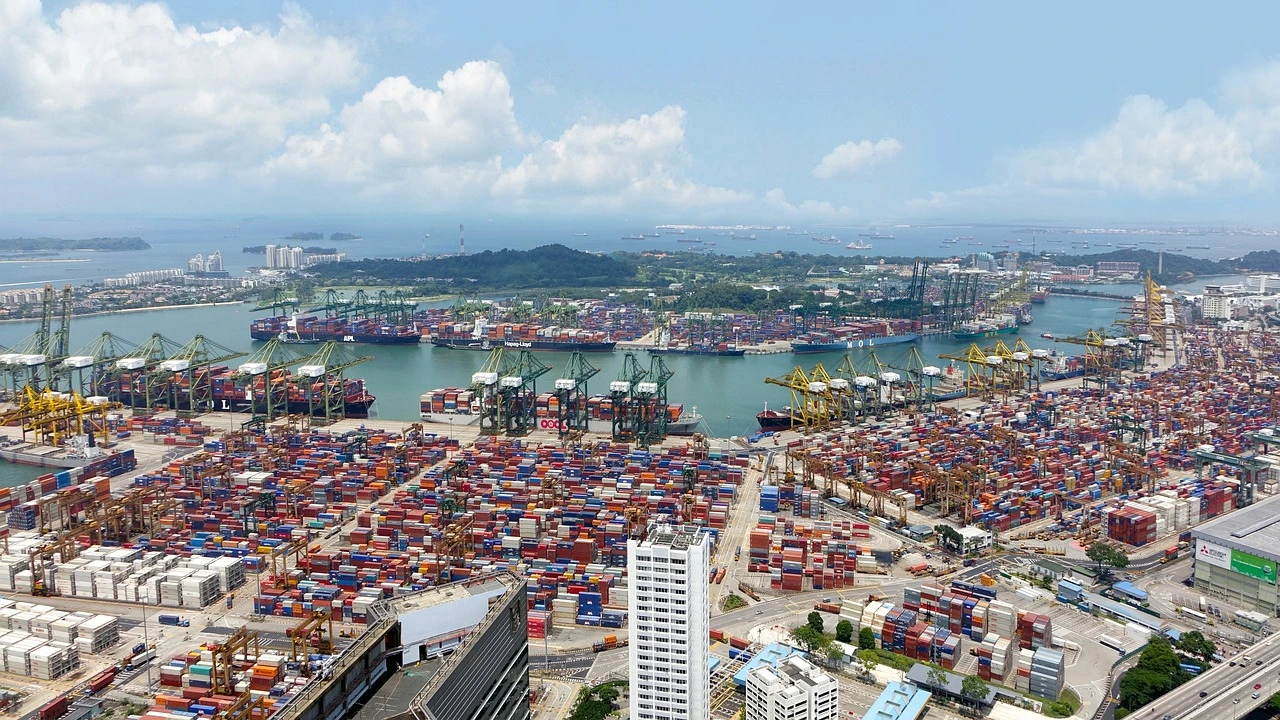
III. The Us Implies 25% Tax On Imported Steel And Aluminum
On the morning of February 11, 2025, US President Donald Trump officially signed a decree imposing a 25% tax on imported steel and aluminum, effective from March 4, 2025. Specifically:
- Subject of tax: All countries that export aluminum and steel to the US market.
- Tax rate: 25%.
- Validity: From March 4, 2025.
Accordingly, the 25% tax rate will increase again for steel and aluminum imports from Argentina, Australia, Brazil, Canada, the EU, Japan, Mexico, South Korea, the UK and Ukraine. Steel and aluminum products from these countries have previously been exempt from tariffs into the United States under the terms of the exemption.
For Vietnam, the above decree will increase the tax rate on Vietnam’s aluminum products from 10% to 25%. Meanwhile, the tax rate on Vietnam’s steel products will remain at 25% compared to the tax rate from 2018.
According to US customs statistics, in 2024, Vietnam will export about 983 million USD of steel and steel products (up nearly 159% compared to 2023). For aluminum products, in 2024, Vietnam will export about 479 million USD of aluminum and aluminum products to the US market, up 9.5% compared to 2023.
The Vietnam Trade Office in the US recommends that businesses assess the situation and diversify markets, especially countries with FTAs with Vietnam, to reduce dependence on one market.
IV. Vietnam Imposes Temporary Anti-Dumping Duties On Some Chinese Steel Products (AD20)
On February 21, 2025, the Ministry of Industry and Trade issued Decision 460/QD-BCT on the imposition of temporary anti-dumping duties (ADD) on a few hot-rolled steel products originating from China with ADD from 19.38% to 27.83%, applicable from March 8, 2025. This is an important decision of the Ministry of Industry and Trade to protect the domestic steel production industry against the increase in cheap steel imports.
Here is the important information in the Decision:
- Case code: AD20
- Product name: Hot Rolled Steel.
- Basic characteristics: Goods are some alloy or non-alloy iron or steel products that are rolled flat; hot rolled; thickness from 1.2 mm to 25.4 mm; width not exceeding 1,880 mm; has not been over-processed by hot rolling; rust or no rust removal; not inlaid, coated, plated or coated; with or without oil coating; carbon content is less than or equal to 0.30% by volume.
- HS code: 7208.25.00, 7208.26.00, 7208.27.19, 7208.27.99, 7208. 36.00, 7208.37.00, 7208.38.00, 7208.39.20, 7208.39.40, 7208.39.90, 7208.51.00, 7208.52.00, 7208.53.00, 7208.54.90, 7208.90.90, 7211.14.15, 7211.14.16, 7211.14.19, 7211.19.13, 7211.19.19, 7211.90.12, 7211.90.19, 7225.30.90, 7225.40.90, 7225.99.90, 7226.91.10, 7226.91.90.
- Place of origin: People’s Republic of China (China).
- Temporary ADD: 19.38% to 27.83%.
- List of companies subject to taxation: See here.
This decision is effective for 120 days, starting from March 8, 2025.
(According to Decision 460/QD-BCT dated February 21, 2025)
READ MORE What is Antidumping duty? List of Chinese Goods subject to antidumping duty in Vietnam.
V. Value-added Tax (VAT) Policy For Tripartite Transactions Through Bonded Warehouses
On February 17, 2025, the Ministry of Finance issued Official Letter No. 1872/BTC-TCT to give opinions on VAT policies for goods from inland brought into bonded warehouses. Accordingly, the Ministry of Finance gives the following views:
In case a domestic enterprise sells goods to a foreign trader with a presence in Vietnam and is appointed to deliver goods to another Vietnamese enterprise (third party), this transaction is not eligible for the application of the VAT rate of 0% according to Article 9.1 of Circular No. 219/2013/TT-BTC:
“Article 9. Tax rate 0%
1. Tax rate of 0%: applicable to exported goods and services…
Exported goods and services are goods and services sold or supplied to organizations and individuals abroad and consumed outside Vietnam; selling and supplying to organizations and individuals in non-tariff zones…”.
Specifically, goods in this transaction are not sold to foreign enterprises and consumed outside the territory of Vietnam. At the same time, goods are also not sold to enterprises in the tariff zone for consumption in the non-tariff zone. Therefore, this transaction is not eligible for the 0% VAT rate.
(According to Official Letter No. 1872/BTC-TCT dated February 17, 2025)
READ MORE Value-added Tax Policies For International Goods Trading Transactions
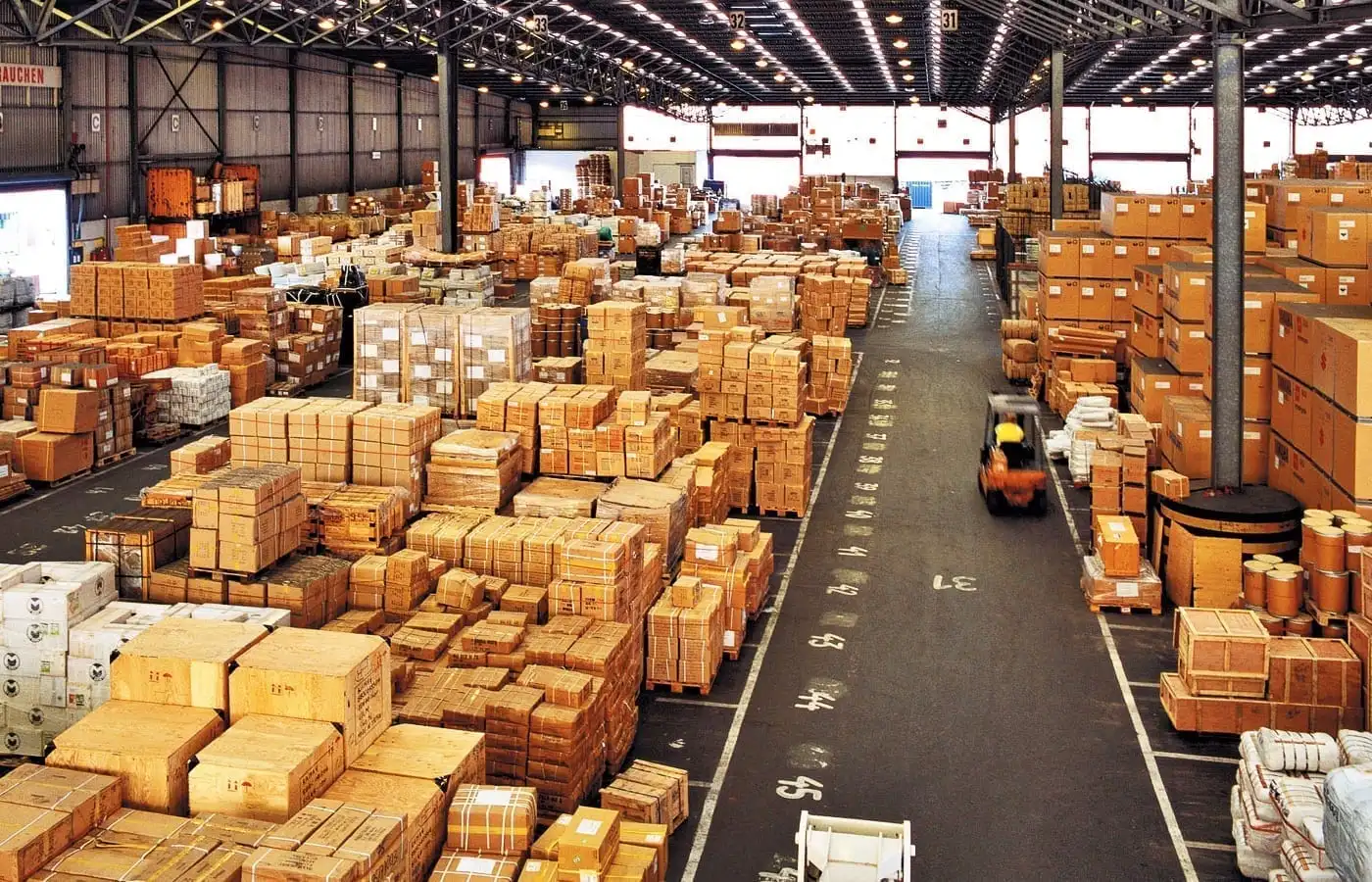
VI. Problems With The Proposal For A 100% Refund Of Import Tax In Case Goods Must Be Re-Exported
On February 21, 2025, the General Department of Customs issued Official Letter No. 896/TCHQ-TXNK to answer problems with the request for 100% import tax refund. The General Department of Customs opinions are as follows:
1. Subjects receiving tax refunds
Subjects receiving tax refunds: imported goods that must be re-exported
Specifically, cases of tax refund for imported goods that must be re-exported include:
- Goods imported but must be re-exported abroad or exported into non-tariff zones.
- Imported goods cannot be delivered to recipients through international postal or express services, and must be re-exported.
- Imported goods have paid taxes and then sold to international means of transport.
- Imported goods that have paid tax but are still stored in warehouses and yards at border gates and are under the supervision of customs authorities.
(According to Article 19.1.c of the Law on Export and Import Tax 2016 and Article 34 of Decree 134/2016/ND-CP)
2. Conditions for tax refund
Conditions for tax refund: unused, processed and processed goods
(According to Article 19.2 Law on Export and Import Taxes 2016)
Note: Taxpayers need to accurately and truthfully declare re-exported goods on the customs declaration, ensuring that the tax refund dossier is fully met.
(According to Official Letter No. 896/TCHQ-TXNK dated February 21, 2025)
READ MORE Guidelines on Tax Refunds of Imported Goods for Export Production 2024
Contact UNI now to receive expert consultation on procedures for your import tax refund and customs declaration.
VII. Guiding Export Processing Enterprises (EPEs) To Bring Goods Into The Inland To Check Product Durability
On February 4, 2025, the General Department of Customs issued Official Letter No. 507/TCHQ-GSQL to give opinions on this issue as follows:
According to the regulations in Clause 3, Article 36 of Decree 08/2015/ND-CP:
“Raw materials, supplies, machinery and equipment imported for processing and production of export goods and export products must be stored in the production area of the enterprise. In case of storage outside the production area , the enterprise must send a document to the customs office for consideration and decision.”
Therefore, when an export processing enterprise brings an export product into the inland for durability inspection, it is necessary to notify the customs office.
Customs authorities will proactively apply appropriate supervision methods to ensure customs management. If signs of violation are detected, the Customs authority will inspect and handle them according to regulations.
(According to Official Letter No. 507/TCHQ-GSQL dated February 4, 2025)
VIII. Guiding Procedures For Export Processing Enterprises (EPE) And Authorized Economic Opearator (AEO) To Deliver Raw Materials And Supplies To Reprocessing Partners
On January 24, 2025, the General Department of Customs issued Official Letter No. 445/TCHQ-GSQL guiding on this issue as follows:
1. Notice of production facility and contract to hire a reprocessing partner
- Before sending raw materials and supplies for processing, the Company must notify the production facility and the contract to hire a processing partner for the Customs Branch where it is managed.
- Follow Form 20 – Appendix II or Form 12/TB-CSSX/GSQL – Appendix V Circular 39/2018/TT-BTC.
2. The process of delivering materials to the partner for reprocessing
Export processing enterprises (EPE) belonging to the Authorized economic operator (AEO) category are entitled to directly transport imported raw materials and supplies (E11) or purchased domestically (E15) to partners for production or reprocessing.
- After completing the E11 import procedures, raw materials and supplies will be transported from the import gate to the warehouse of the processing partner.
- Or the Company can specify the delivery from the warehouse of domestic goods trading partners to the warehouse of the processing partner.
3. Customs clearance
a. In case of importing raw materials from foreign countries (type E11):
- The company declares the bonded transport location code as the code of the enterprise receiving the reprocessing; or
- The Code of the Customs Branch receives the reprocessing contract (if the reprocessing enterprise has not yet been granted a location code).
b. In case of purchasing raw materials from the domestic market (type E15):
The Company is allowed to deliver the goods first and complete customs procedures later within 30 days of the date of delivery.
When registering the import declaration, the Company declares the unloading location as:
- Code of the enterprise receiving the reprocessing.
- Or the code of the Customs Branch receiving the reprocessing contract (if the reprocessing enterprise has not yet been granted a location code).
c. Obligation to keep records
The company needs to store complete documents proving the process of delivery and use of raw materials and supplies from import, processing, receipt of semi-finished products, products and production.
All must comply with accounting and customs regulations and be ready to provide when requested by the management agency.
(According to Official Letter No. 445/TCHQ-GSQL dated January 24, 2025)
READ MORE Tax Policies In Case Export Processing Enterprises (EPEs) Lease Factories To Others (EPEs)

IX. Guidance On Declaration Of Customs Value Of Imported Goods For Bonuses/Penalties For Fast/Slow Unloading
On February 19, 2025, the General Department of Customs issued Official Letter No. 831/TCHQ-TXNK on the declaration of customs value of imported goods for bonuses/penalties for fast/slow unloading. Accordingly, some contents to note are as follows:
Circular 39/2015/TT-BTC stipulates customs value as follows:
- The customs value of imported goods is the actual price payable up to the first border gate of import (Article 5).
- The actual price payable is the total amount that the buyer has paid or will have to pay to the seller for the purchase of imported goods after it has been adjusted according to the adjustment charges plus and minus adjustment (Article 6).
Accordingly, the bonus/penalty incurred after the buyer receives the goods is not within the scope of fees that must be adjusted and added to the customs value (Article 13) and fees that must be deducted from the customs value (Article 15).
Therefore, if the Company and the seller have an agreement on the bonus/penalty related to the unloading of the goods by the buyer, this fee will not be added or deducted from the customs value of the imported goods.
(According to Official Letter No. 831/TCHQ-TXNK dated February 19, 2025)
X. Guidance On Procedures For Importing Low-Value Goods And Express Goods
On February 17, 2025, the Ministry of Finance issued Official Letter No. 1813/BTC-TCHQ guiding the implementation of Decision No. 01/2025/QD-TTg on the collection of value-added tax (VAT) and customs procedures for low-value imports sent via express delivery services. The details are as follows:
1. Application of tax policies
From February 18, 2025, goods imported via express delivery services will no longer be exempt from VAT.
The declaration and payment of VAT on these goods will comply with the provisions of the VAT Law and relevant legal documents.
2. Regulations on customs declaration and tax liability for low-value declarations
Group 2 (low-value) imported goods sent via international express services transported by air or sea:
- Courier enterprises declare e-customs on the VNACCS system.
- VAT must be calculated and paid according to Form No. 02-BKTKTGT, Appendix I, List 2 enclosed with Circular 56/2019/TT-BTC, in which the lines “Total customs value”, “VAT rate”, “VAT amount” are added.
Group 2 (low-value) imported goods sent via international express services transported by road or railway:
- Make customs declaration according to Form HQ/2015/NK Circular No. 38/2015/TT-BTC, comply with VAT regulations according to Circular 56/2019/TT-BTC.
For imported goods with VAT rates (5%, 8%, 10%) and not subject to VAT, enterprises shall make a list of imported goods with the same VAT rate.
3. Customs tax and charge receipts
Express delivery enterprises will use electronic tax receipts according to the provisions of Appendix I of Circular No. 178/2011/TT-BTC.
Before issuing e-receipts, enterprises need to carry out procedures for notifying customs offices according to form No. 01 of Circular 178/TT-BTC.
(According to Official Letter 1813/BTC-TCHQ dated February 17, 2025)
The latest information about customs situation will be continuously updated in the customs newsletter of UNI CUSTOMS CONSULTING. We invite businesses to stay informed!
For expert advice on customs issues, please contact this hotline +(84) 908-535-898 (Vietnamese), +(84) 902-927-767 (Korean) or send an email to the address: [email protected].