

In the context of volatile US mutual tariff policies during the 2025–2026 period, Vietnamese exporters are facing stringent legal challenges and the risk of retroactive tax assessments. This recap summarizes the specialized origin management strategies from the CEO of UNI, helping businesses master the principle of “substantial transformation” and build a three-tier origin management system. This is an essential handbook for protecting the “Made in Vietnam” label and maintaining a sustainable competitive advantage in the US market.
1. Supporting Central Vietnam Enterprises in Navigating Trade Waves
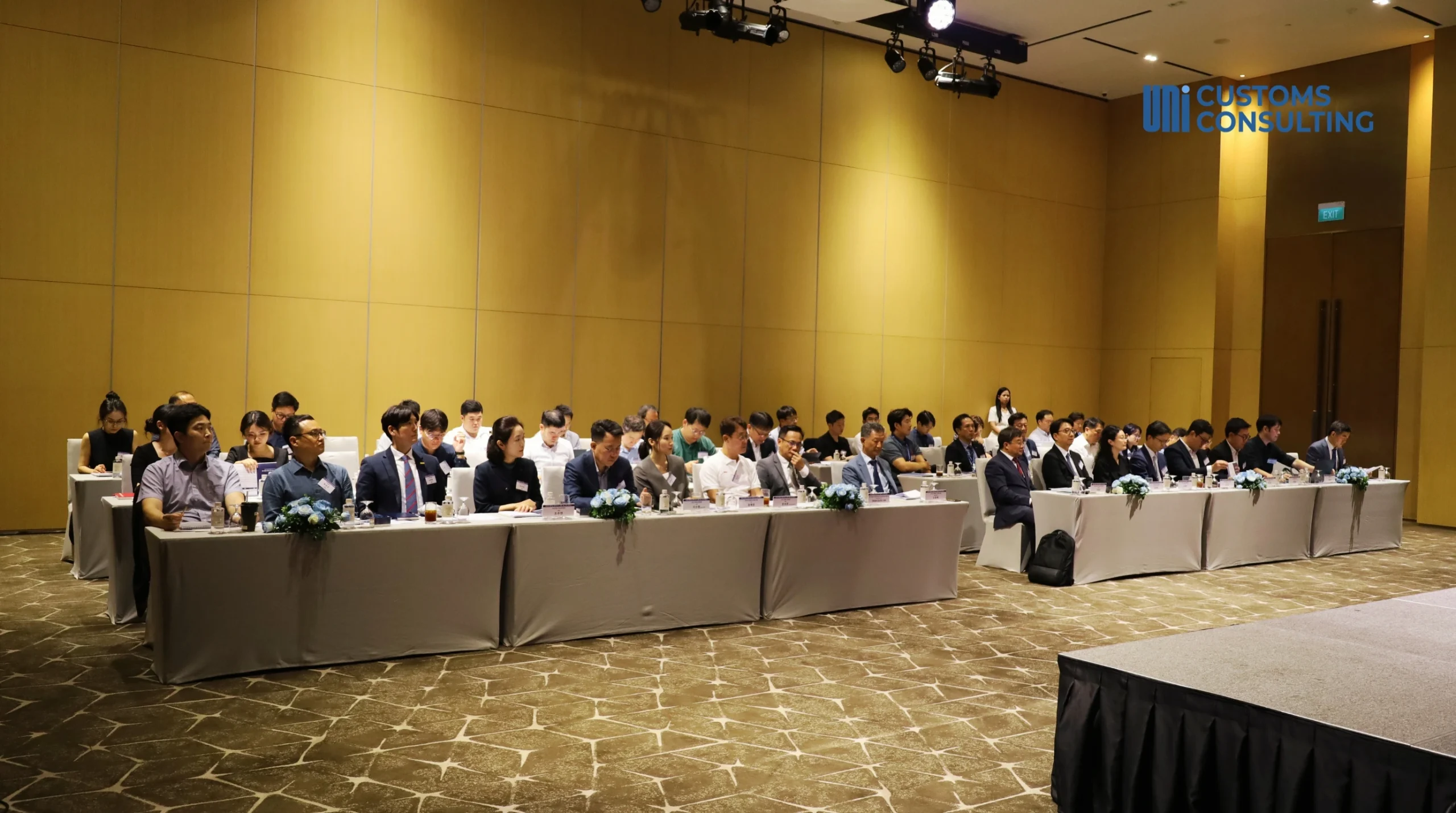
Amidst increasing pressure on invested enterprises due to the implementation of new labor and tax regulations in 2026 and global trade conflicts, the 2026 Seminar on Supporting Enterprises Expanding to Central Vietnam was organized to promptly share information and resolve current difficulties.
The event took place on April 1, 2026, at Shilla Monogram with the participation of approximately 30 enterprises investing in the Central region. The seminar was chaired by KOTRA (Da Nang Office) in collaboration with the Consulate General of the Republic of Korea and the Korean Business Association in Da Nang.
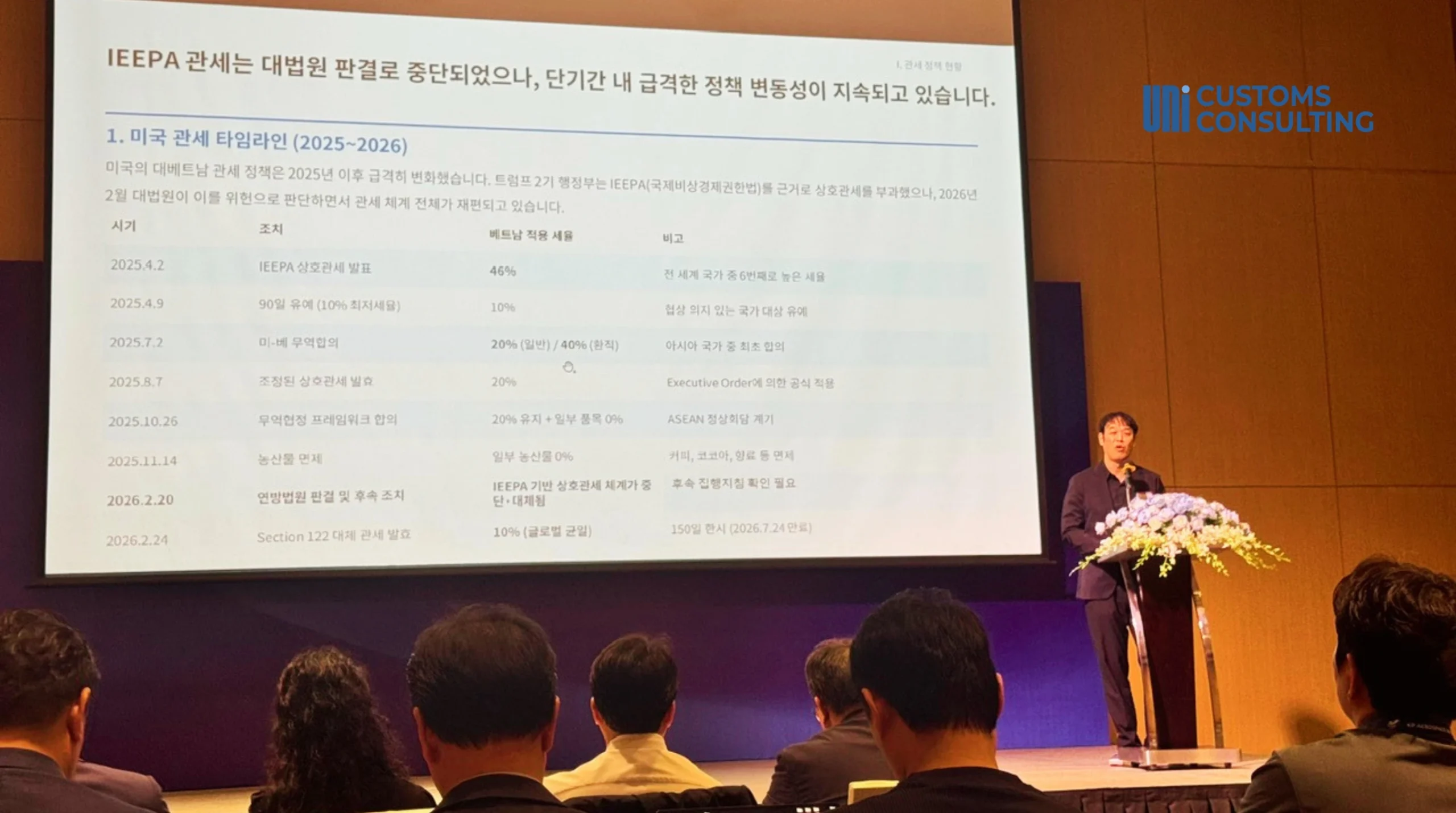
During the discussion session, Mr. Byun Sang Hyun – CEO of UNI Customs Consulting, presented on “Origin Rule Management Strategy Responding to U.S. Tariffs”. The content summarized existing risks regarding origin verification and provided a legal defense roadmap for “Made in Vietnam” goods when exported to the U.S.
2. US Mutual Tariffs: Fluctuations & Impact on Origin Certification Processes
The tariff landscape for the 2025–2026 period is full of uncertainty. Notably, after the reciprocal tax system based on IEEPA was declared suspended by the Supreme Court in February 2026, Vietnamese enterprises are facing the alternative tax structure of Section 122 (10% global).
|
Date |
Measure | Vietnam Applied Rate |
Notes |
| 04/02/2025 | IEEPA Reciprocal Tariff | 46% | 6th highest rate globally |
| 04/09/2025 | 90-day Grace Period | 10% | For countries showing intent to negotiate |
| 07/02/2025 | U.S.-Vietnam Trade Agreement | 20% (Gen) / 40% (Trans) | First agreement with an Asian nation |
| 08/07/2025 | Adjusted Reciprocal Tariff | 20% | Officially applied via Executive Order |
| 10/26/2025 | Trade Agreement Framework | 20% + Select 0% items | Agreed during ASEAN Summit |
| 11/14/2025 | Agricultural Exemptions | 0% for select items | Coffee, cocoa, spices, etc. |
| 02/20/2026 | Federal Court Ruling | IEEPA system suspended | Awaiting follow-up enforcement guidelines |
| 02/24/2026 | Section 122 Tariff Effective | 10% (Uniform Global) | Valid for 150 days (Expires 07/24/2026) |
This shift requires origin certification processes to be extremely stringent, as the U.S. tends to increase taxes again through Section 301 investigations in the second half of 2026.
a. Tightening Inspection Trends by U.S. Customs and Border Protection (CBP)
- Record Enforcement: 2025 marked a harsh milestone when CBP recovered over $400 million in taxes for origin violations through EAPA investigations.
- Red Alert (Form 28/29): Receiving Form 28 (Request for Information) is not merely an administrative procedure but the first signal of a tax evasion investigation.
- Enterprises have only 30 days to provide a satisfactory response.
- Failure to do so carries the real risk of punitive duties (Form 29) reaching hundreds of percent.
- Key Targets: The solar energy industry (tariffs up to 542%), steel, and aluminum are in the direct “sights” of the Joint Task Force (TFTF) to prevent illegal transshipment activities.
b. Principles of “Substantial Transformation”
To protect the “Made in Vietnam” label, Mr. Byun emphasized that products must achieve significant changes:
- Character: This is the core element. The product must change its physical or chemical nature compared to the input materials, not just a change in trade name.
- Essential Character: CBP currently focuses on the origin of components that determine the main function, such as chips, PCBA boards, or motors. If these components are from China, the product still risks being ruled as Chinese origin despite being assembled in Vietnam.
- “Simple Assembly” Warning: Processes such as “screwing,” labeling, or assembling from available modules will be considered by CBP as failing to meet substantial transformation standards.
3. Solutions and Response Strategies for Enterprises Toward US Mutual Tariffs
To overcome these barriers, Mr. Byun Sang Hyun provided a specific roadmap:
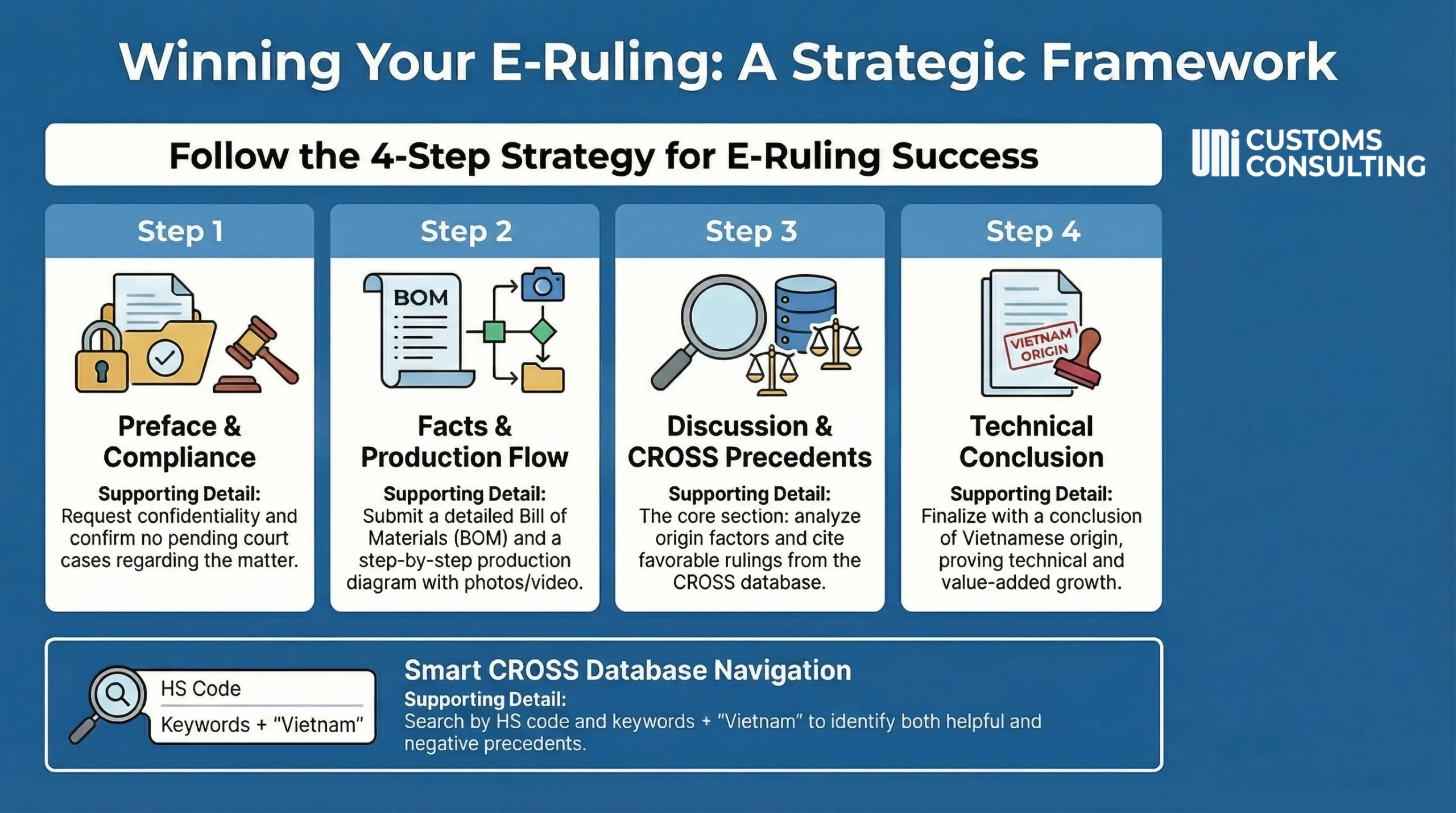
- “e-Ruling” Legal Shield:
This is the most powerful tool to help enterprises obtain a legally binding ruling from CBP before shipping, helping to exempt retroactive penalties and build absolute trust with U.S. partners.
- Building a 3-Level Management System:
- Basic Level: Transparently store Bills of Materials (BOM), Certificates of Origin (C/O), and supplier confirmations.
- Process Proof: Maintain visual evidence (images, videos) of the actual production process at the factory along with value-added calculation sheets.
- Legal Defense: Utilize CROSS data to analyze precedents and maintain “Reasonable Care” in every declaration to avoid penalties for intentional errors.
4. UNI’s Mission and Future Cooperation
Mr. Byun Sang Hyun’s presentation received significant interest from the many guests attending the seminar. This was not just a professional lecture but a survival handbook for enterprises exporting to the U.S. in 2026.
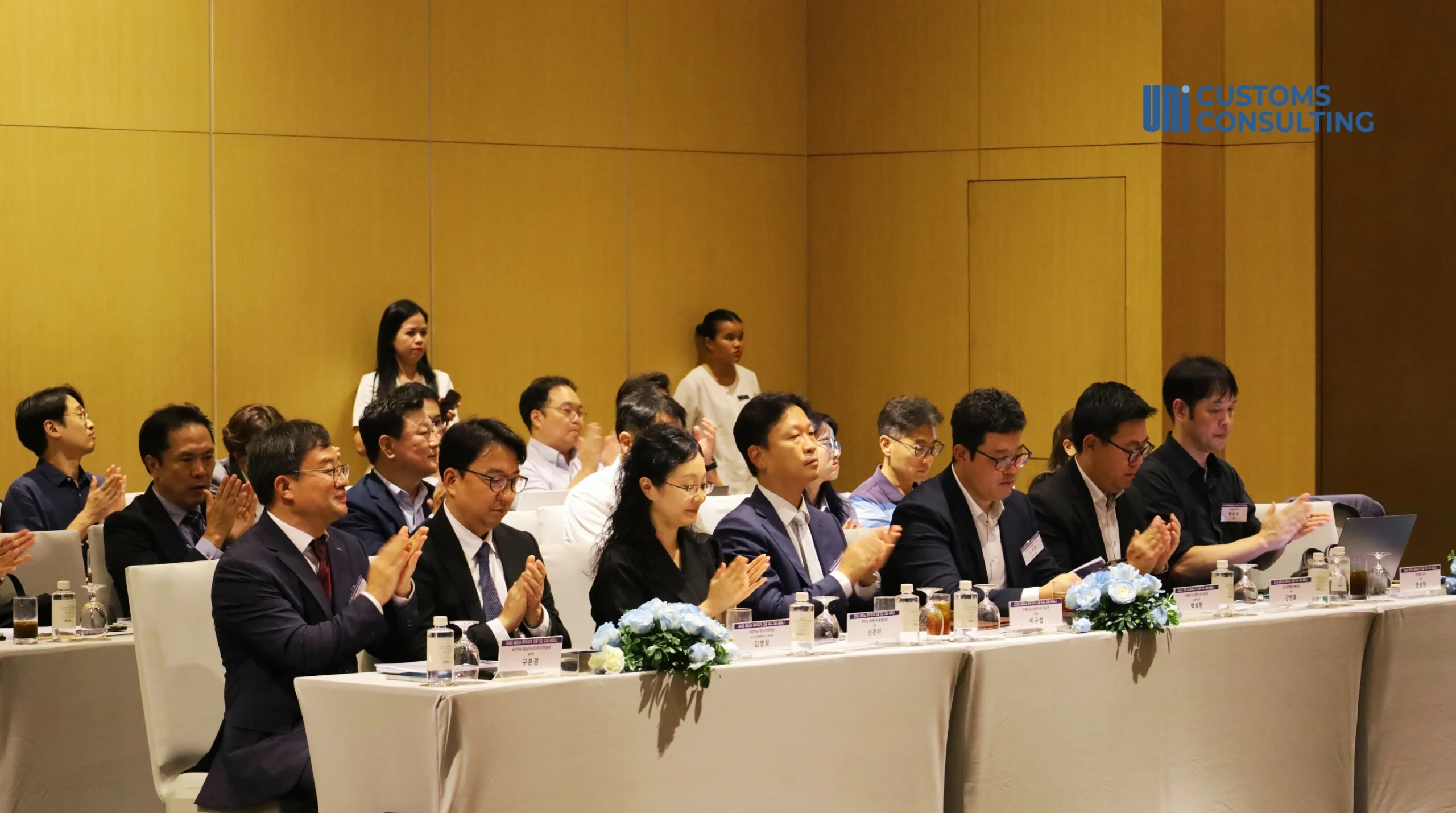
The presence of UNI’s CEO at the seminar chaired by KOTRA also affirms a close cooperative relationship with the shared goal of protecting and promoting the Korean business community in Vietnam.
UNI commits to continuing as a prestigious bridge, accompanying enterprises in dialogues with associations and government agencies. Our mission is to turn tariff risks into competitive advantages through standard compliance and sustainable supply chain strategies.
Contact us using the contact information below!
📞 Contact UNI Customs Consulting for free consultation:
📧 Email: uni@eximuni.com
📱 Hotline: (+84) 24-7308-7988 (Hanoi) | (+84) 28-7301-8910 (HCM)