

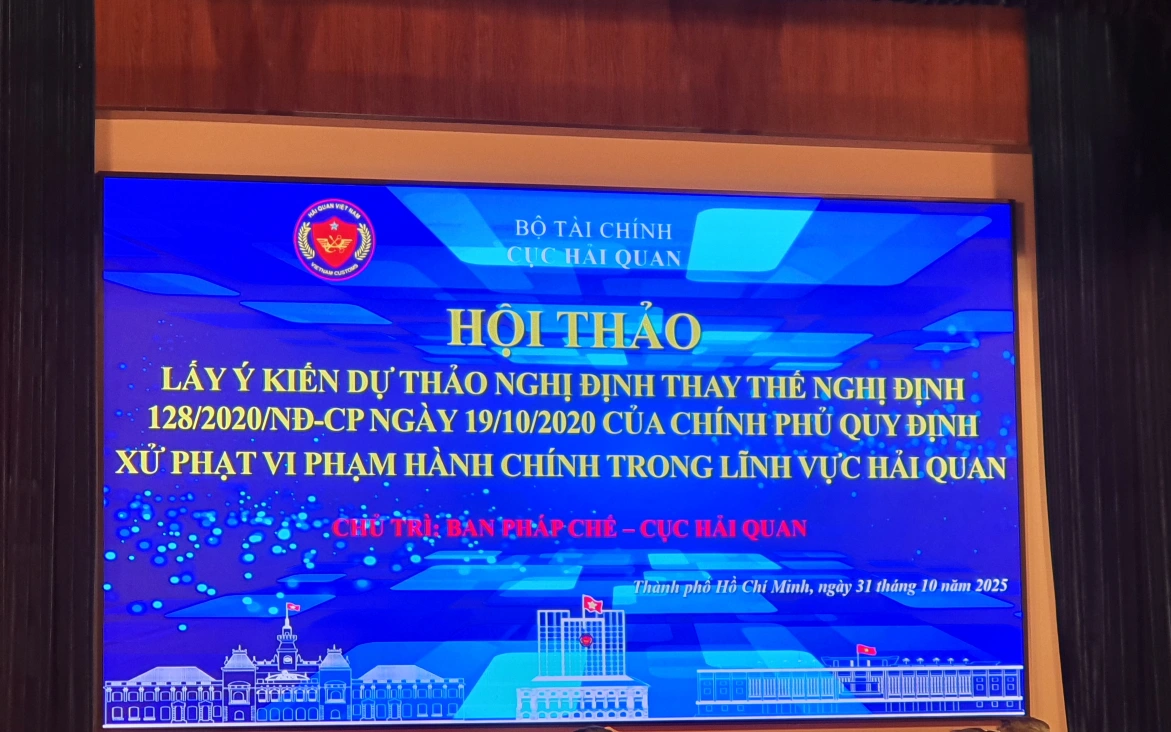
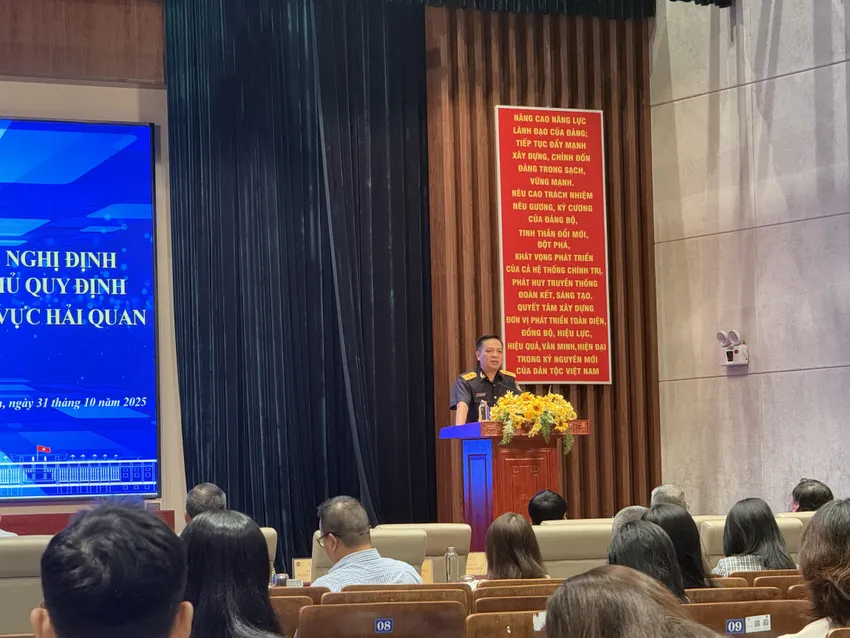
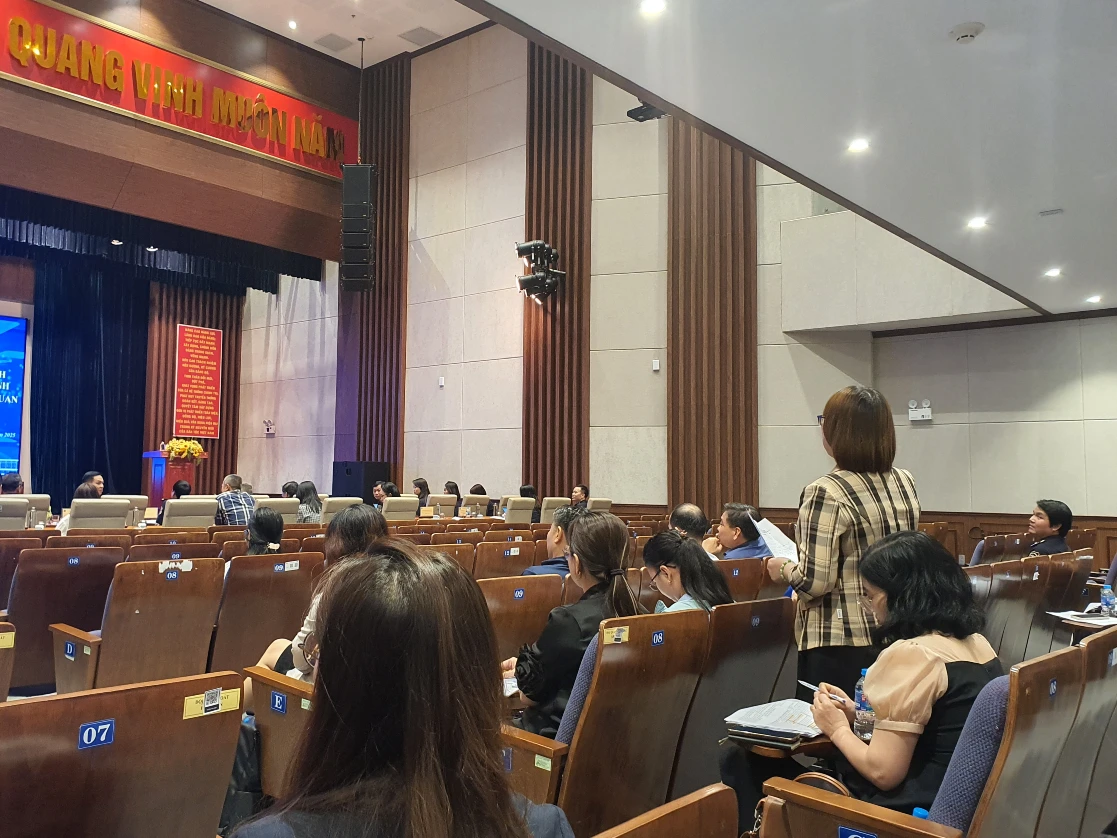
On the afternoon of October 31, 2025, UNI Company participated in the Conference for Feedback on the Draft Decree replacing Decree 128/2020/ND-CP (and Decree 102/2021/ND-CP) on administrative penalties in the customs sector. The event was organized by Sub-Department of Customs Region II – Ho Chi Minh City Customs Department, with the participation of representatives from the Customs Department, Japan Business Association in Ho Chi Minh City (JBAH), Vietnam Logistics Association (VLA), export processing enterprises, import-export enterprises, and local Customs Sub-Departments.
UNI attended the conference as a representative enterprise of the Korean Chamber of Commerce and Industry in Ho Chi Minh City (KOCHAM).
I. Purpose and Context
The conference was organized to collect feedback on the draft decree replacing Decree 128/2020/ND-CP, aiming to simplify sanctions, eliminate overlapping regulations, and align with international standards as recommended by the Kyoto Convention.
II. Summary of the Draft Content
1. Abolition of penalties for minor declaration errors
According to Article 9 of the draft, acts of incorrect declaration (regarding quantity, product name, value, origin, HS code, category, etc.) that do not change tax obligations and do not violate commodity policy will not be penalized.
This new provision is consistent with Standard 6.3 of the Kyoto Convention, aimed at reducing procedural burdens and compliance costs for enterprises.
2. Redefinition of penalty framework and levels
The draft divides penalties into 5 levels, ranging from 1 million to 40 million VND, depending on the nature and value of the violation. Specific penalty levels are classified by each act, from minor declaration errors for aid goods to failure to export or short export compared to the declaration.
Notably, export goods that are processed products, manufactured exports, goods from export processing enterprises, or temporary import-re-export will not be subject to the highest penalty level (according to Clause 5, Article 9).
3. Confirmation of the legality of customs declaration cancellation
The cancellation of declarations in accordance with regulations in Circular 38/2015 and 39/2018 is defined as a legitimate right of enterprises and is not considered an administrative violation.
4. Cases of supplementary declaration after the deadline
If the declarant discovers errors on their own and makes supplementary declarations after the prescribed deadline, they will still be penalized from 500,000 VND to 20 million VND, depending on the degree of impact (Clause 6, Article 9).
5. General drafting principles (Article 6)
- Only add violations that are truly necessary.
- Do not penalize acts that already have other administrative management measures in place.
- Limit the situation of “indiscriminate penalties,” creating a favorable environment for enterprises to comply.
III. Opinions Discussed at the Conference
1. Penalties for individuals in customs declarations
JBAH representatives stated that many enterprises face difficulties when regulations penalize individual violators (declaration staff), causing difficulties in determining responsibility.
→ Proposal: only handle penalties at the enterprise level.
Response from the Customs Department: maintain current regulations but individual penalty levels will be ½ of organizational penalty levels.
2. Procedures for collecting goods in non-tariff zones
Enterprises reported that the requirement to approve each shipment causes time delays. The drafting committee acknowledged this and indicated they will study simplifying procedures in this specific area.
3. Timing of declaration before goods arrival
VLA recommended: if enterprises declare before goods arrive and export within 24 hours, they should be exempt from penalties. The drafting committee indicated they will study this further as it relates to cargo security control and multimodal transport.
4. Penalty levels for transshipment goods
VLA representatives reported that the penalty level of 2-4 million VND is not reasonable because transshipment agents do not directly control the goods. The drafting committee acknowledged this and will consider classification based on actual risk.
5. Overlapping regulations between legal documents
Dong Nai Customs cited the example of enterprises importing chemicals potentially being penalized simultaneously under two decrees.
→ Recommendation: identify the lead agency and unify handling principles to avoid duplicate penalties.
6. Feedback from Binh Duong Customs
The draft reflects the direction of reducing criminalization of minor violations, while also requesting enhanced post-clearance inspection and settlement reporting to better manage export processing enterprises.
IV. General Assessment
The majority of enterprise opinions agreed with eliminating penalties for minor declaration errors, viewing this as a positive step, consistent with international practices and contributing to reduced compliance costs.
However, several technical issues still need further clarification during the draft completion stage, including:
- Distinction between individual and organizational responsibility;
- Control procedures in non-tariff zones;
- Regulations on declaration before goods arrival;
- Penalty mechanisms for logistics agents and transshipment;
- Principles for handling duplication between legal documents.
Contact us right now to receive quotation and consultation:
📞 Contact UNI Customs Consulting for free consultation:
📧 Email: uni@eximuni.com
📱 Hotline: +(84) 908-535-898 (Vietnamese) | +(84) 902-927-767 (Korean)