


Below are the latest customs newsletters in January 2025 which offer you updated customs regulation in Vietnam.
I. VIETNAM AND KOREA SIGN MUTUAL RECOGNITION AGREEMENT ON AUTHORIZED ECONOMIC OPERATORS (AEO MRA)
On the afternoon of December 24, 2024, at the headquarters of the General Department of Vietnam Customs, Mr. Nguyễn Văn Thọ, Director General of Vietnam Customs, and Mr. Ko Kwang Hyo, Commissioner of Korea Customs Service, signed the Mutual Recognition Agreement on Authorized Economic Operators (AEO MRA).
Following the signing of the AEO MRA, AEOs from both countries will be eligible for preferential treatment under the AEO programs of Vietnam and Korea. Both parties are currently completing the necessary procedures to establish the legal framework for implementing the AEO MRA program.
According to Korea Customs Service statistics, as of August 2024, Korea had 935 AEOs, accounting for approximately 50% of the country’s export value and 70% of its import value. In Vietnam, as of August 2024, there were 76 AEOs, whose import and export activities constituted over 30% of Vietnam’s total import-export turnover.
This agreement was signed based on the commitments outlined in the Revised Protocol to the Agreement between Vietnam and Korea on Cooperation and Mutual Assistance in Customs Matters, signed in December 2022 and effective as of September 2023.
(Source: General Department of Vietnam Customs)
You might enjoy: Free Trade Agreement (FTA) in Vietnam Business Context: How to Take Advantage? – UNI Customs Consulting

II. THE UNITED KINGDOM OFFICIALLY RATIFIES THE CPTPP AGREEMENT
On October 16, 2024, the United Kingdom announced that it has officially completed the ratification procedures for the Comprehensive and Progressive Agreement for Trans-Pacific Partnership (CPTPP).
Starting from December 15, 2024, the CPTPP will officially take effect for the United Kingdom. This milestone enables goods traded between Vietnam and the United Kingdom to benefit from preferential tariffs upon meeting the rules of origin requirements under the CPTPP.
It is important to note that the CPTPP Certificate of Origin (C/O Form CPTPP) issued by Vietnam must be completed in English and typed. The content of the C/O must align with the Customs Declaration that has completed customs clearance, as well as other relevant documents such as the bill of lading, commercial invoice, and the origin inspection report (if required).
With its accession to the CPTPP, the United Kingdom officially becomes the 12th member of this trade bloc, joining Canada, Mexico, Peru, Chile, New Zealand, Australia, Japan, Singapore, Brunei, Malaysia, and Vietnam.
(According to Official Letter No. 981/XNK-XXHH dated November 21, 2024)

III. EXTENSION OF VAT REDUCTION FOR THE FIRST HALF OF 2025
On December 31, 2024, the Government issued Decree No. 180/2024/ND-CP, extending the value-added tax (VAT) reduction policy for the first six months of 2025.
The General Department of Customs also released Official Letter No. 6068/TCHQ-TXNK, providing guidance on implementing this policy.
Key ponits to note:
Subjects eligible for VAT reduction and VAT reduction rates:
- Eligible Subjects: Goods and services currently subject to the 10% VAT rate.
- Tax reduction:
- For taxpayers using the credit-invoice method: A 2% reduction (applying an 8% VAT rate).
- Tax calculation according to the revenue percentage method: 20% reduction in the VAT calculation rate if invoices are issued.
(Pursuant to Articles 1 and 1.2 of Decree 180/2024/ND-CP)
Groups of goods and services not eligible for VAT reduction:
- Group of goods and services belonging to groups – Details: Appendix I
- Telecommunications, finance, banking, securities, insurance, real estate.
- Metal, prefabricated metal products.
- Mining products (except coal mining), coke, refined petroleum, chemicals.
- Group of goods and services in information technology – Details: Appendix III
- Group of goods and services subject to special tax – Details: Appendix II
- Goods and services are not subject to the VAT rate of 10%.
- Coal products: only VAT reduction at the coal mining stage.
(Pursuant to Article 1.1 of Decree 180/2024/ND-CP)
Instructions for declaration on the VNACCS/VCIS system:
- Use code VB235 in the “Codes for application of tax rates/tax rates and other collections” on the e-import declaration to declare the VAT rate of 8%.
The use of the code applies from 0:00 on January 1, 2025 for goods subject to VAT reduction.
- The VB235 code does not apply to:
- Goods are not subject to VAT.
- Goods subject to VAT at the rate of 0% or 5%.
- Goods are not subject to VAT reduction according to Resolution 174/2024/QH15.
The VAT reduction is consistently applied across all stages, including importation, production, processing, and commercial business, effective January 1, 2025.
(According to Decree 180/2024/ND-CP and Official Letter No. 6068/TCHQ-TXNK)

IV. CUSTOMS LAW COMPLIANCE INCENTIVE PROGRAM
On December 4, 2024, the General Department of Customs issued Decision 2790/QD-TCHQ on the promulgation of the Customs Law Compliance Incentive Program (“Program”). The main highlights of the Program are as follows:
1. Purpose of the Program:
- Support and encourage enterprises to enhance voluntary compliance with customs laws in import and export activities.
- Facilitate trade, reduce costs and risks, and assist enterprises in addressing difficulties related to customs procedures.
- Strengthen the partnership between customs authorities and enterprises, promote import-export activities, and improve the efficiency of customs management.
2. Benefits of the Program:
- Customs offices shall assist in solving problems, guiding customs procedures, inspecting dossiers and goods.
- Cooperate with ports, warehouses, and yards to facilitate delivery and receipt of goods.
- Providing information on compliance results, warning of risks in the import and export process
- Support businesses to reduce inspection costs, facilitate the application of scanner inspection.
- Provide information on customs procedures, new policies, and organize training for businesses.
- Digitize the management process and support businesses through technology platforms.
- Update tax information on the centralized Tax Accounting System.
3. Eligibility for Participation in the Program:
- Customs authorities act as the managing body and implement the Program.
- Enterprises engaged in import and export activities that meet the Program’s participation criteria and aim to improve their compliance with customs laws.
- Enterprises, organizations, and business associations participating as honorary members to support the Program.
4. Eligibility to participate in the Program
| Full. | Condition | Level 2 Compliant Enterprises | Level 3 Compliant Enterprises |
| 1 | Enterprise profile information | Fully updated and accurate | Fully updated and accurate |
| 2 | Legal Compliance | No violations within 365 days
(Excluding: violations of customs clearance time, tax filing deadlines, customs declarations) |
No violations within 365 days
(Excluding: violations of customs clearance time, tax filing deadlines, customs declarations) |
| 3 | Rate of yellow and red lane | > 30%/year | > 30%/year |
| 4 | Number of declarations | > 100 declarations/year
> 150 declarations/year |
> 100 declarations/year
> 70 declarations/year |
| 5 | Import and export turnover | > 10 million USD/year
> 20 million USD/year |
> 5 million USD/year
> 7 million USD/year |
| 6 | Number of employees | > 50 employees
> 100 employees |
> 50 employees
> 70 employees |
| 7 | Amount of tax paid | > 10 billion VND/year | > 5 billion VND/year |
| Note: enterprises can choose 1 of 2 criteria number (4) Number of declarations or criterion number (5) Import and export turnover.
Level 2 compliant enterprises: Highly compliant. Level 3 compliant enterprises: Moderately compliant. |
|||
5. Registration process for participation in the Program:
- The General Department of Customs will proactively compile a list of enterprises meeting the above criteria to promote and encourage their participation in the Program.
- Enterprises wishing to participate must submit a registration form (Form No. 01) to the General Department of Customs.
Download the form here.
- If an enterprise meets the criteria, the General Department of Customs will sign a Memorandum of Understanding and issue a Membership Certificate to the enterprise.
(According to Decision No. 2790/QD-TCHQ)

V. NEW REGULATIONS ON THE IMPORT OF ELECTRIC VEHICLES FROM JANUARY 1, 2025
According to Circular No. 54/2024/TT-BGTVT
Recently, Vietnam has issued a series of new regulations, including changes in the process and procedures for certifying technical safety and quality for imported electric vehicles. The new regulations will officially take effect from January 1, 2025 and are expected to have an impact on businesses importing electric vehicles and electric vehicle parts.
1. Abolishing regulations on quality inspection of imported electric bicycles from January 1, 2025
Circular No. 54/2024/TT-BGTVT was issued, officially repeals Circular No. 41/2013/TT-BGTVT regulating the inspection of technical safety and quality of electric bicycles.
(According to Article 22.2 of Circular 54/2024/TT-BGTVT)
Circular 54/2024/TT-BGTVT only applies quality inspection to imported motor vehicles (cars, motorcycles, mopeds) and motor vehicle spare parts. Electric bicycles belong to the group of rudimentary vehicles, so they will not be subject to application.
(According to Article 6 of Circular 53/2024/TT-BGTVT)
Therefore, it is likely that electric bicycles to be imported will not be subject to quality inspection procedures from January 1, 2025 if there are no new regulations to replace the repealed Circular 41/2013/TT-BGTVT.
Read more: “Recommendations for Electric Bicycle Importing Businesses”
2. TProcedures for importing electric motorcycles from January 1, 2025
(According to Article 5 of Circular 54/2024/TT-BGTVT)
a.Dossier of registration for inspection:
- Test Registration Form
- Imported Vehicle Information Sheet
- Brochure introducing the manufacturer’s vehicle features and specifications
- Commercial invoice with list of goods
- Declaration of imported goods
- Safety Test Report;
- Power Consumption Registration Form
- Power Consumption Test Report
- Confirmation of the inspection plan
Thus, the new point of Circular 54/2024/TT-BGTVT is that imported electric motorcycles must be registered for electricity consumption and must be tested for electricity consumption.
b. Methods of quality inspection of imported vehicles
(i) Method of vehicle inspection, sample testing:
This method applies to:
- Models imported for the first time into Vietnam
- The model has been certified 36 months ago, the test sample will be randomly selected in the import shipment at the request of the importer but not earlier than 06 months before the end of the above 36-month period.
- The goods lot of the same type as the adjacent import goods lot was previously issued a notice of failure.
Inspection contents:
- Check the conformity between documents in the inspection registration dossier;
- Check the status of frame numbers and engine numbers of vehicles in the shipment and compare them with the list of frame numbers and engine numbers in the inspection registration dossier;
- Define the types that are included in the shipment. Select 01 random sample for each type to check and compare the model vehicle with the documents in the inspection registration dossier and for testing. The requirements for testing each type of motor vehicle are specified in Appendix IX issued together with this Circular;
- Inspect and re-evaluate the dossier after the importer supplements the safety test report and the exhaust gas test report.
(ii) Probabilistic inspection method
This method applies from the second shipment onwards, only checking documents and comparing them with model vehicles.
Inspection contents:
- Checking for conformance between documents in the application for inspection
- Check the status of frame numbers and engine numbers of vehicles in the shipment and compare them with the list of frame numbers and engine numbers in the inspection registration dossier;
- Determine the types of vehicles included in the shipment.
Select 01 random sample for each type and check and compare the model vehicle with the documents in the inspection registration dossier
(According to Articles 6 and 7 of Circular 54/2024/TT-BGTVT)

c. Notes on the inspection process:
(i) Cases of application rejection
- Documents in the registration dossier for inspection contain images or content that do not reflect the national sovereignty or contain other content that adversely affects the security, politics, economy, society, or diplomatic relations of Vietnam.
- The Vehicle Identification Number (VIN) is not declared in the registration dossier for inspection.
(ii) Cases where applications are deemed non-compliant
Vehicle Identification Number (‘VIN’)
- The vehicle’s VIN or engine number inspected does not match the registration dossier for inspection.
- The vehicle does not have a VIN.
- The vehicle’s VIN is partially or wholly unidentifiable.
- The vehicle’s VIN is affixed to a metal plate or other material attached to the vehicle’s frame using welding, riveting, or adhesive methods.
- The vehicle does not have a trademark.
- The VIN of the vehicle matches the VIN of a previously imported vehicle.
(iii) Other cases to note:
- Vehicles with illegible, altered, or tampered VINs require specialized forensic examination.
- If the documents in the dossier do not match the actual vehicle, the importer is allowed to supplement the dossier within 15 working days.
- At the request of the inspection authority, software provided by the manufacturer may be used for vehicle structure evaluation instead of physical testing.
- Test vehicles that have been run-in abroad must be certified by the manufacturer as unused.
- Imported vehicles damaged during transportation may be repaired or have unused spare parts of the same type replaced (applicable to body parts, glass, lights, relays, mirrors, wipers, batteries, tires, and windshields).
(According to Article 4 of Circular 54/2024/TT-BGTVT)
3. Publicize energy consumption, label energy before selling vehicles to the Vietnamese market
Motorcycles belonging to the group of means of transport are required to be labeled with energy
(According to Article 1.4 of Decision No. 04/2017/QD-TTg)
Electric motorcycles must publicize their energy consumption and label them before they are sold to the market. Public information must match the certification and be posted on the importer’s website (if any).
Energy labels must be registered with the Ministry of Industry and Trade
(According to Article 15 of Circular 54/2024/TT-BGTVT)
4. Responsibilities of the importer
- Ensure that imported goods remain unchanged as required for the certification authority to carry out inspections.
- Ensure that imported goods remain unchanged as required for the certification authority to carry out inspections.
- Submit an annual report related to energy labeling, with the deadline for submission no later than December 31.
- Attach the chassis number and engine number plate to the back of the quality, technical safety, and environmental protection certificate of the imported vehicle, and seal the stamp for the purpose of online vehicle registration as per the regulations of the Minister of Public Security.
- Store import dossiers for at least 05 years from the time of stopping import of the type of goods. When destroying these documents, the importer must ensure that data can be retrieved for product recall.
(According to Article 19 of Circular 54/2024/TT-BGTVT)
VI. NEW REGULATIONS FOR ELECTRIC BICYCLES FROM 2025
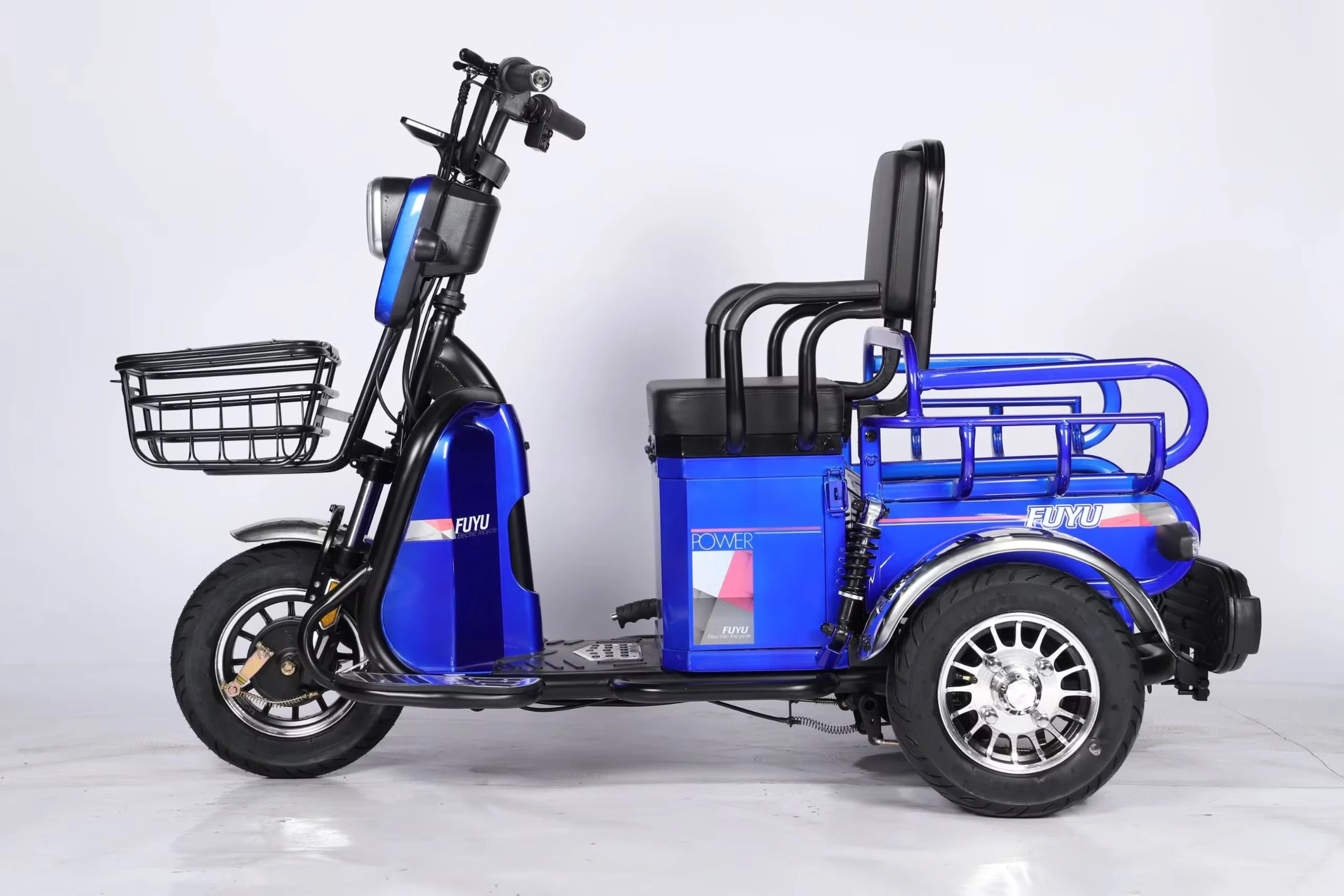
The Vietnam Register has just issued Notice No. 4638/DKVN-VAQ dated December 18, 2024, providing guidelines for manufacturers, assemblers, and importers of electric bicycles:
a. Definition of electric bicycles under the new regulations, effective from 2025:
Electric bicycles are defined as bicycles equipped with motor assistance. The motor power must be cut off when the rider stops pedaling or when the bicycle reaches a speed of 25 km/h.
Therefore, the manufacture, assembly and importation of electric bicycles powered solely by an electric motor without a pedaling mechanism will no longer comply with the new regulations as of January 1, 2025. This type of vehicles will not be classified as electric bicycles.
(Pursuant to Article 34.2 of the Law on Traffic Order and Safety 2024)
b. Recommendations for manufacturers, assemblers, and importers:
- Complete the production, delivery, or importation of electric bicycles powered solely by an electric motor without a pedaling mechanism before January 1, 2025.
- Adjust the plan for manufacturing, assembling and importing electric bicycles in accordance with the definition of electric bicycles under the new regulations.
This announcement was issued in the context of potential changes effective January 1, 2025, where electric bicycles may no longer require quality inspection procedures for imported vehicles.
(According to Notice No. 4638/DKVN – VAQ dated December 18, 2024)
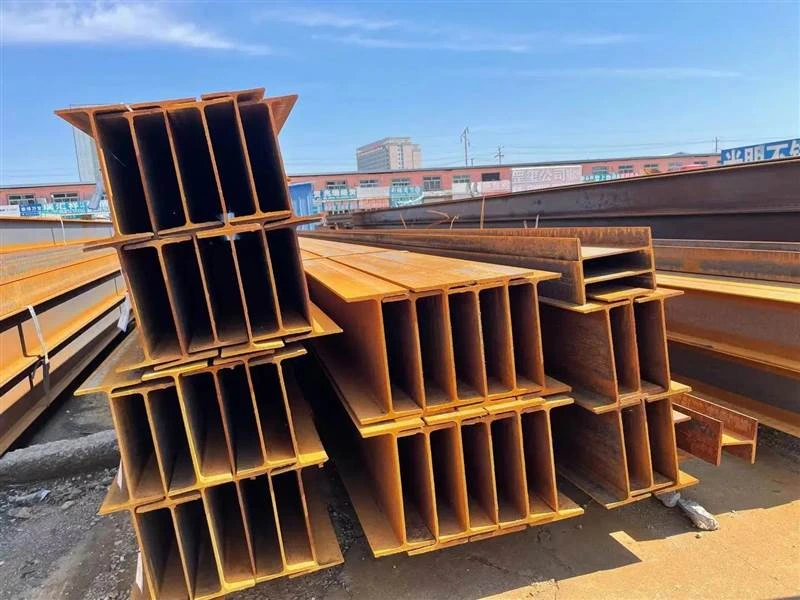
VII. ADJUSTMENT OF ANTI-DUMPING DUTIES (ADD) ON “H-SHAPED” STEEL PRODUCTS ORIGINATING FROM CHINA
Case code: AR02.AD03
Applicable goods: H-shaped steel products, whether alloyed or non-alloyed, with a straight web structure in the middle and two horizontal flanges at the top and bottom.
Common name: “H-Beams”, “W-Beams”, or “Wide-Flange Beams”.
Related HS codes: 7216.33.11, 7216.33.19, 7216.33.90,7228.70.10, 7228.70.90.
Origin of goods: China.
Group of companies subject to duty adjustment: Jinxi Group of Companies (China).
Adjusted ADD rate: 13.38% (previous rate: 22.09%).
Effective Period of the Anti-Dumping Measure: From December 10, 2024, to September 5, 2027 (subject to modification or extension under further decisions by the Ministry of Industry and Trade based on the results of reviews conducted in accordance with the law).
(According to Decision No. 3098/QD-BCT dated November 25, 2024)
Relevant article: What is Antidumping duty? List of Chinese Goods subject to antidumping duty in Vietnam.
VIII. TAX HANDLING IN CASES OF ENTERPRISE EVASION, NON-SUBMISSION, OR LATE SUBMISSION OF CUSTOMS FINAL STATEMENT
On December 4, 2024, the General Department of Customs (GDC) issued Official Dispatch No. 6060/TCHQ-TXNK regarding tax notification for cases where enterprises evade, fail to submit, or delay submission of Customs Final Statement (hereinafter referred to as “BCQT”).
Key points to note include:
- In the case of late submission of BCQT: The Customs authority will issue a written invitation for the enterprise to attend a meeting at its office to prepare an administrative violation record. If the enterprise does not appear within 10 days, the Customs authority will conduct an investigation at the enterprise’s premises. Subsequent shipments by the enterprise will be subject to enhanced document checks and physical inspections.
- In the case of non-submission of BCQT by an active enterprise: The Customs authority will prepare an administrative violation record and conduct customs audit or specialized inspections.
- In the case of enterprise cessation, dissolution, or bankruptcy with unpaid tax obligations: Related organizations or individuals, such as owners, shareholders, or capital-contributing members, will be held responsible for settling the unpaid tax amounts.
- In the case of enterprise evasion and non-submission of BCQT: Criminal proceedings will be initiated for smuggling or tax evasion. If the Customs authority lacks actual standards to determine the tax amount, it will use actual standards from similar goods of other organizations or individuals.
Tax liabilities of the enterprise will be updated on the centralized accounting system.
(According to Official Letter No. 6060/TCHQ-TXNK dated December 04, 2024)

IX. NOTABLE POINTS ON TAX DEBT HANDLING
On December 2, 2024, the GDC issued Official Dispatch No. 6039/TCHQ-TXNK providing guidance on tax debt handling. Key points include:
1. Regarding voluntary repayment of tax debts that have been charged off or canceled
Pursuant to Article 18.2 of Circular 69/2020/TT-BTC, taxpayers whose debts have been deferred or written off but voluntarily repay the debt will not be subject to revocation of the charge-off or cancellation of debt decision.
The GDC notes the inadequacies in the above regulations and will propose amendments to the law to ensure legality.
2. Regarding late payment interest after termination of tax debt charge-off decisions:
Currently, there is an inconsistency between the provisions of Article 59.2 of the Law on Tax Administration and Article 23.3 of Decree No. 126/2020/ND-CP. The GDC recognizes this issue and is proposing amendments to cover all potential scenarios involving late payment.
The GDC shall guide enterprises to temporarily apply the provisions of Article 23.3 of Decree 126/2020/ND-CP for implementation. Accordingly, the tax administration agency will calculate late payment interest for enterprises from the date of issuance of the decision terminating the tax debt charge-off until the taxpayer fully pays the outstanding tax debt into the state budget.
Until amendments are made to Point b, Clause 2, Article 59 of the Law on Tax Administration No. 38/2019/QH14, relevant entities are advised to act in accordance with Clause 3, Article 23 of Decree 126/2020/ND-CP.
3. Application of tax debt cancellation provisions:
For tax debts incurred before July 1, 2020 but the business registration certificate is revoked after July 1, 2020:
Under Article 152.1 of the Law on Tax Administration 2019.
Accordingly, the cancellation of tax debts applies to:
- Tax debts exceeding 10 years past the payment deadline and deemed uncollectible.
- Enterprises subjected to enforcement measures by tax authorities, such as:
- Deduction of funds from the enterprise’s bank account for tax payment.
- Garnishment of wages or income.
- Suspension of customs clearance for imported/exported goods.
- Seizure and auction of assets.
- Confiscation of money and other assets.
- Revocation of the Enterprise Registration Certificate (ERC) or Investment Registration Certificate (IRC).
For tax debts incurred from July 1, 2020:
Under Article 85.3 of the Law on Tax Administration 2019.
Accordingly, the cancellation of tax debts applies to:
- Tax debts exceeding 10 years past the payment deadline and deemed uncollectible.
- Enterprises subjected to enforcement measures by tax authorities, such as revocation of the ERC or IRC.
(According to Official Letter No. 6039/TCHQ-TXNK dated December 2, 2024)
X. VALUE-ADDED TAX POLICIES FOR INTERNATIONAL GOODS TRADING TRANSACTIONS
On October 23, 2024, the Binh Duong Tax Department issued Official Letter No. 27668/CTBDU-TTHT on the determination of value-added tax (VAT) for goods trading transactions abroad.
Accordingly, if an enterprise buys goods from abroad, does not carry out customs procedures in Vietnam but sells such goods directly to another country, the revenue from this transaction is subject to the VAT rate of 0%.
Enterprises must submit documents to prove that the delivery and receipt of goods takes place outside the territory of Vietnam, such as:
- A purchase contract signed with the foreign seller;
- A sales contract signed with the buyer;
- Documents verifying that the goods were delivered and received outside Vietnam, such as international commercial invoices, bills of lading, packing lists, certificates of origin, etc.;
- Bank payment records, including evidence of payment from the enterprise to the foreign seller and evidence of payment from the buyer to the enterprise.
The enterprise is required to issue VAT invoices in accordance with regulations.
(According to Official Letter No. 27668/CTBDU-TTHT dated October 23, 2024)

XI. DEDUCTION OF CORPORATE INCOME TAX (CIT) ON INCOME FROM SALARIES OF FOREIGN WORKERS WORKING IN VIETNAM
Enterprises apply the CIT deduction method to incomes from salaries and wages of foreigners working in Vietnam as follows:
- According to the partial progressive schedule: for foreign workers who have worked in Vietnam for 183 days or more during the tax year.
- According to the full tax schedule: for individuals who have worked in Vietnam for less than 183 days during the tax year.
The enterprise must base the calculation on the foreign employee’s working period in Vietnam as stipulated in the employment contract or the assignment document for work in Vietnam.
In case an enterprise hires a foreign worker to work in Vietnam but this person has not been granted a work permit by a competent authority in Vietnam, there is no basis to include it in deductible expenses when determining CIT taxable income.
(According to Official Letter No. 27325/CTBDYU – TTHT dated December 2, 2024)
XII. UPDATED EXPORT TAX RATES (13 ITEMS), EFFECTIVE FROM JANUARY 1, 2025
On December 18, 2024, the Import-Export Tax Department (Import-Export Tax) has just issued an Official Letter on changing the export tax rates of some commodity codes from January 1, 2025. Specifically, as follows:
| No. | HS Code | Tax rates apply from 01/01/2025 |
| 1 | 6801.00.00 | 20% |
| 2 | 6802.10.00 | 20% |
| 3 | 6802.21.00 | 20% |
| 4 | 6802.23.00 | 20% |
| 5 | 6802.29.10 | 20% |
| 6 | 6802.29.90 | 20% |
| 7 | 6802.91.10 | 20% |
| 8 | 6802.91.90 | 20% |
| 9 | 6802.92.00 | 20% |
| 10 | 6802.93.10 | 20% |
| 11 | 6802.93.90 | 20% |
| 12 | 6802.99.00 | 20% |
| 13 | 6803.00.00 | 20% |
The Department of Import and Export Tax requests the Department of Information Technology and Customs Statistics to update the VNACCS system with the tax rates of the 13 commodity codes mentioned above.
(According to Official Letter No. 1465/PL dated December 18, 2024)
The latest information about customs situation will be continuously updated in the customs newsletter of UNI CUSTOMS CONSULTING. We invite businesses to stay informed!
For expert advice on customs issues, please contact this hotline +(84) 908-535-898 (Vietnamese), +(84) 902-927-767 (Korean) or send an email to the address: uni@eximuni.com.
Pretty nice post. I just stumbled upon your weblog and wanted to say that I
have really enjoyed browsing your blog posts.
In any case I will be subscribing to your rss feed and I hope you write again very soon!