


1. Procedure for postponement of the enforcement of the customs clearance suspension measure

Recently, the General Department of Customs (GDC) received letters from some company and the Ministry of Transport regarding the postponement of the enforcement of the customs clearance suspension measure. In response, the GDC provides the following conditions and procedures:
Conditions:
To temporarily suspend the customs clearance suspension enforcement, businesses must meet the following conditions:
- No overdue tax debt
- No outstanding late payment fees or penalties on previous shipments
- Full tax payment for goods currently undergoing customs clearance
- The outstanding tax, late payment fees, and penalties must be guaranteed as required.
(Article 33.5, Decree No. 126/2020/ND-CP)
Procedure:
Businesses seeking to lift the suspension must submit a written request to the Customs Department where the debt arose, along with a bank guarantee for the outstanding debt. The Customs Department handling the debt will verify the accuracy and completeness of the documentation and report to the General Department of Customs, which will propose that the Ministry of Finance issue a decision to temporarily suspend the enforcement according to legal regulations.
(Article 33.6, Decree No. 126/2020/ND-CP)
Source: Official Letter No. 3802/TCHQ-TXNK dated August 09, 2024
2. Incorrect declaration of the “customs procedure codes” indicator when participating in the Tax Incentive Program
 Currently, Vietnam is implementing a tax incentive program for imported parts used in the production and assembly of automobiles under Decree No. 26/2023/ND-CP. The General Department of Customs has received inquiries from businesses about eligibility for preferential tax rates when errors are made on the customs declaration. In response, Customs clarifies the procedure as follows: For customs declarations under the tax incentive program for automobile production and assembly:
- “Customs procedure codes”: Declare code A43 – “Imported goods under the tax incentive program.”
- “Internal Management Register of the Enterprise” Code: Declare code “#&7a.”
During the declaration process, it should be noted that:
- The index ” Customs procedure codes ” belongs to the list of information indicators not allowed to be additionally declared;
- The indicator “Internal management number of the enterprise” can be additionally declared
(According to Section 3, Appendix II of Circular No. 38/2015/TT-BTC) If a business incorrectly declares the “Customs procedure codes” (a non-amendable field), they will not qualify for the 0% preferential tax rate under group 98.49 of the tax incentive program for automobile production and assembly.
Source: Official Letter No. 3815/TCHQ-XNK dated August 09, 2024
3. Handling of differences in commodity codes due to changes in HS code versions
Recently, the General Department of Customs received requests for guidance on handling discrepancies between HS codes on Certificates of Origin (C/O) issued by Japan (using HS 2007, HS 2012, HS 2017) and those on import declarations (using HS 2022).
In this cases, the General Department of Customs instructs local Customs offices to accept the C/O if there are no other doubts about the validity of the C/O.
Handling HS Code Discrepancies in Other Cases: Customs authorities will reject the C/O if there is sufficient evidence that the goods’ description on the C/O does not match the goods described on the import declaration or the actual goods imported. If Customs authorities cannot conclusively determine that the goods description on the C/O corresponds to the goods on the import declaration, the handling of the HS code discrepancies will proceed as follows:
- For C/O applying the Wholly Obtained (WO) origin criterion: Accept the C/O if there is no doubt about the accuracy of the declared information.
- For C/O applying the criteria of goods wholly produced from originating materials (PE or RVC 100%):
- Accept the C/O if there is no doubt about the accuracy of the declared information.
- Reject the C/O if the criteria applied on the C/O is PE or RVC 100%, but the criteria applied to the HS code on the import declaration is WO.
- In this case, C/O is only accepted if the Trade Agreement (FTA) allows goods produced from materials of pure origin from another member country to be considered as pure export goods of that country.
- For C/O applying the Specific Process (SP) criterion: Accept the C/O if the production processes are the same. Otherwise, Customs will verify the validity
- For C/O applying the Change in Tariff Classification (CTC) or Regional Value Content (RVC) criteria: Accept the C/O if the business provides sufficient documentation proving the goods meet the corresponding criteria.
(Based on Circular No. 33/2023/TT-BTC and Official Letter No. 2011/TCHQ-GSQL dated May 9, 2024)
Source: Official Letter No. 3808/TCHQ-GSQL dated August 09, 2024
4. Procedures for Import and HS Code Classification for Unassembled or Disassembled Goods
HS Code Classification:
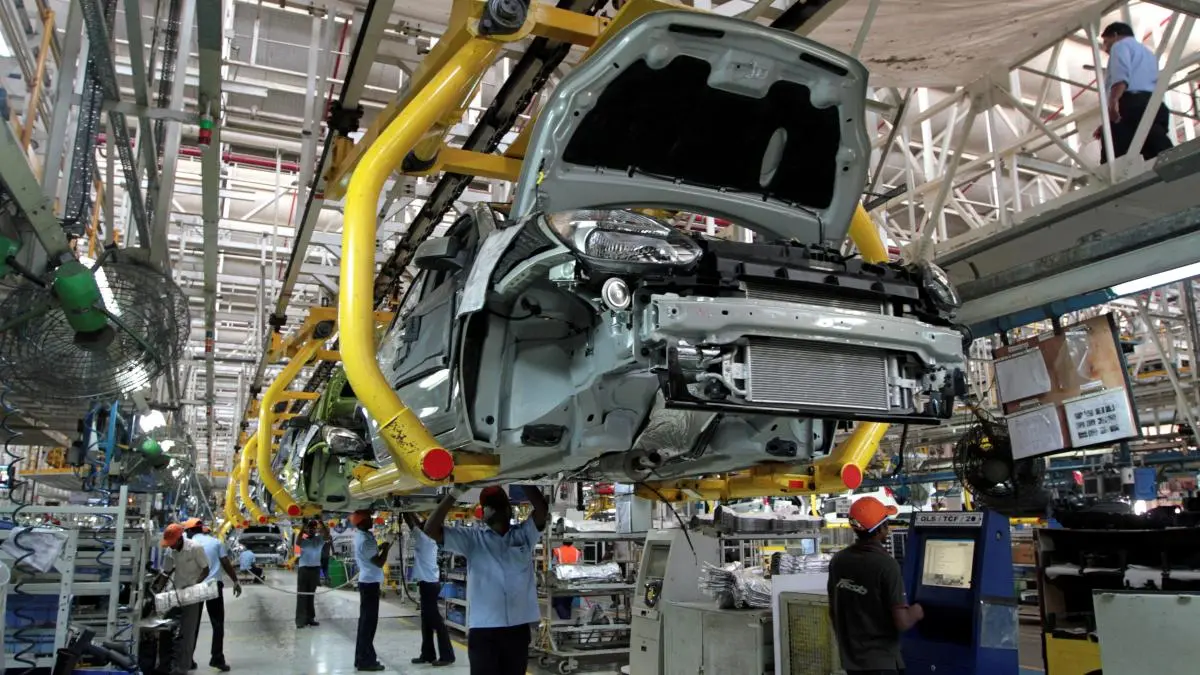
Goods that are in an unassembled or disassembled state due to packaging, storage, or transportation requirements are classified under the same HS code category as the fully assembled and completed item. This is based on Rule 2(a) of the six General Interpretative Rules for HS Classification established by the World Customs Organization (WCO), which states:
“A heading shall apply to an article, incomplete or unfinished, provided that, as presented, it has the essential character of the complete or finished article. It shall also apply to complete or finished articles presented unassembled or disassembled.”
For the purpose of this rule, “unassembled or disassembled goods” refers to items that can be reassembled using standard tools (such as screws, bolts, nuts, rivets, or welding), provided that the reassembly process involves only simple assembly and does not require further processing.
When classifying goods under an HS code, customs documentation, technical specifications, and other relevant information about the goods must be referenced to accurately determine the name and code of the goods based on the Vietnam Export and Import Goods Classification List. If the company does not provide specific and detailed information about the goods, including images and technical documents, the GDC cannot provide sufficient grounds to guide the classification of the goods.
Customs Procedures:
For unassembled or disassembled goods imported from various sources, across multiple shipments, and through different customs checkpoints, the following procedures apply:
- Register a list of the separate components and parts of the machinery or equipment (hereinafter referred to as the “List”) using Form No. 03/DMTBĐKNK-TDTL/2015.
- Submit 01 Tracking Sheet to monitor the deduction of parts and components of machinery or equipment (according to Form No. 04/PTDTL-TBNC/2015) before importing the first shipment.
If the “List” has been registered but requires amendments or additions, the customs declarant may modify or supplement the “List” and submit a new tracking sheet before the first importation or before importing machinery and equipment for subsequent shipments. (Article 8 of Circular No. 14/2015/TT-BTC)
Source: Official Letter No. 4052/TCHQ-TXNK dated August 23, 2024
5. European Union (EU): Initiation of Anti-Dumping Investigation Concerning “Hot-Rolled Steel” Products Originating from Egypt, India, Japan, and Vietnam
Basic Information
- Document Number: C/2024/4995
- Issuance Date: August 8, 2024
- Investigating Authority: Directorate-General for Trade – European Commission
- Petitioner: European Steel Association (EUROFER – “the complainant”). The complaint was filed on behalf of the Union industry for certain flat-rolled steel products pursuant to Article 5(4) of the WTO Anti-Dumping Agreement.
- Reason for Investigation: The European Commission (the “Commission”) received a complaint under Article 5 of Regulation (EU) 2016/1036 of the European Parliament and Council of June 8, 2016, on protection against dumped imports from non-EU countries. The complaint alleges that hot-rolled flat steel products originating from Egypt, India, Japan, and Vietnam are being dumped and causing injury to the EU industry.
Scope of the Investigation:
- Product Name: Hot-rolled flat steel products of iron, non-alloy steel, or alloy steel, whether in coils or not (including products cut-to-length and narrow strips), not further worked than hot-rolled, and not clad, plated, or coated.
- HS Codes: 7208.10.00, 7208.25.00, 7208.26.00, 7208.27.00, 7208.36.00, 7208.37.00, 7208.38.00, 7208.39.00, 7208.40.00, 7208.52.10, 7208.52.99, 7208.53.10, 7208.53.90, 7208.54.00, 7211.13.00, 7211.14.00, 7211.19.00, ex 7225.19.10 (TARIC code 7225.19.10.90), 7225.30.90, ex 7225.19.10 (TARIC code 7225.19.10.90), 7225.30.90, ex 7226.19.10 (TARIC codes 7226.19.10.91 and 7226.19.10.95), 7226.91.91, and 7226.91.99.
- Origin of Goods Under Investigation: Egypt, India, Japan, and Vietnam.
Allegations of Dumping and Injury:
- Dumping Margins: The dumping allegations are based on two scenarios:
- For months when selling prices are below production costs, a comparison is made between the normal value (including production costs, selling, administrative expenses, and profit) and the export price (ex-factory) when exporting to the EU.
- For months when selling prices are above production costs, domestic prices are compared with the export prices (ex-factory) when exporting to the EU. The monthly comparison results are aggregated into annual data, showing that Vietnamese companies are alleged to have significant dumping margins.
- Injury: The dumping activities have resulted in reduced sales volumes, prices, and market share for the EU steel industry, leading to severe impacts on overall performance, financial conditions, and employment levels.
Allegation of Raw Material Distortions:
For steel products from Vietnam, iron ore and coke represent [30-40%] and [26-39%] of the product’s production costs, respectively. The complaint indicates that raw material distortions lead to significantly lower production costs compared to representative international markets, under Article 7(2a), paragraph 2 of the WTO Anti-Dumping Agreement.
Period of Investigation (POI):
- Dumping Investigation Period: April 1, 2023, to March 31, 2024.
- Injury Assessment Period: January 1, 2021, to March 31, 2024.
In the Notice of Initiation, the European Commission provided details regarding the complainant, the goods under investigation, the dumping allegations, injury and causality, raw material price distortions, the investigation procedure, deadlines, as well as rules on the rights and obligations of the parties involved, and instructions for uploading and downloading documents via the EC’s TRON electronic system.
For more information, please visit:
- UNI’s full summary of the incident: THE FULL VERSION
- Attachment to the original case: THE ORIGINAL VERSION
6. India: Initiation of Anti-Dumping Investigation on “Hot-Rolled Alloy or Non-Alloy Steel Coils” Products Originating from or Exported from Vietnam (Case Code: AD OI – 13/2024)
Basic Information:
- Case Code: AD OI – 13/2024
- Issuance Date: August 14, 2024
- Investigating Authority: Directorate General of Trade Remedies (DGTR) of India
- Petitioner: Indian Steel Association (ISA)
- Complainants: JSW Steel Limited and ArcelorMittal Nippon Steel India Limited
- Reason for Investigation: The DGTR decided to initiate the anti-dumping investigation on April 14, 2024, based on a petition that provided sufficient preliminary evidence of dumping by Vietnamese companies and the damage caused by such dumping, along with the risk of future injury. The investigation was launched under Section 9A and Article 5 of the WTO Anti-Dumping Agreement.
Scope of the Investigation:
- Product Name: Hot-rolled alloy or non-alloy steel coils, uncoated, not plated or clad, with a thickness of up to 25mm and a width of up to 2100mm.
- Excluded Products: Hot-rolled stainless steel coils.
- HS Codes: 7208, 7211, 7225, and 7226.
- Origin of Goods Under Investigation: Vietnam
The parties involved in this investigation may submit their views on the scope of the products under review and any proposed Product Control Numbers (PCN) within 15 days from the initiation of the investigation.
Allegations of Dumping, Injury, and Causality:
- Dumping Margin: A comparison of the normal value and export price at ex-factory levels shows that the preliminary dumping margin is significant and exceeds the de minimis level for the products being imported from the concerned country.
- Injury to Domestic Industry: The complainants allege that large volumes of low-priced imports have caused deterioration in their business conditions, including reductions in cash profits, market share, overall profitability, and return on investment. They are also concerned that dumped imports are posing a threat of further injury to the domestic industry. There is sufficient preliminary evidence that the domestic industry has suffered actual injury and faces further injury risks from hot-rolled steel imports from Vietnam.
Period of Investigation (POI):
- Dumping Investigation Period: January 1, 2023, to March 31, 2024.
- Injury Investigation Period includes the following phases:
- April 1, 2020, to March 31, 2021
- April 1, 2021, to March 31, 2022
- April 1, 2022, to March 31, 2023
- POI: April 1, 2023, to March 31, 2024
Request for Retroactive Application of Anti-Dumping Duties:
The complainants have requested the retroactive imposition of anti-dumping duties for the following reasons:
- Vietnam has a history of dumping “hot-rolled steel coils” and has been subject to anti-dumping duties for this product before.
- Vietnamese exporters have been dumping on a large scale over a relatively short period. The dumping margin is significant during the investigation period, and the volume of dumped imports has increased in recent times.
- There has been a significant decline in the performance of the Indian steel industry during the investigation period, resulting in substantial harm. If immediate anti-dumping measures are not taken, the Indian steel industry will face irreparable damage.
Currently, the Vietnam Trade Remedies Authority is working with the Vietnam Trade Office in India to request the DGTR to provide additional necessary information for forwarding to the relevant parties.
For more information, please visit:
- UNI’s full summary of the incident: THE FULL VERSION
- Original attachment of the case: THE ORIGINAL VERSION