


Below is the collection of latest legal updates until December 2024.
I. STRENGTHENING MANAGEMENT OF IMPORTED GOODS TRANSACTED VIA E-COMMERCE
On November 8, 2024, the General Department of Customs issued Official Letter No. 5480/TCHQ-GSQL, requiring enhanced inspection and supervision of imported goods transacted through e-commerce.
The management measures are set out as follows:
1. At the import border gate
- Fully implement customs procedures when transporting goods from the port of entry to the designated consolidation location.
- Decline customs declarations that lack required information or pertain to e-commerce websites/apps not registered in the E-Commerce Activity Management System of Vietnam.
2. At the centralized supervision locations
Refusal to carry out customs procedures:
- Failure to declare information about the e-commerce website/application providing services.
- Declared information relates to websites/applications not registered in Vietnam or not listed in the E-Commerce Activity Management System of Vietnam.
Additionally, customs sub-departments must enhance the following activities:
- Verify customs valuation.
- Prevent cases of splitting goods into multiple small packages or declaring incorrect values to evade taxes or specialized inspections.
- Check the origin of goods and intellectual property rights, paying particular attention to items such as food, cosmetics, spare parts, pharmaceuticals, fashion products, etc.
- Inspect and supervise quantities and types of goods to prevent goods from being repackaged into smaller units for smuggling purposes.
3. At the warehouses of express delivery enterprises:
In the upcoming period, customs sub-departments are instructed to conduct a comprehensive review of all courier company warehouses.
In cases where warehouses fail to meet customs inspection and supervision requirements, operations must be terminated, and warehouse codes must be revoked.
(According to Official Letter No. 5480/TCHQ-GSQL dated November 8, 2024)

II. STRENGTHENING CUSTOMS MANAGEMENT AND SUPERVISION OF GOODS ENTERING, STORING AND TAKING OUT OF PORTS, WAREHOUSES AND YARDS
The General Department of Customs has issued Official Letter No. 5294/TCHQ-GSQL dated October 30, 2024 to strengthen customs management and supervision of goods at ports, warehouses and yards to prevent smuggling and trade fraud. Specific directions include:
1. Management via VASSCM (Automated Customs Management System)
Direct the relevant Customs Sub-Departments to request the business enterprises of ports, warehouses and yards to fully and accurately update information on goods brought into the port, warehouse and yard area (getin), including false information (if any), information about goods entering, being stored, and exiting these areas to the VASSCM system. Note:
- Update the information of the goods (including the description of the goods, the name of the goods if any) and send it to the VASSCM system immediately after completing the cargo handling at the port, warehouse or yard.
- Fully and accurately update the information of the goods to be received and sent to the VASSCM system no later than 15 minutes from the time the goods are taken out of the port, warehouse or yard; including information on the “number of the means of transport”.
- This regulation also applies to cases where goods are transported using multiple vehicles in separate shipments and to cases involving multiple declarations for the same container.
2.Violation handling:
Strengthen the sanctioning of administrative violations according to the provisions of Decree 128/2020/ND-CP with the following acts:
- Cargo handling not at the right port of destination stated in the cargo manifest or bill of lading;
- Allowing goods to be taken out of the port, warehouse or yard area without receiving information about eligible goods passing through the supervision area;
- Failing to provide information to customs authorities in the process of monitoring, inspecting and supervising goods exiting, entering and storing at ports, warehouses and yards…).
In cases where enterprises are found engaging in smuggling or illegal transportation of goods across borders, customs authorities will collaborate with relevant agencies to conduct investigations and take legal action in accordance with the law.
(According to Official Letter No. 5294/TCHQ-GSQL dated October 30, 2024)

III. PROCEDURE FOR CUSTOMS CLEARANCE WHEN THE VNACSS/VCIS SYSTEM IS OUT OF ORDER
On November 1, 2024, the General Department of Customs issued Decision No. 2537/QD-TCHQ, guiding enterprises to carry out customs procedures for goods when the VNACCS/VCIS system encountered a complete breakdown.
Key points of Decision No. 2537/QD-TCHQ and its procedures include:
1. Applicability:
- When the VNACCS/VCIS system has a complete breakdown, it is impossible to carry out e-customs procedures.
- Other professional support systems are still operating normally.
2. Temporary paper-based customs procedures:
- Customs procedures for exports and imports.
- Customs procedures for goods in transit, transshipment, export, import, or transfer to another customs location under independent transportation procedures.
3. Principles of handling system failures:
- For declarations already registered and assigned a number on the VNACCS system: The customs authority will print two copies of the declaration from the auxiliary system (V5) to proceed with customs clearance under this procedure.
- After the VNACCS/VCIS system is restored, the assigned customs officer will update the processing results into the system.
- For declarations that have not been registered and issued numbers on the VNACCS system, enterprises declare customs on paper declarations.
- For goods transported independently, enterprises declare the use of the form “transport list”, number 21a/BKVC/GSQL in Appendix V of Circular 39/2018/TT-BTC.
- For other information that needs to be additionally declared but is not on the paper declaration (for example, anti-dumping duty), the customs authority will guide the declaration in the blank criteria and clearly state the contents.
4. Other contents are also detailed in this document:
- General principles, channeling principles.
- Detailed procedures for customs clearance of exported goods.
- Specific steps for customs clearance procedures for exported, imported goods, and goods transferred under independent transportation procedures.
Details of the decision: see here
5. Effective Date:
- The decision takes effect upon notification from the General Department of Customs about a VNACCS/VCIS system failure.
- The General Department of Customs will announce the cessation of this decision once the VNACCS/VCIS system is restored.
(According to Decision 2537/QD-TCHQ dated November 01, 2024)

IV. REFUND OF TAXES FOR ON-SPOT IMPORT DECLARATION
On November 11, 2024, the General Department of Customs (GDC) has issued Official Letter No. 5556/TCHQ-TXNK providing guidance on the refund of import taxes for on-spot import declarations.
1. Tax policies:
GDC affirms that in case the on-spot importer has paid import tax for production and business purposes and later utilizes the on-spot imported goods for the production of export goods, the paid import tax shall be refunded.
(Pursuant to Clause 1, Article 36 of Decree No. 134/2016/ND-CP)
On-spot imported goods under the processing category will be exempted from taxes if the following conditions are met:
- Taxpayers must have a processing contract and declare contract information and appendices on the customs declaration.
- Taxpayers or reprocessing organizations must own or use processing facilities and machinery in Vietnam, and at the same time notify relevant information to customs offices as prescribed.
On-spot imported good registered for customs declaration in other forms must be declared and paid at the tax rate and dutiable value at the time of registration of the declaration.
(Pursuant to Clause 6, Article 1 of Decree 18/2021/ND-CP)
2. Tax refund dossier:
- Official letter for tax refund: 01 original copy.
- Payment proof (if paid): 01 photocopy.
- Import and export contracts, invoices and entrustment contracts (if any): 01 photocopy.
- Report on tax calculation of imported raw materials, supplies and components.
- Processing contract with foreign customers (if any): 01 photocopy.
- Documents proving the production establishment, ownership or use of machinery and equipment: 01 photocopy.
(Pursuant to Clause 5, Article 36 of Decree No. 134/2016/ND-CP)
(According to Official Letter No. 5556/TCHQ-TXNK dated November 11, 2024)

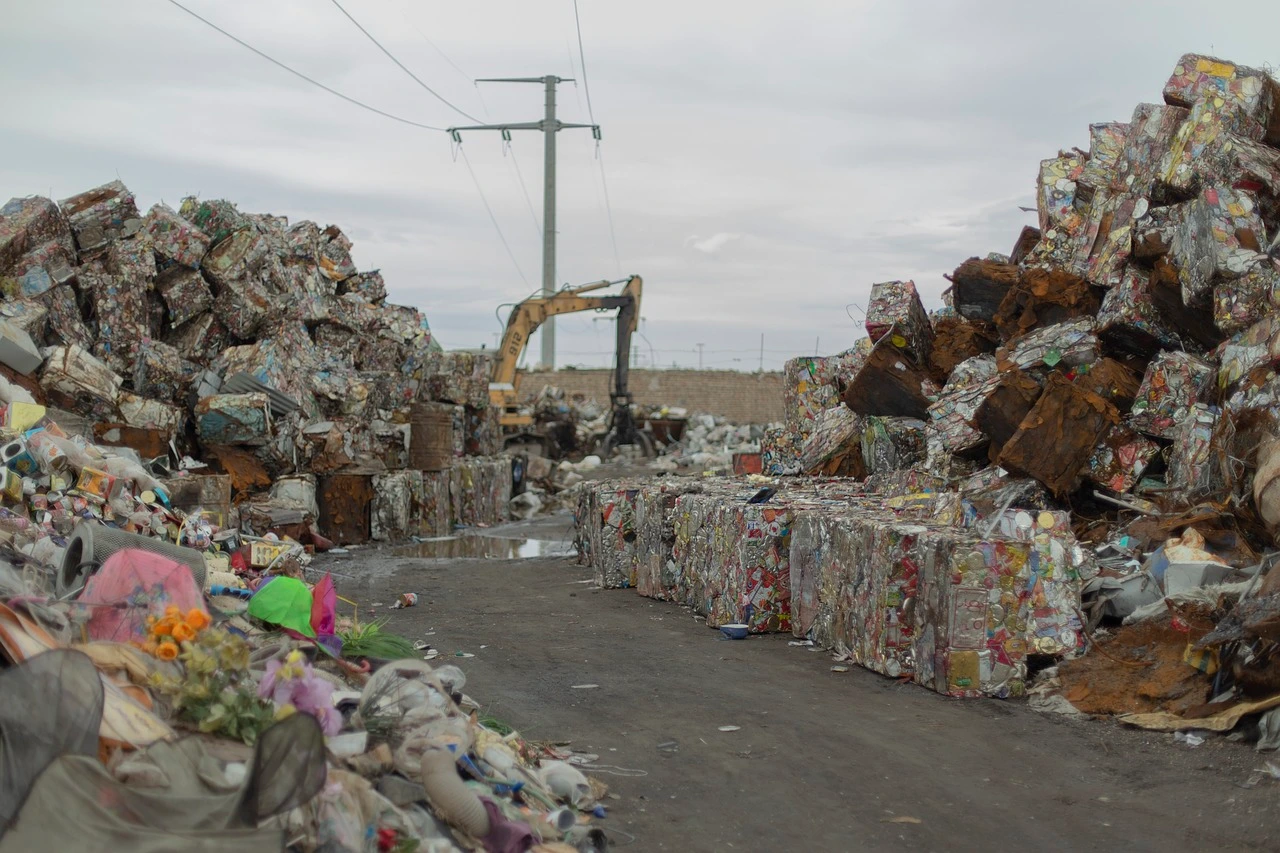
V. LIST OF SCRAPS SUSPENDED FROM TEMPORARY IMPORT FOR RE-EXPORT OR BORDER-GATE TRANSFER IN THE PERIOD OF 2025 – 2029
On October 8, 2024, the Ministry of Industry and Trade (MOIT) has just issued Circular 18/2024/TT-BCT regulating the List of scraps suspended from temporary import for re-export or border-gate transfer.
Key information about the list is summarized as follows:
1. Subjects of application:
- Enterprises engaged in the business of temporary import, re-export, and transit of goods.
- Organizations and authorities manage these activities.
- Individuals, organizations, and other agencies involved in such activities.
2. Non applicable cases:
Transit trade where goods are transported directly from the exporting country to the importing country without passing through Vietnam’s border gates.
Effective period: from January 1, 2025 to December 31, 2029.
3. Guidelines for Using the List:
- If a 2-digit HS code is listed, all 8-digit HS codes under that Chapter are applicable.
- If a 4-digit HS code is listed, all 8-digit HS codes under that Heading are applicable.
- If a 6-digit HS code is listed, all 8-digit HS codes under that Subheading are applicable.
- HS codes 3919, 3920, 3921, 3923.21, and 3923.29 in this List apply only to used goods.
Details of the list of scrap temporarily suspended for temporary import, re-export or border transfer
See details here.
(According to Circular 18/2024/TT-BCT dated October 08, 2024)
VI. AMENDMENTS TO EXPORT TARIFFS AND PREFERENTIAL IMPORT TARIFFS FROM DECEMBER 16, 2024
The Government of Vietnam has just issued Decree 144/2024/ND-CP, amending Decree 26/2023/ND-CP, regarding new export and preferential import tax rates for certain goods.
The revised tax rates for specific product groups are detailed in the two annexes attached to this Decree, as follows:
1. Appendix I – export and preferential import tariffs by taxable item categories:
Summary:
| HS Code | Description | Tax Rate |
| 31.02 | Mineral fertilizers or chemical fertilizers, containing nitrogen | 5% |
| 79.01 | Unprocessed zinc | 10% |
| 80.01 | Unprocessed Tin | 10% |
See details here.
2. Appendix II – Preferential import tariff for taxable items
Section I – Preferential import tariff for general goods
| HS Code | Description | Tax Rate |
| 23.04 | Soybean oil cake and other solid residues from the extraction of soybean oil. | 0% – 2% |
| 24.04 | Products containing tobacco leaves, nicotine, or substitutes for non-burning use; other nicotine-containing products for delivering nicotine into the human body | 50% |
| 85.43 | Electrical machinery and equipment with specific functions, not specifically provided for or included elsewhere in this Chapter. | 0% |
| 8543.40.00 | Electronic devices for e-cigarettes | 50% |
| 87.01 | Tractors (excluding those under HS code 87.09) | 0% – 5% |
| 8701.10 | Single-axle tractors | 10% – 30% |
Section II – Regulations on HS Codes and Preferential Import Tariff Rates for Auto Parts and Components Imported Under the Tax Incentive Program for Automobile Manufacturing and Assembly (Group 98.45) – Tariff rates: 15% – 25%.
See details here.
Note:
Preferential import tariffs for goods under HS Group 24.04 (Products containing tobacco leaves, reconstituted tobacco, etc.) and HS Code 8543.40.00 (Electronic devices for e-cigarettes and similar personal vaporization devices) apply only if these goods are permitted for import into Vietnam.
Effective date: From December 16, 2024.
(According to Decree 144/2024/ND-CP dated November 1, 2024)

VII. TERMINATION OF ANTI-DUMPING MEASURES ON COLD-ROLLED STAINLESS STEEL ORIGINATING FROM CHINA, INDONESIA, MALAYSIA, AND TAIWAN (ER02.AD01)
On November 12, 2024, the Ministry of Industry and Trade (MOIT) issued Decision No. 3011/QD-BCT to announce the termination of anti-dumping measures for certain products:
Case code: ER02. AD01
Goods under investigation: Cold-rolled stainless steel in the form of coils or sheets.
Related HS codes: 7219.32.00, 7219.33.00, 7219.34.00, 7219.35.00, 7219.90.00, 7220.20.10, 7220.20.90, 7220.90.10, 7220.90.90
Origin of goods: Taiwan (China), Republic of Indonesia, Malaysia and People’s Republic of China.
Conclusions of the investigating agency: There is no likelihood of continuation or recurrence of dumping practices causing harm to the domestic industry.
Decision by the MOIT: To terminate and not extend the application of anti-dumping measures on the investigated goods.
Effective date: November 12, 2024
(According to Decision No. 3011/QD-BCT dated November 12, 2024)
Learn more about: Antidumping measures under Vietnam laws: How to request for imposition of antidumping measures in Vietnam
VIII. THE FOREST PROTECTION DEPARTMENT CLARIFIES CHALLENGES IN MANAGING WOOD EXPORTS
On October 28, 2024, the Forest Protection Department issued Official Letter No. 1314/KL-ĐT to address difficulties in managing wood exports.
The basic information is summarized as follows:
1. Issues of dossiers for export of wood and wood products:
Implementation Timeline under the VPA/FLEGT Agreement.
- According to regulations, the Prime Minister shall determine the timeline for implementing wood export management within 30 working days, calculated from the date the Ministry of Agriculture and Rural Development reaches agreement with the Joint Implementation Committee on the implementation of the VPA/FLEGT Agreement.
2.
- However, at present, the prime minister has not decided on the time to implement timber management under the VPA/FLEGT Agreement.
- Therefore, the current export timber dossier still complies with the regulations on forest product dossiers for exporting specified in Article 19 of Circular No. 26/2022/TT-BNNPTNT.
If wood products are common plant species originating from domestically grown forests, it is not mandatory to certify the “Forest product list”. The local Forest Protection Agency shall only certify at the request of the forest product owner.
2. Classification of timber processing and exporting enterprises
- The Forest Protection Department said that as of October 2024, there are 16 provinces nationwide that have implemented classification, with 194 wood processing and exporting enterprises classified as Group I enterprises.
The list is publicly posted on the website: kiemlam.org.vn./.
- The classification of enterprises other than timber processing and exporting enterprises will take effect from March 16, 2026. Currently, the Forest Protection Department has proposed the Ministry of Agriculture and Rural Development to develop a legal document to provide detailed guidance on this issue.
3. Compliance with Dossier for domestic forest wood origin when exporting
In case the legal documents have different provisions on the same issue, the document with higher legal effect shall be applied.
Therefore, the dossier of certification of timber origin before export will apply according to the provisions of Article 9 of Decree No. 102/2020/ND-CP (amended and supplemented in Decree No. 120/2024/ND-CP).
(According to Official Letter No. 1314/KL-DT dated October 28, 2024)

IX. CUSTOMS PROCEDURE FOR TRANSIT GOODS WITH CHANGED TRANSPORT METHOD
Recently, the General Department of Customs (GDC) issued Official Letter No. 5502/TCHQ-GSQL dated November 8, 2024, to guide customs procedures in the case of goods in transit that undergo a change in transport method while in Vietnam.
The GDC’s opinions are as follows:
1. Requirements for customs sealing:
Goods in transit, for which the transport method is changed in Vietnam, must be loaded into a container and sealed with customs seals from the entry port to the exit port.
2. Requirements for customs declarants:
- The declarant must file one separate transport declaration for each leg of the journey from the first entry port to the final exit port (Article 51 of Circular No. 38/2015/TT-BTC).
- The declarant must submit a “request letter for changing the transport method” to the Customs Sub-department where the transport method change occurs and the relevant Customs Sub-department assigned with monitoring duties, using the form in the Appendix of Decree No. 59/2018/ND-CP. Form available here.
- The declarant must also notify the Customs Sub-departments at both the entry and exit ports for tracking and coordinating supervision.
- If approved, the declarant must receive and submit the handover minutes to the Customs Sub-departments where the transport method change occurs, the Customs Sub-department assigned with monitoring duties, and the Customs Sub-department at the exit port.
3. Transport time:
Transport time is calculated for each segment of the journey, with a maximum of one day for distances under 500 km, and a maximum of three days for distances of 500 km or more.
(According to Official Letter No. 5502/TCHQ-GSQL dated November 08, 2024)
X. GUIDANCE ON CLASSIFICATION OF TAX REFUND DOSSIERS
Recently, the General Department of Taxation issued Official Letter No. 5025/TCT-KK to provide guidance on the classification of tax refund files.
For files eligible for pre-refund, the tax authority will compare the information declared by the taxpayer on the file with the information stored in the tax agency’s database to determine whether the taxpayer is eligible for a tax refund.
If the information declared by the taxpayer on the file differs from the information stored in the tax agency’s database, the taxpayer must explain and supplement the information.
The time taken for the explanation and supplementation is not included in the time limit for processing the tax refund file.
In cases requiring post-refund inspection, the tax authority will review and cross-check the taxpayer’s payment documents through the bank. Based on the review results, the tax authority will determine the refund-eligible tax amount and handle the tax refund file in accordance with regulations.
(Article 77 of the Law on Tax Administration)
(According to Official Letter No. 5025/TCT-KK dated November 06, 2024)
You may want to read these blogs:
Tax refund for Re-imported Exported Goods: Guidelines on Procedures
Tax Refund for Re-exported Imported Goods: Guidelines on Procedures
Guidelines on Tax Refunds of Imported Goods for Export Production 2024
The latest information about customs situation will be continuously updated in the customs newsletter of UNI CUSTOMS CONSULTING. We invite businesses to stay informed!